

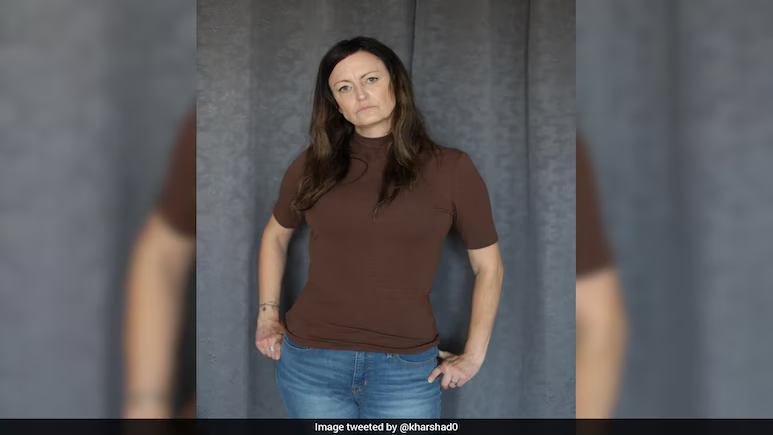
A Canadian actress and comedian has ignited renewed debate over access to medically assisted death for people with severe psychiatric illnesses after applying for the country’s Medical Assistance in Dying program.
Claire Brosseau, 48, applied in 2021 to Medical Assistance in Dying (MAID), citing decades of what she describes as “unbearable” suffering caused by chronic mental health conditions. In an interview with The New York Times, Brosseau said she has lived since childhood with manic depression, anxiety, substance use disorder, chronic suicidal thoughts, and other psychiatric challenges.
She said she has pursued extensive treatment across North America for decades, including psychiatric care, numerous medications, multiple forms of therapy, and guided psychedelic therapy, without lasting relief. In a Substack post last year, Brosseau disclosed that she has attempted suicide multiple times.
Under current federal rules, people whose sole underlying condition is a mental illness are not eligible for MAID. As a result, Brosseau’s application has been paused, and she may not become eligible until at least 2027, depending on future changes to the law.
Brosseau has since joined a legal challenge alongside Dying With Dignity Canada, arguing that excluding mental illness from MAID eligibility is discriminatory. Despite saying she has a strong network of friends and family, Brosseau told the Times she fears she will eventually die by suicide if she cannot access assisted death.
Medical professionals involved in her care have expressed differing views. One of her psychiatrists, Dr. Mark Fefergrad, cautioned against medically assisted death in her case, saying he has seen patients recover after long periods of severe illness.
“I believe she can get well,” he told the New York Times. “I don’t think MAID is the best or only choice for her.”
Another psychiatrist, Dr. Gail Robinson, took a contrasting position, arguing that limiting MAID to those with physical illnesses unfairly excludes people with severe psychiatric conditions and amounts to discrimination.
If her application is ultimately approved, Brosseau has said she hopes her psychiatrists, her sister, her parents, and her dog will be nearby for support, though she does not want them present in the room at the moment of her death. She has said she would prefer to say her goodbyes beforehand.
The case has intensified national discussion about how Canada balances patient autonomy, medical ethics, and protections for people living with mental illness as lawmakers continue to revisit the scope of MAID.