

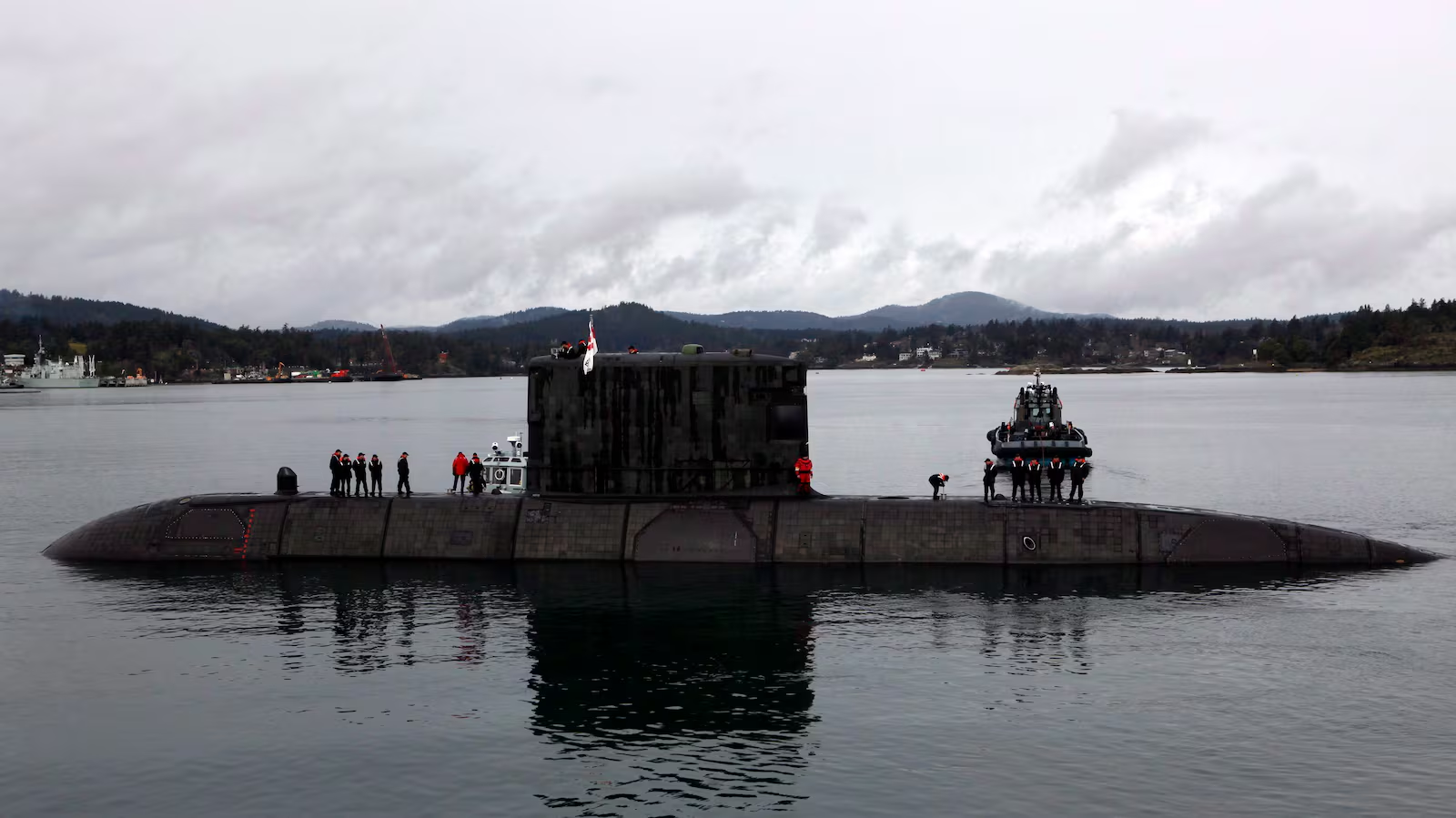
BERLIN — Canada’s multi-billion-dollar submarine procurement project has entered a decisive phase, with Germany’s Thyssen Krupp Marine Systems (TKMS) and South Korea’s Hanwha Ocean Co. identified as the two “qualified suppliers” vying to build up to 12 new vessels for the Royal Canadian Navy.
Prime Minister Mark Carney toured TKMS’s German shipyard on Tuesday alongside Chancellor Friedrich Merz, highlighting the scale of the deal and Canada’s urgent need to replace its aging fleet before it is retired in 2035.
Carney said the government had received 25 responses to its request for information but only TKMS and Hanwha met the “very demanding” technical requirements, such as the ability to patrol under sea ice and endure long deployments in the Pacific. “We need to be able to have year-round fleets in all three coasts under quite demanding conditions,” Carney told reporters.
While emphasizing the process will be conducted “fully, transparently, fairly,” Carney acknowledged the pressure of time and cost, noting the project carries “some sort of urgency.”
Government officials briefing reporters underscored that the submarines would primarily serve patrol functions but could also be combat-capable. They added that industrial benefits for Canada will be a deciding factor. “We need some sort of return when we are investing that amount of money,” one senior official said.
The TKMS bid already has a Canadian footprint — the company opened a new office in Canada in May, with CEO Oliver Burkhard promising a “long-term strategic partnership.” Hanwha, meanwhile, will host Carney in South Korea this October as Ottawa continues evaluating both contenders.
When asked whether Carney’s visit to TKMS risked signalling favouritism, officials insisted the process remains balanced.
The submarine project marks one of Canada’s most ambitious defence procurements in decades, with billions at stake and questions looming over timelines, industrial spinoffs, and the navy’s readiness to operate a modern fleet. For Carney, who is touring Europe to deepen trade and defence ties, the stop in Germany served as both a diplomatic and defence statement.