

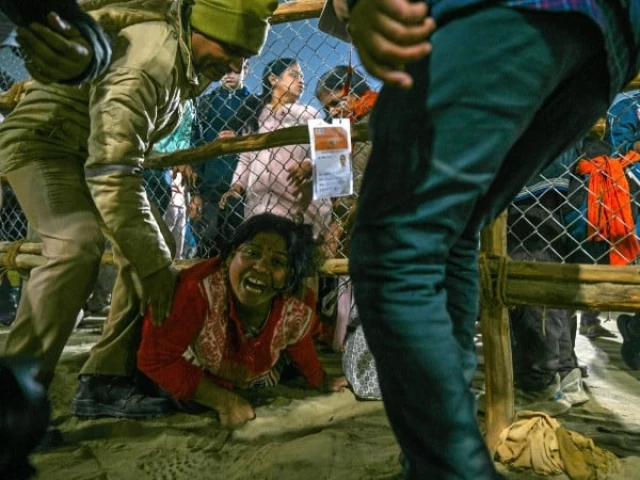
An explosive BBC Hindi investigation has uncovered that at least 82 people died during the stampedes at the Kumbh Mela in Prayagraj on January 29, 2025—more than twice the number reported by the Uttar Pradesh government. The state had officially acknowledged 37 deaths across four incidents during the Mauni Amavasya holy day, but the BBC’s findings point to a much higher toll.
The investigation, published on June 10, involved interviews with over 100 families from 11 states and more than 50 districts. BBC journalists confirmed 82 fatalities based on verifiable evidence such as post-mortem reports, morgue slips, death certificates, and witness accounts. Among the confirmed victims were devotees whose families received ₹25 lakh compensation from the government, those handed ₹5 lakh in cash under unclear circumstances, and others who received nothing at all.
While Chief Minister Yogi Adityanath told the state assembly in February that 30 deaths occurred near Sangam Nose between 1:10 and 1:30 AM, and seven more elsewhere, the BBC discovered discrepancies. It identified 36 families who received the ₹25 lakh compensation officially, and 26 others who were handed ₹5 lakh in cash—yet not counted in the official death toll. The latter group said they were pressured to sign papers stating the deaths were due to “illness,” not stampedes. Video evidence reportedly shows Uttar Pradesh Police distributing ₹500-note bundles to these families.
Nineteen additional families provided documents proving their loved ones had died in the stampede but had received no aid whatsoever. These included compelling cases like that of Arun Narayan Koparde from Karnataka, whose wife recounted the panic and chaos as devotees surged following an announcement of “Amrit Baras Raha Hai.” His was one of four Karnataka victims whose families eventually received compensation.
Even high-profile victims were overlooked. One such case was that of KN Vasudevacharya, the younger brother of former BJP General Secretary KN Govindacharya. Initially listed as having no heir, the BBC confirmed his identity—but his family has still not been compensated.
The stampedes were not limited to the Sangam Nose area. BBC also documented fatalities at other key locations such as Mukti Marg Chauraha near Kalpavriksh Dwar, where at least five more deaths occurred around 8:00 AM. Victims included individuals from Gorakhpur, Sultanpur, Haryana, and Bihar. Some families received partial compensation in cash, while others received nothing. Eyewitnesses recounted the horror of seeing bodies lying unattended for hours, with little response from authorities.
The investigation raises serious concerns about the transparency and accuracy of the Uttar Pradesh government’s reporting. Despite the state boasting of extensive security arrangements—including CCTV coverage, thousands of personnel, and ambulances—many victims’ families say they received inadequate or delayed support. The findings have reignited criticism from opposition parties and human rights advocates, who say the tragedy was not only mismanaged but deliberately downplayed.