

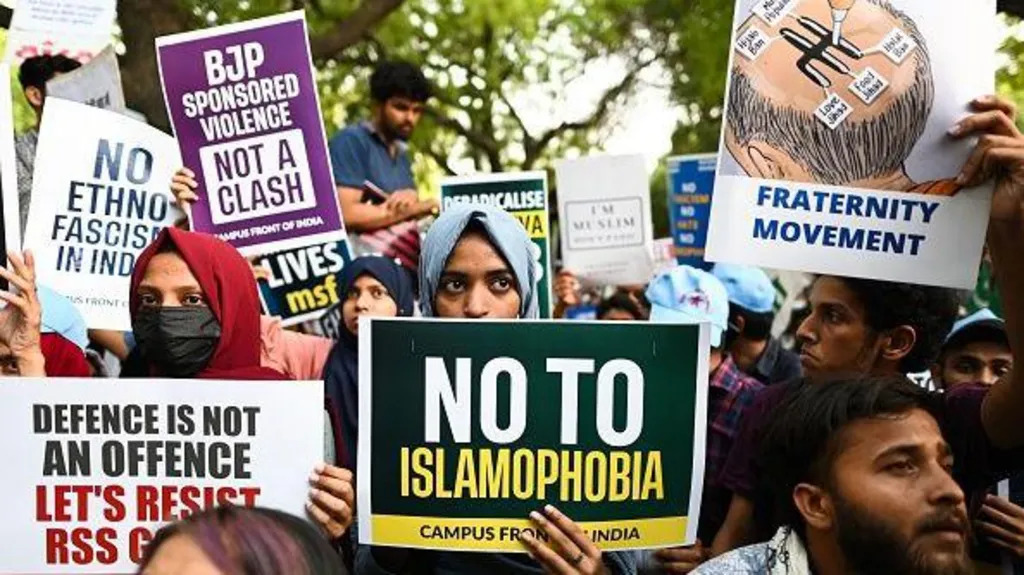
New Study Highlights Rise in Anti-Muslim Rhetoric, Ties It to Election Period
India experienced a 74% spike in hate speech incidents in 2024, with the highest surge recorded during the country’s national elections, according to a new report by the Washington-based research group India Hate Lab.
The study, released Monday, documented 1,165 instances of hate speech, with a staggering 98.5% targeting Muslims. It also highlighted the involvement of top political figures, including Prime Minister Narendra Modi and Home Minister Amit Shah, in spreading divisive rhetoric.
The report found that most incidents occurred in states governed by the Bharatiya Janata Party (BJP) or its larger alliance.
- 79.9% of hate speech events (931 instances) took place in BJP-ruled states.
- Three BJP-led states—Uttar Pradesh, Maharashtra, and Madhya Pradesh—accounted for nearly half of all recorded incidents.
- The BJP organized 340 hate speech events in 2024, marking a 580% increase from 2023.
Over the years, the BJP has faced accusations of targeting India’s minorities, particularly Muslims, but the party continues to reject these allegations.
On Tuesday, BJP national spokesperson Jaiveer Shergill dismissed the report, calling it an attempt to tarnish India’s image.
“India has a very strong legal system structured to maintain peace, order, and ensure non-violence at any cost,” Shergill told CNN. “Today’s India does not need any certification from any ‘anti-India reports industry’ run by vested interests.”
However, the party faced accusations of using hate speech during its 2024 election campaign, with opposition leaders calling out Modi for employing divisive rhetoric targeting Muslims. In May, the Election Commission of India instructed the BJP to remove a social media post that allegedly demonized Muslims.
The India Hate Lab report painted a disturbing picture of growing intolerance and targeted incitement:
Political rallies, religious processions, and protest marches were common platforms for hate speech.
May 2024 saw the highest spike, with 269 reported incidents coinciding with election campaigning.
Christian communities also faced hate speech, though at lower levels than Muslims.
Calls for violence and economic boycotts of Muslim businesses increased compared to 2023.
🔹 Mosques and Muslim residential properties were singled out for destruction.
Since Modi’s government came to power in 2014, rights groups have repeatedly warned of rising discrimination against Muslims and other minorities. The BJP has consistently denied these allegations, maintaining that India remains a democratic and secular nation.
With India’s next state elections approaching, experts warn that hate speech could continue to rise, especially if no legal or political deterrents are put in place.
The report underscores deepening religious and political divisions in India, raising concerns about the long-term impact of hate speech on communal harmony and democracy in the country.