

Commercial projects aim to expand lunar exploration and innovation
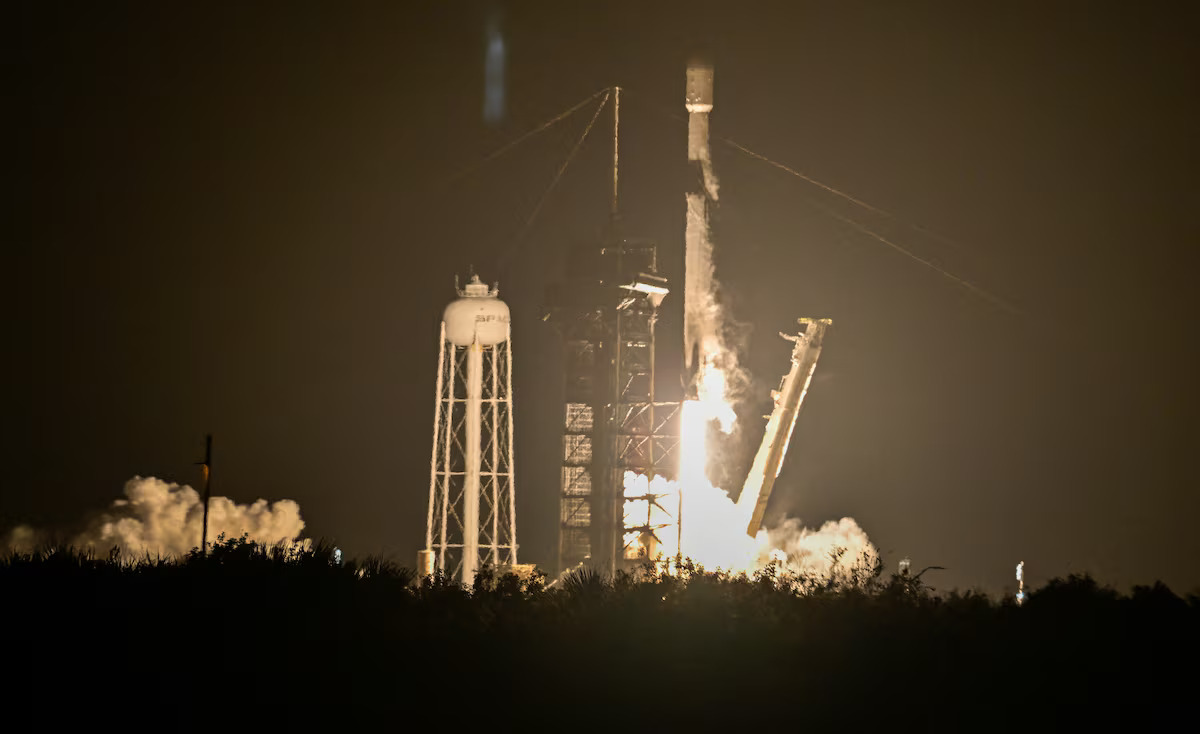
A SpaceX Falcon 9 rocket launched from NASA’s Kennedy Space Center early Wednesday, marking a significant milestone in the growing race for commercial access to the moon.
The 1:11 a.m. ET launch was the first to deliver two private lunar landers—Blue Ghost, built by Firefly Aerospace, and Hakuto-R Mission 2, built by Japan’s ispace Inc.—on a single rocket. Both spacecraft carry payloads designed to advance lunar science and commercial exploration, with contributions from companies around the world, including Canada.
Blue Ghost, developed by Texas-based Firefly Aerospace, aims to become the second privately built spacecraft to land on the moon. The lander will spend 25 days in Earth orbit before its scheduled lunar landing attempt on March 2. The mission includes 10 NASA payloads as part of the Artemis program, such as Lunar PlanetVac, an innovative regolith collection experiment featuring a camera built by Canada’s Canadensys Aerospace Corp.
Hakuto-R Mission 2, dubbed Resilience, is Japan-based ispace’s second attempt to land on the moon following the failure of its first mission in April 2023. The spacecraft is expected to take a longer trajectory, aiming to land in May or June. One of the mission’s highlights is a European-built microwave-sized rover, which could become the first commercial rover to traverse the lunar surface.
Both landers are targeting the moon’s near side, in its northern hemisphere, and are designed to operate on solar power, limiting their operational lifespans to approximately two weeks—the length of one lunar day.
The dual launch is part of a broader wave of commercially driven lunar exploration initiatives. It follows last year’s groundbreaking missions under NASA’s Commercial Lunar Payload Services (CLPS) program, which incentivizes private companies to develop lunar technologies.
Firefly Aerospace’s Blue Ghost and other CLPS missions represent a significant evolution in how space exploration is conducted, blending public and private efforts.
“This is a watershed moment for commercial lunar exploration,” said Chris Culbert, CLPS program manager. “Landing on the moon is very, very hard, but these missions show that small, innovative companies are capable of overcoming the challenge.”
Canada’s Canadensys Aerospace Corp. has emerged as a leader in lunar hardware, supplying cutting-edge technologies to multiple missions. The Ontario-based company provided cameras for the Blue Ghost mission and is actively working on lunar vehicle designs and other innovations to support long-term activities on the moon.
“We’re moving at a pace far beyond what traditional government programs could achieve just a few years ago,” said Christian Sallaberger, CEO of Canadensys. “It’s an exciting time for the industry.”
Canadensys recently initiated production of 200 lunar cameras, with 100 already allocated for upcoming missions.
The success of these missions could set the stage for up to three additional CLPS flights in 2025. Together with ispace’s Resilience lander, these initiatives are paving the way for routine commercial activity on the moon.
As the world watches, the push for private lunar exploration signals a new era where collaboration between governments and industry could redefine humanity’s relationship with space.