

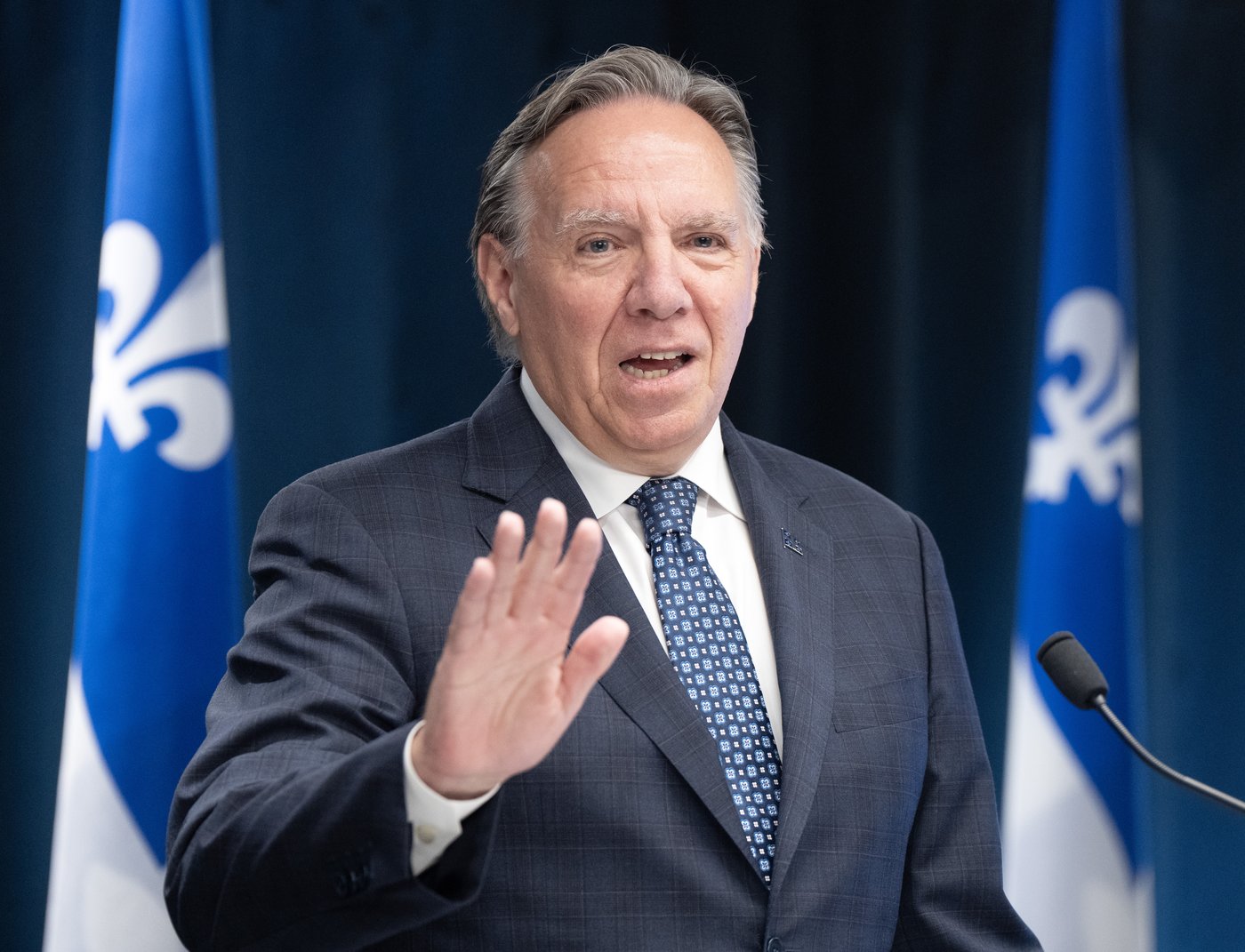
Quebec Premier Francois Legault has announced a six-month freeze on certain temporary foreign worker applications in Montreal, a move designed to pressure the federal government to reduce the number of non-permanent residents in the province. This new measure, which takes effect on September 3, is part of a broader strategy aimed at alleviating strain on housing, education, and healthcare services while also protecting the French language in the city.
The Coalition Avenir Quebec government is also planning to introduce legislation this fall to limit the number of international students in specific schools across the province. Legault emphasized that these actions are only the first steps in addressing the rapid increase in temporary immigration, which has doubled from 300,000 to 600,000 over the past two years.
“We have an obligation to reduce the number of temporary immigrants to protect our public services,” Legault stated during the announcement. He highlighted that although the new moratorium is expected to result in only 3,500 fewer temporary foreign workers in Montreal by the end of the six months, it demonstrates Quebec’s commitment to managing immigration levels.
The moratorium will apply to new applications and renewals for temporary foreign workers in Montreal, with exceptions for those in education, healthcare, construction, agriculture, food processing, and individuals earning at least $57,000 annually—the median salary in Quebec.
The Quebec government has been urging Ottawa to reduce the number of non-permanent residents under federal jurisdiction in the province from 420,000 to 210,000. Legault expressed hope that Quebec’s proactive measures would prompt the federal government to take more significant action.
“I think we have to show an example because we’re putting a lot of pressure on [Prime Minister] Justin Trudeau,” Legault said, underscoring the urgency of the situation.
The federal government has signaled its willingness to collaborate with Quebec, with a spokesperson for Immigration Minister Marc Miller confirming that they will work to explore ways to reduce temporary immigration. Employment Minister Randy Boissonnault also approved the freeze and indicated that the policy change would be closely monitored.
However, business groups have voiced concerns about the potential impact on the economy. Michel Leblanc, president of the Chamber of Commerce of Metropolitan Montreal, warned that small businesses, already grappling with challenges in an uncertain economic climate, would be hit hardest by the freeze. Karl Blackburn, president of the Conseil du patronat, echoed these sentiments, stating that the freeze would create significant difficulties for employers in sectors like retail, catering, and manufacturing.
In addition to the freeze, Legault announced plans to introduce legislation that would give the provincial government the authority to cap the number of international students at certain institutions, aiming to curb what he described as “abuses” at some schools. While details remain sparse, the move has raised questions about its potential impact on English-language universities in Montreal.
The federal government has reiterated its commitment to monitoring Quebec’s actions closely, ensuring that any measures taken do not infringe upon the rights of individuals or lead to discriminatory practices.