

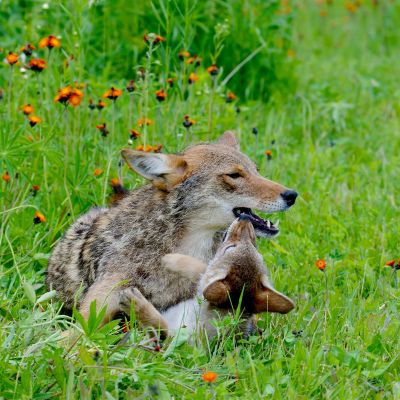
The City of Brampton is reminding residents to stay alert and take precautions as coyote pupping season gets underway across the city.
From April to June, coyotes give birth and raise their pups in dens located in ravines, wooded areas and naturalized spaces throughout Brampton. During this period, residents may notice more coyote activity in neighbourhoods as the animals search for food and protect their young.
City officials say coyotes are a normal part of urban wildlife and encourage residents to focus on coexistence and prevention rather than fear.
Brampton Animal Services is urging residents to keep pets on short leashes, especially near parks, trails and wooded areas where coyotes are commonly seen.
Officials also advise residents to avoid leaving food sources outdoors, including pet food, garbage, bird seed and fallen fruit, which can attract wildlife and increase unwanted encounters.
Residents are encouraged to supervise pets outdoors at all times, particularly during dawn and dusk when coyotes are most active.
If a coyote is encountered, the city advises residents not to run. Instead, they should remain calm, slowly back away and make themselves appear large and loud to scare the animal away.
Animal Services says aggressive or unusual coyote behaviour should be reported immediately to 3-1-1 or 905-458-5800. Residents are advised to call 9-1-1 if there is an immediate threat to public safety.
The city also reminded residents that feeding coyotes and other wildlife is prohibited under Brampton’s Animal Services By-law. Officials say feeding wildlife can cause animals to lose their natural fear of humans, leading to dangerous interactions and increased risks to public safety.
Violators may face fines of up to $5,000.
City officials are instead encouraging residents to support wildlife responsibly by planting native vegetation, securing garbage bins, feeding pets indoors, reducing pesticide use and avoiding actions that unintentionally attract animals.
Brampton Animal Services continues to use aversion conditioning techniques, including humane hazing, to reinforce coyotes’ natural fear of humans and reduce conflicts in residential areas.
The city’s interactive coyote sightings map is also available to help residents monitor wildlife activity and report sightings in their neighbourhoods.
Officials say coyotes are generally shy and non-confrontational animals that play an important role in maintaining a balanced ecosystem by controlling rodent populations and other small prey species.
Residents can learn more about coyote safety and report sightings through the city’s website or by contacting Brampton Animal Services.