

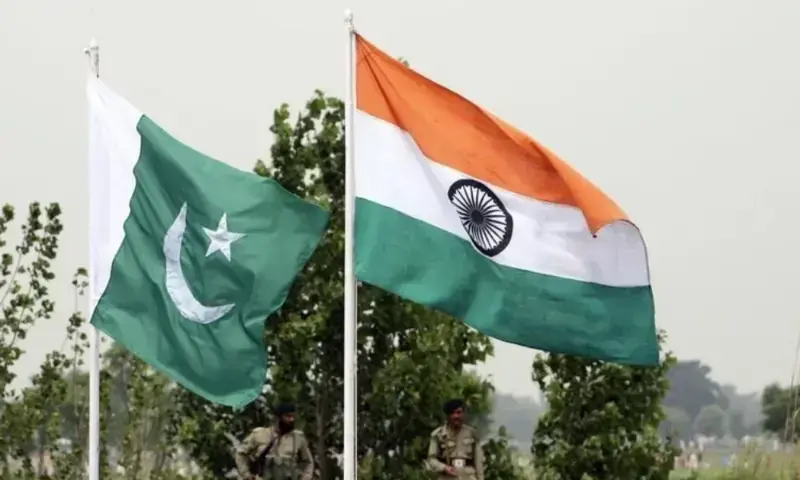
A year after the brief but intense 2025 military confrontation between India and Pakistan, international analysts and strategic experts are warning that any future conflict between the two nuclear-armed neighbours could become significantly more dangerous, with reduced opportunities for global powers to prevent escalation.
In a recent editorial, The Washington Post cautioned that the world may be underestimating the seriousness of tensions in South Asia. Reflecting on the May 2025 conflict, the newspaper described it as a new style of “non-contact warfare,” dominated by missiles, drones and air strikes rather than large-scale ground invasions.
The publication warned that both countries may now believe they can engage in limited conventional warfare without crossing the nuclear threshold — a perception analysts say could lead to catastrophic miscalculations in future confrontations.
The editorial also highlighted changing diplomatic dynamics under former U.S. President Donald Trump. Although American officials reportedly helped calm the 2025 crisis, repeated claims by Trump that he personally brokered the ceasefire reportedly created unease within Indian political circles.
According to analysts, strained diplomatic relations between Washington and New Delhi could make future mediation efforts more difficult during a rapidly escalating crisis.
A separate report by the Congressional Research Service identified water security as another major source of tension between the two countries. The report noted that India’s decision to place the historic 1960 Indus Waters Treaty “in abeyance” after the 2025 attack marked a significant escalation in bilateral tensions.
Pakistan has repeatedly stated that any attempt to disrupt water flows from the Indus River system would be viewed as an “Act of War,” as nearly 80 per cent of the country’s agriculture depends on the basin.
Strategic observers warn that disputes over water resources could become a parallel pathway to military escalation, adding another dangerous layer to already fragile relations.
Environmental experts are also raising alarm over the broader global consequences of any future conflict. A report by the Centre for Strategic and Contemporary Research warned that even a limited nuclear exchange between India and Pakistan could trigger long-term environmental devastation through “nuclear cooling,” where soot released into the atmosphere blocks sunlight and disrupts global climate systems.
The report cautioned that such a scenario could damage worldwide food production and potentially trigger mass starvation across multiple regions.
Writing in Foreign Affairs, U.S. scholar Elizabeth Threlkeld argued that the nature of escalation between India and Pakistan is rapidly evolving. She warned that future conflicts are likely to involve deeper military strikes, shorter decision-making timelines and new technological battlefields, increasing the risk of unintended escalation.
According to Threlkeld, the greatest threat may no longer be deliberate nuclear use, but rather a fast-moving crisis spiralling out of control due to miscalculation.
The International Institute for Strategic Studies also noted shifting geopolitical alignments following the 2025 conflict. Analysts at the institute observed that improving ties between Washington and Islamabad, including Pakistan’s role in facilitating discussions linked to the U.S.-Iran crisis, have added to Indian concerns over changing American regional priorities.
Taken together, recent reports from international media outlets, research organizations and strategic experts paint a troubling picture: while the 2025 India-Pakistan conflict stopped short of nuclear confrontation, it may have lowered the threshold for future crises, making the next standoff potentially faster, riskier and far more difficult to control.