

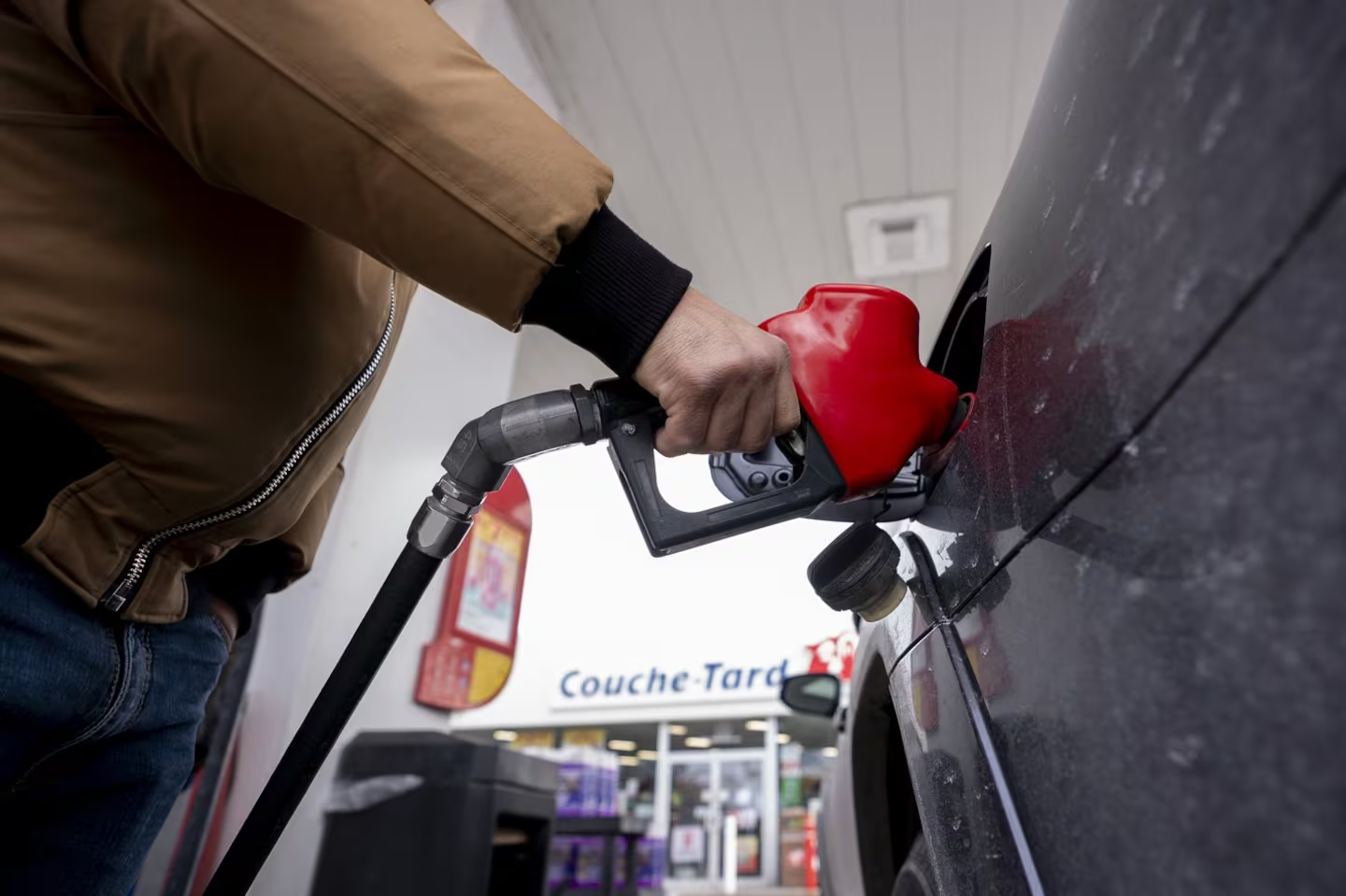
As gasoline prices continue climbing across Canada, more motorists are making trips to First Nations-owned gas stations in search of lower fuel costs, with some drivers saving as much as 30 to 40 cents per litre depending on location and eligibility.
In communities such as Hagersville and the Six Nations of the Grand River territory, many drivers say the rising cost of fuel is encouraging them to consider on-reserve gas stations as a practical option to reduce expenses.
However, experts note that how much drivers actually save depends on several factors, including whether they hold a status card, the distance travelled, fuel efficiency and local tax rules.
At New Credit Variety & Gas Bar near Hagersville, Ontario, motorists have been stopping to take advantage of lower prices while travelling through the area. Some drivers say the savings are worthwhile if they are already nearby, but not necessarily worth making a long trip solely for cheaper fuel.
Across Canada, tax exemptions available to many First Nations-owned businesses allow on-reserve stations to offer lower prices compared to off-reserve competitors. In most provinces, these businesses are exempt from certain provincial fuel taxes and portions of sales taxes, allowing savings to be passed on to customers.
Status card holders often benefit from even deeper discounts due to additional personal tax exemptions available under federal law.
This week at a gas station on Six Nations territory, regular fuel was reportedly selling for approximately $1.59 per litre for non-status customers and about $1.44 per litre for status card holders. Nearby off-reserve stations were charging close to $1.80 per litre for regular gasoline.
Although the federal government recently suspended the federal excise tax on gasoline amid rising prices, taxes still account for a significant portion of fuel costs in provinces like Ontario. Drivers continue paying provincial gas taxes, harmonized sales taxes and clean fuel standard charges, all of which impact prices at the pump.
On-reserve gas stations are generally exempt from provincial gas taxes and the provincial portion of HST, though most still pay clean fuel standard charges.
Fuel savings also vary widely between provinces. In places such as Alberta, where fuel taxes are already relatively low, the price gap between reserve and non-reserve stations tends to be smaller. In contrast, provinces like British Columbia, where fuel taxes are significantly higher, often see more dramatic savings on reserve lands.
Industry observers say drivers should carefully calculate whether travelling longer distances for cheaper gas is actually worthwhile. While a short detour could save between $10 and $15 on a full tank, long drives to reach cheaper fuel may offset those savings through additional fuel consumption.
Despite regional differences, gasoline prices across Canada continue to be influenced by global events and market instability. According to CAA data, the national average price of regular gasoline has surged from 141.8 cents per litre in February to approximately 185.1 cents per litre today, following global energy disruptions linked to the conflict involving Iran earlier this year.