

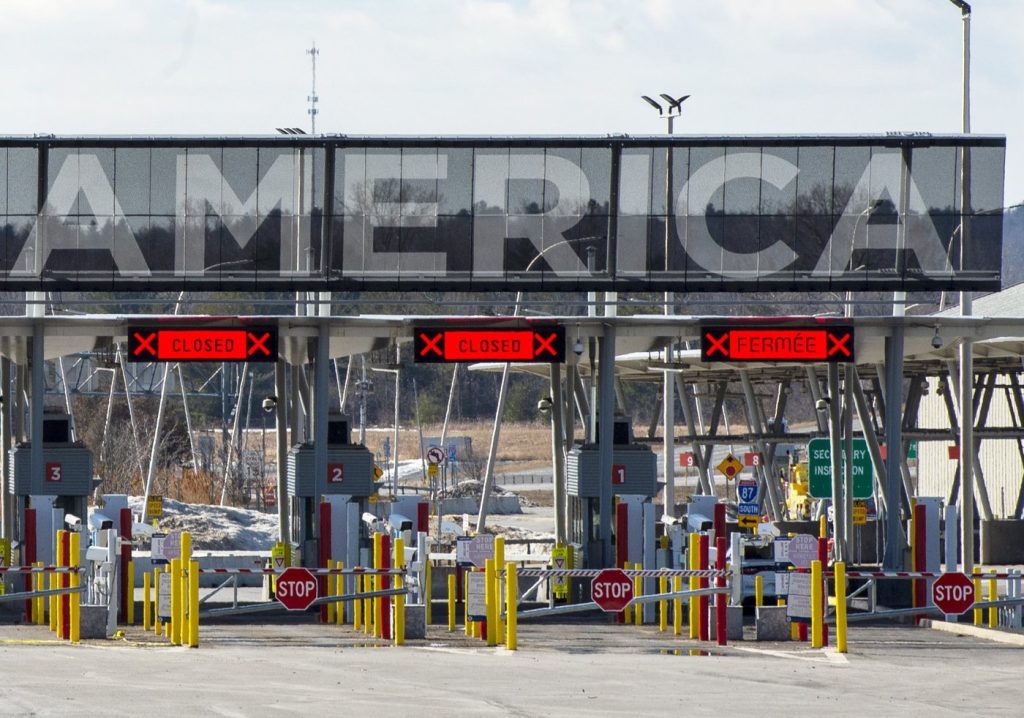
A heartbreaking case along the Canada–U.S. border is raising renewed concerns about migrant safety after a Brazilian woman died of hypothermia in a remote wooded area of Quebec, following multiple failed attempts to enter Canada through official crossings.
According to a coroner’s report signed by Donald Nicole, the 36-year-old woman likely succumbed to extreme cold around January 15, 2024, after entering Canada through a forested region near Coaticook, Quebec. The report paints a stark picture of isolation and vulnerability, with temperatures in the area plunging as low as -14°C during that period.
Environment Canada data confirmed the harsh conditions, with readings hovering between -6°C and -14°C in mid-January. Alone and exposed, the woman is believed to have spent an extended period outdoors before succumbing to the cold.
Her body was not discovered until April 2024, months after her death, when it was found in a wooded area and authorities were alerted. Police later confirmed she had died within hours of being located.
Investigators revealed that the woman had attempted to enter Canada at official border crossings on three separate occasions—January 7, 10, and 11—at Stanstead, Newport, and Buffalo. Each time, she was turned away by the Canada Border Services Agency. Shortly thereafter, she appears to have made a desperate attempt to cross through an unguarded rural route.
The coroner’s findings indicate no signs of trauma, foul play, or substance involvement. An autopsy conducted in Montreal found no injuries or medical conditions that could explain her death, leading officials to conclude it was accidental, caused by prolonged exposure to freezing temperatures.
The case has reignited debate about the risks faced by migrants navigating increasingly complex and restrictive border systems. Frantz André, a retired businessman and migrant support advocate, said the tragedy highlights the dangers for individuals repeatedly denied entry.
“This is not normal,” he said, expressing concern that similar incidents continue to occur. He pointed to a comparable case in January 2023, when a man was found dead near Roxham Road under similar circumstances, also believed to have died from hypothermia while attempting a border crossing.
Authorities were eventually able to identify the woman through DNA matching conducted by Canada’s National Centre for Missing Persons and Unidentified Remains in collaboration with the U.S. Federal Bureau of Investigation.
While the official ruling classifies the death as accidental, the broader implications are far more complex. The case underscores the human cost of migration barriers and the difficult choices faced by individuals seeking entry into Canada under uncertain and often desperate conditions.
For the woman’s family, the coroner’s findings may bring some closure. But for advocates and policymakers alike, the tragedy serves as a stark reminder that behind every statistic is a life—and a story—that deserves attention.