

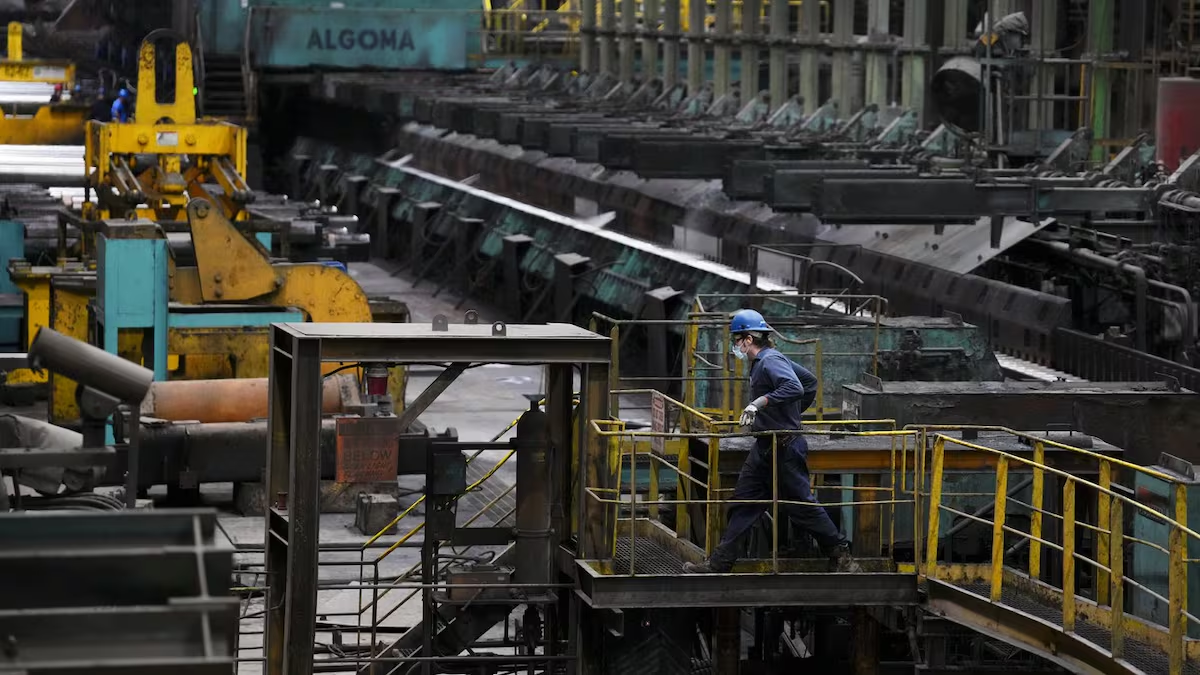
SAULT STE. MARIE — Hundreds of workers at Algoma Steel are preparing for an uncertain future as layoffs begin to take effect, marking a difficult turning point for employees and the broader community.
The layoffs, first announced in December, officially begin Monday, with an estimated 300 workers expected to be impacted initially, followed by additional reductions in the coming weeks. While not all of the roughly 1,000 affected employees will leave immediately, the reality of job losses has already begun to settle in for many.
Union representatives have spent weeks navigating the complex process of determining which workers will remain, with decisions guided strictly by seniority rules outlined in the collective agreement. Officials say the process has been both meticulous and emotionally challenging, as they work to ensure fairness while dealing with the human impact of each decision.
Support services in the region are now preparing for a surge in demand. The Power Action Centre, which has been offering training and employment guidance since January, has already registered more than 400 workers and expects that number to grow significantly once layoffs fully take effect.
To assist affected workers, employment support programs are being expanded, including on-site sessions to help individuals understand Employment Insurance (EI) eligibility and register for benefits. Community organizations are also stepping up efforts to guide workers through retraining opportunities and career transitions.
A recent federal decision to extend special Employment Insurance measures has provided some relief. The extension gives workers additional time to decide whether to accept severance packages or retain recall rights with the company, offering a crucial buffer during an already stressful period.
Although some employees have already retired or left the company, the layoffs still represent a major shift for the local workforce. For many families, the coming weeks will be defined by tough decisions, financial uncertainty and the challenge of starting over.
Despite the difficulties ahead, union leaders and community agencies emphasize that support systems are in place to help workers navigate the transition — but acknowledge that the emotional and economic impact will be felt across the region.