

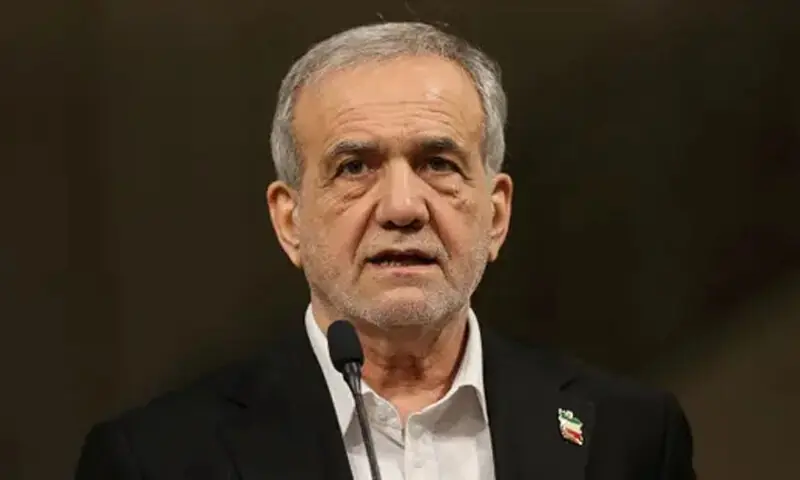
Iran’s leadership has called on India to use its position as chair of the BRICS bloc to play a stronger diplomatic role in the escalating conflict involving Iran, the United States and Israel.
According to Iranian government statements, Iranian President Masoud Pezeshkian raised the issue during a telephone conversation with Indian Prime Minister Narendra Modi on March 12. Iranian Foreign Minister Seyed Abbas Araghchi also discussed the matter with India’s External Affairs Minister S. Jaishankar during a separate call.
Tehran has urged New Delhi to lead what it described as a “strong and constructive” response from the BRICS group as tensions continue to rise in West Asia. The conflict has already disrupted global shipping routes and energy supplies, increasing pressure on international markets.
Iranian officials said Pezeshkian told Modi that Iran did not initiate the conflict and had no interest in prolonging it. However, he defended Tehran’s strikes on U.S. military bases in the region, describing them as acts of self-defence.
According to the Iranian readout of the conversation, Modi expressed concern about the growing tensions and reiterated that India considers itself a friend of Iran. He reportedly emphasized the importance of diplomacy and said a wider regional conflict would not serve the interests of any country.
The request for BRICS involvement highlights a complex diplomatic situation for India. The group expanded recently to include new members such as Iran and the United Arab Emirates, both of which now find themselves on opposing sides of the conflict following Iranian strikes that reportedly hit targets in UAE territory.
So far, the BRICS bloc has not issued any joint statement on the conflict under India’s current chairmanship. This contrasts with last year when the group, then chaired by Brazil, released statements expressing concern over earlier U.S.–Israeli military actions against Iran.
India’s position has also been complicated by its diplomatic relations with several parties involved in the crisis. Just days before the conflict began, Modi voiced strong support for Israel during remarks delivered to the Israeli parliament. After Iran carried out retaliatory strikes on U.S. bases in Gulf countries, India expressed solidarity with the affected Arab states but avoided directly naming Iran.
Meanwhile, other founding BRICS members — including Brazil, Russia, China and South Africa — have individually criticized the earlier U.S.–Israeli strikes.
Diplomatic sources say discussions are underway behind the scenes to develop a common BRICS position, but progress has been slow due to differing national interests among member states.
The conflict has also had economic repercussions for India, particularly in the energy sector. Disruptions in the Strait of Hormuz have affected the flow of energy supplies. India imports more than 60 per cent of its liquefied petroleum gas needs, and the vast majority of those shipments pass through the strait.
The resulting supply disruptions have begun to affect domestic markets, including restaurants and hospitality businesses that rely heavily on LPG supplies. Analysts say the situation places additional pressure on India as it attempts to balance diplomatic ties with both Western partners and countries in West Asia.