

A retired Canadian military commander says the United States may have underestimated Iran’s ability to sustain and adapt its military response as the conflict in the Middle East continues to escalate.
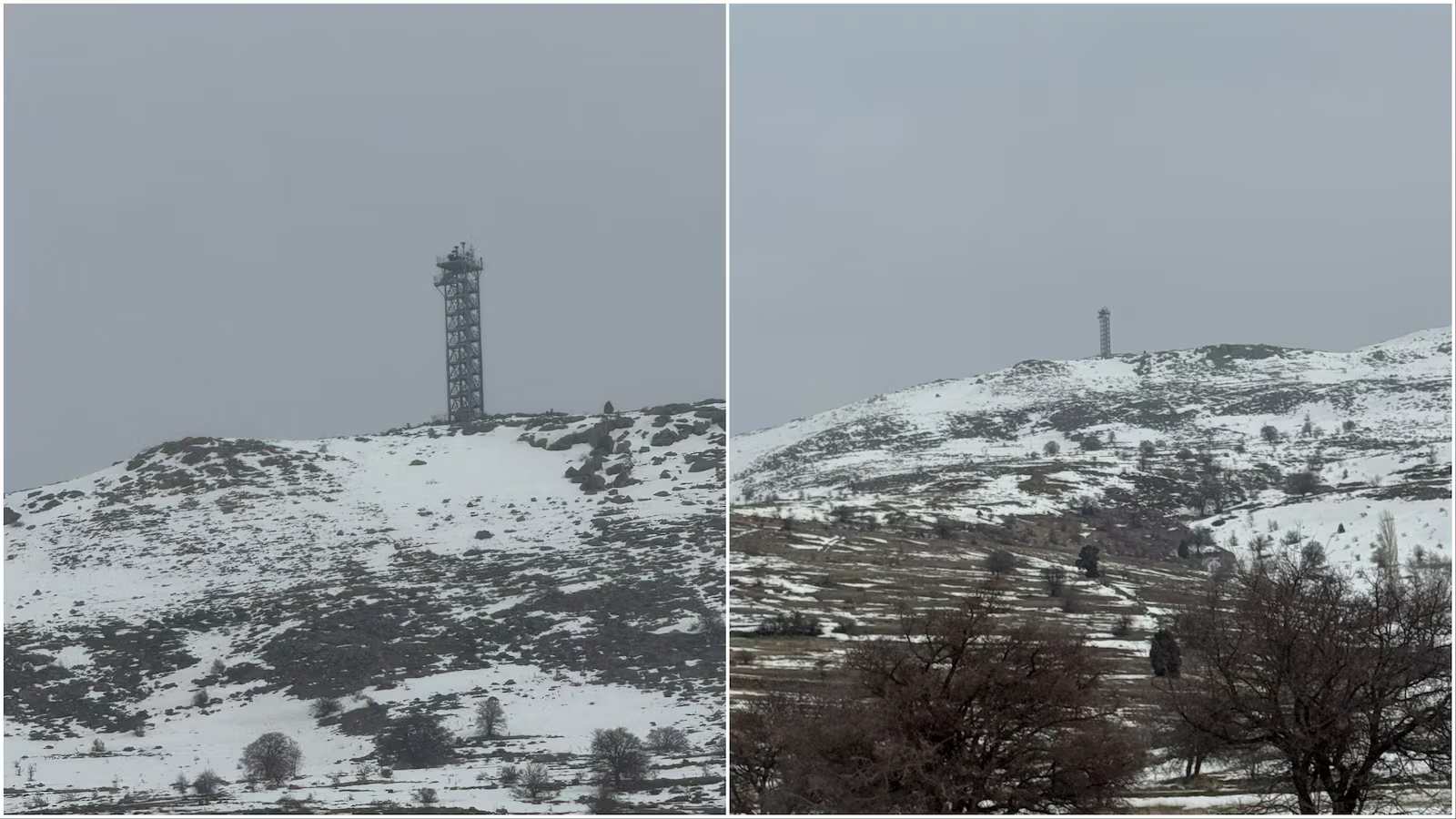
High above the Turkish city of Malatya sits the Kurecik Radar Base, a key NATO early-warning facility located nearly 2,000 metres above sea level. The base plays an important role in detecting ballistic missiles across the region and has become increasingly significant during the ongoing conflict involving Iran.
According to Turkish officials, a U.S. Patriot missile defence system was recently deployed to the facility after two missiles launched from Iran were intercepted. A third missile was reportedly shot down on Friday, highlighting the growing importance of regional defence infrastructure.
Residents in nearby communities say the presence of such installations brings both reassurance and risk. Mehmet, a shop owner in Malatya, said people in the area are aware of the tensions but remain calm, expressing confidence in the country’s ability to defend itself if necessary.
Turkish officials say Iran has denied responsibility for the missile launches. Hakan Fidan said the discrepancy between Iran’s statements and the reported attacks is being discussed through diplomatic and military channels.
While missile attacks have slowed in recent days, Iranian forces continue to conduct targeted strikes using missiles and drones. Iranian authorities have said their operations are aimed at the United States, Israel and allied countries in the region. Some neighbouring Gulf states have already reported damage to hotels, businesses and oil facilities.
Retired Canadian major-general David Fraser, a former NATO commander in Afghanistan, said the conflict is evolving into what he described as a “war of economics.” While U.S. and Israeli weapons systems are more advanced, they are significantly more expensive than the drones Iran is deploying.
Fraser noted that intercepting relatively inexpensive drones with advanced missile systems creates a major cost imbalance. He said the price of destroying a single drone can be dozens of times higher than the cost of producing it, making the defence effort effective but financially inefficient.
Despite facing stronger military technology, Iran has continued to maintain pressure using tactics that rely on lower-cost weapons and strategic choke points such as the Strait of Hormuz. Disruptions in this vital shipping route have raised concerns about global energy supplies and international trade.
Fraser also suggested that U.S. military planners may have underestimated Iran’s ability to sustain the conflict. He said Iran appears to be adapting its strategy in ways similar to other modern conflicts, using drones, targeted strikes and economic pressure points to offset technological disadvantages.
Meanwhile, Donald Trump has called on international allies to help secure the Strait of Hormuz and ensure safe passage for global shipping. However, it remains unclear whether other nations are prepared to participate in patrol operations in the strategically sensitive waterway.
As the conflict continues, military analysts say the situation remains unpredictable, with regional defence systems and international alliances playing a crucial role in containing further escalation.