

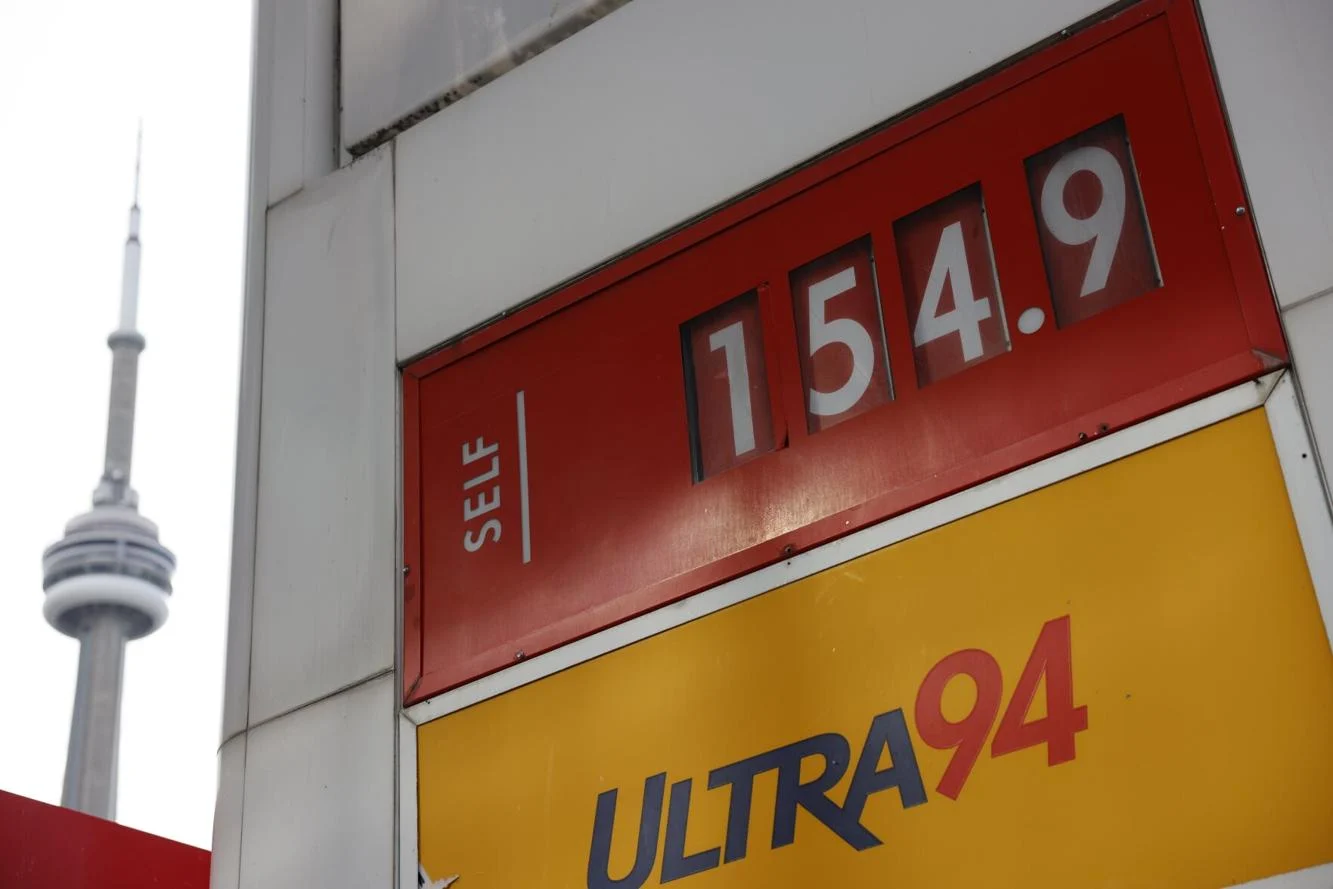
Gasoline prices across the Greater Toronto Area are rising rapidly as escalating conflict in the Middle East continues to disrupt global oil markets, with analysts warning that fuel costs could eventually exceed $2 per litre if the crisis drags on. According to energy analyst Dan McTeague, the price of gasoline in the Toronto region has already climbed from about $1.34 per litre to nearly $1.59 in recent days, reflecting sharp swings in global crude oil prices since the war began following military strikes involving the United States and Israel against Iran on Feb. 28. Global oil benchmarks surged dramatically after the conflict intensified, with West Texas Intermediate crude jumping from about $67 to nearly $120 per barrel before easing slightly, while Brent crude followed a similar path with steep increases. Analysts say the market volatility is being driven largely by disruptions to shipping routes through the Strait of Hormuz, a critical waterway that normally carries about 20 per cent of the world’s oil supply. If the conflict continues into April and crude prices approach or exceed historic highs—such as the $145 per barrel record set in 2008—McTeague estimates fuel prices in the Toronto area could climb as high as $2.15 to $2.20 per litre. Other analysts say the situation remains unpredictable, with Patrick De Haan noting that while record prices were once considered unlikely, the rapid escalation of the conflict has already pushed oil above $100 per barrel and could send it even higher if fighting spreads further across the region. Economic experts warn that sustained energy price increases would have widespread consequences beyond the pump. Higher fuel costs could ripple across the Canadian economy, raising transportation expenses, increasing prices for goods delivered by truck, and potentially adding surcharges to airline tickets. Pedro Antunes said a surge in oil prices may boost revenues for Canada’s energy sector but would likely strain household budgets as gasoline prices reduce consumers’ spending power. Supply chain specialists also note that transportation costs play a major role in product pricing because roughly 70 per cent of freight in Canada moves by truck, meaning prolonged increases in fuel prices could eventually drive up the cost of food, consumer goods and travel. Analysts say the situation will remain volatile as long as uncertainty persists around the duration and geographic spread of the conflict, leaving drivers and businesses closely watching global developments that continue to influence prices at the pump.