

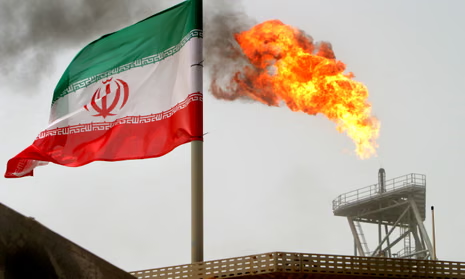
The escalating conflict involving Iran has sent immediate shockwaves through the global economy, with energy markets, financial systems and trade routes reacting sharply to the growing instability in the Middle East.
The most visible impact has been in oil markets. Prices surged following coordinated U.S.–Israeli strikes and Iran’s retaliatory attacks, driven largely by concerns over potential disruptions in the Strait of Hormuz. This narrow waterway handles roughly one-fifth of the world’s oil shipments. Even without a formal closure, heightened security risks, increased insurance costs and hesitancy among shipping operators have tightened supply expectations. Analysts warn that if tensions persist or worsen, crude prices could climb significantly higher, putting renewed pressure on global inflation.
Higher oil prices ripple through economies quickly. Fuel, transportation and production costs rise, affecting everything from grocery prices to manufacturing expenses. For countries already grappling with inflation and fragile economic recoveries, sustained energy price increases could complicate monetary policy decisions and slow growth.
Financial markets have also responded with volatility. Investors typically shift toward so-called safe-haven assets such as gold, government bonds and the U.S. dollar during geopolitical crises. Equity markets in several regions have experienced fluctuations as traders reassess risk exposure. Gulf markets have faced particular strain, reflecting proximity to the conflict and concerns about infrastructure security.
Trade and transportation networks are under additional pressure. Missile and drone activity across parts of the Gulf has disrupted air travel and increased uncertainty for shipping routes. Delays in commercial aviation and maritime traffic can interrupt global supply chains, adding to costs for exporters and importers. In a tightly connected global economy, even localized disruptions can produce widespread consequences.
Energy producers outside the immediate conflict zone have moved to stabilize markets. OPEC+ has signalled modest production increases in an effort to offset supply concerns. However, analysts caution that incremental output adjustments may not fully counteract the risk premium built into prices if tensions remain high or if shipping lanes face further restrictions.
The longer-term economic consequences will depend largely on the duration and intensity of the conflict. A short-lived escalation may produce temporary price spikes and market turbulence. A prolonged confrontation, particularly one that significantly restricts oil flows or damages infrastructure, could have deeper implications for global growth.
Emerging economies are especially vulnerable to energy price shocks, as higher import costs can weaken currencies and strain public finances. Advanced economies may also face renewed inflationary pressures, forcing central banks to balance growth concerns against price stability.
At the same time, geopolitical uncertainty often dampens business confidence. Companies may delay investment decisions, and consumers may reduce discretionary spending amid concerns about economic stability. Even without direct physical disruption to trade routes, uncertainty itself can weigh on economic momentum.
The situation remains fluid, and markets are closely monitoring diplomatic signals as well as military developments. While global economic systems are more diversified and resilient than in past decades, the strategic importance of Middle Eastern energy ensures that any sustained instability in the region carries global consequences.
How the world economy ultimately absorbs this shock will depend on whether tensions ease through diplomacy or deepen into a broader and longer-lasting confrontation.