

The federal Conservatives are urging the Liberal government to review and restrict health-care coverage for certain refugee claimants, arguing the current system is costly and unfair to Canadian taxpayers.
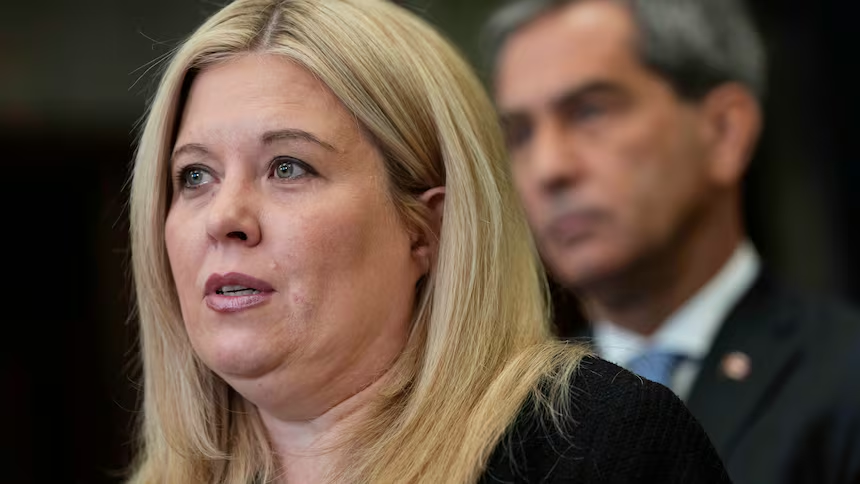
MP Michelle Rempel Garner introduced an Opposition day motion asking the House of Commons to examine the benefits provided under the Interim Federal Health Program (IFHP) and limit coverage for failed asylum claimants to “emergency, life-saving health care only.” The motion also calls for policies to immediately expel foreign nationals convicted of serious crimes in Canada.
The IFHP provides asylum seekers and certain protected persons with federally funded health coverage similar to what Canadians receive under provincial plans. Basic services include hospital care, physician visits, ambulance services and diagnostic testing. Supplemental coverage extends to counselling, mobility aids, urgent dental care and limited vision services.
Rempel Garner argues that supplemental benefits go beyond what many Canadians receive through public systems, particularly for services such as dental and vision care.
Program costs have risen sharply in recent years. A report from the Parliamentary Budget Officer found spending grew from $211 million in 2020-21 to $896 million in 2024-25, driven by both higher beneficiary numbers and rising per-person costs. The report projects the program could reach $1.5 billion annually by 2029-30, although growth is expected to moderate compared to previous years.
A major factor behind the increase is the surge in asylum claims. Claims rose from roughly 19,000 in 2020 to more than 190,000 by 2024 before declining last year. However, a backlog of nearly 300,000 pending cases continues to add pressure to the system.
Immigration Minister Lena Metlege Diab defended the government’s approach, pointing to provisions in Bill C-12 that she says will help officials reject ineligible or fraudulent claims more quickly. She also noted that asylum claims have declined in the past year and that other immigration streams, including student visas and temporary foreign worker permits, have been reduced.
Beginning May 1, cost-containment measures will take effect. IFHP recipients will be required to pay a $4 fee per prescription and 30 per cent of the cost of supplemental services such as dental and counselling. The Parliamentary Budget Officer’s projections did not account for these upcoming changes.
Conservative Leader Pierre Poilievre criticized the government’s immigration record in the House, accusing it of allowing refugee claims to balloon. Prime Minister Mark Carney responded that asylum claims have dropped by roughly one-third over the past year and that the government has tightened overall immigration levels.
The debate echoes a similar controversy from 2012, when former prime minister Stephen Harper restricted most supplemental IFHP benefits. The Federal Court later ruled those cuts unconstitutional, describing them as cruel and unusual treatment. The policy was reversed after the Liberals formed government in 2015.
Critics of the current Conservative motion argue that rising costs stem largely from administrative backlogs rather than refugee misuse. NDP MP Jenny Kwan told the House that accelerating fair and timely claim processing — rather than cutting health care — would address the core issue.
The motion is expected to be voted on in the House, setting up a renewed political clash over immigration levels, refugee protections and public spending.