

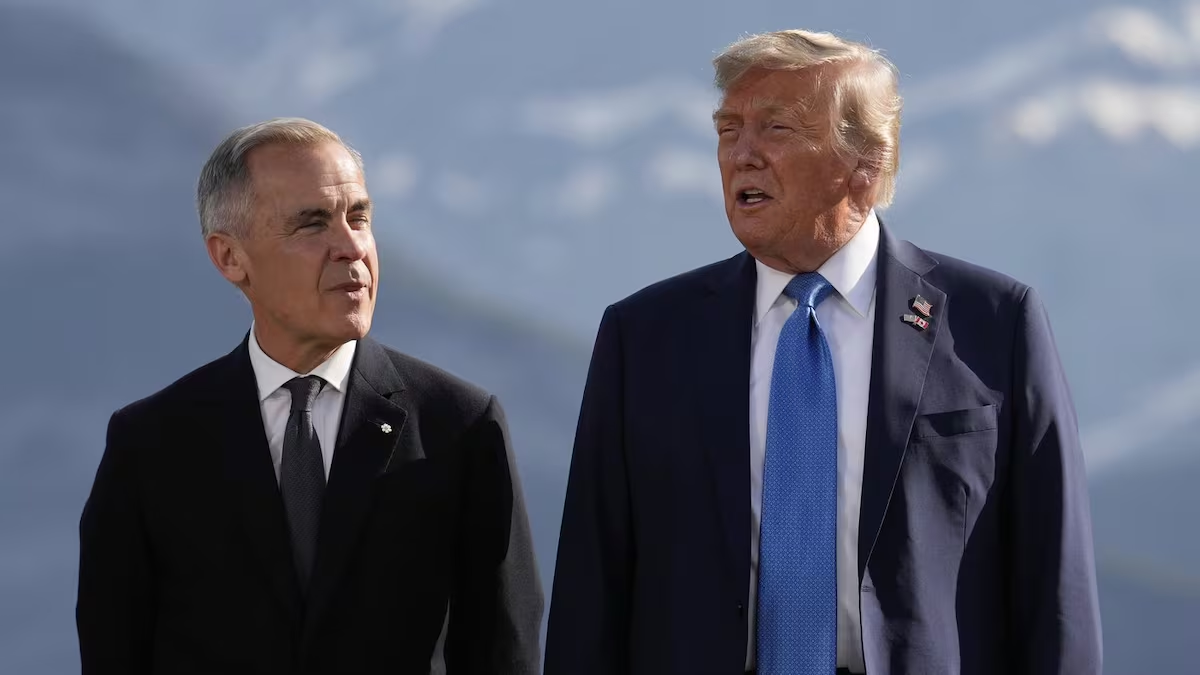
U.S. President Donald Trump on Friday signalled support for a new Canada–China trade agreement, tempering earlier criticism from his administration and marking a shift in tone on Ottawa’s renewed engagement with Beijing.
Asked about the deal reached this week between Prime Minister Mark Carney and Chinese President Xi Jinping, Trump told reporters at the White House that Canada was right to pursue it. “If you can get a deal with China, you should do that,” he said.
The comments contrasted with warnings issued earlier in the day by U.S. Trade Representative Jamieson Greer, who said Canada could come to regret the agreement, citing U.S. tariffs on Chinese vehicles as protection for American auto workers.
Trump, however, reiterated his openness to Chinese automakers building vehicles in the United States, saying such investment would create American jobs.
Carney travelled to Beijing this week to help ease strained relations and secure what he described as a “preliminary but landmark” agreement aimed at ending a tariff dispute. The deal centres on a trade-off between agriculture and electric vehicles.
Under the agreement, Canada will allow up to 49,000 Chinese-made electric vehicles into the country annually at a tariff rate of 6.1 per cent, down from 100 per cent. In return, China will sharply reduce or eliminate duties on several major Canadian agricultural exports.
China is expected to cut tariffs on Canadian canola seed to 15 per cent from as high as 84 per cent by March 1. Additional Chinese tariffs on Canadian canola meal, lobster, crab and peas will be lifted from March through at least the end of the year, though canola oil will remain subject to a 100 per cent tariff.
The deal restores access to a critical export market for Canada, with China ranking as the country’s second-largest buyer of canola and the world’s largest market for peas.
Carney said the limited opening to Chinese EVs would improve affordability, noting that half of the vehicles are expected to be priced below $35,000 by 2030 and that the import cap represents less than three per cent of Canada’s auto market.
The agreement has drawn mixed reactions at home, with Ontario Premier Doug Ford warning of potential risks to Canadian workers, while Saskatchewan Premier Scott Moe welcomed the deal as a major gain for agricultural exporters.