

ANKARA, Turkey — Pakistan and Afghanistan have agreed to uphold a fragile ceasefire following peace talks in Istanbul, Turkey’s Foreign Ministry announced Thursday, marking a rare moment of progress after weeks of deadly border clashes.
The agreement came after earlier talks between the two sides collapsed, with tensions flaring along the border where recent crossfire left dozens of soldiers and civilians dead. The latest round, mediated by Turkey and Qatar, produced a joint statement committing both countries to maintain calm and establish a monitoring and verification mechanism to penalize any violations.
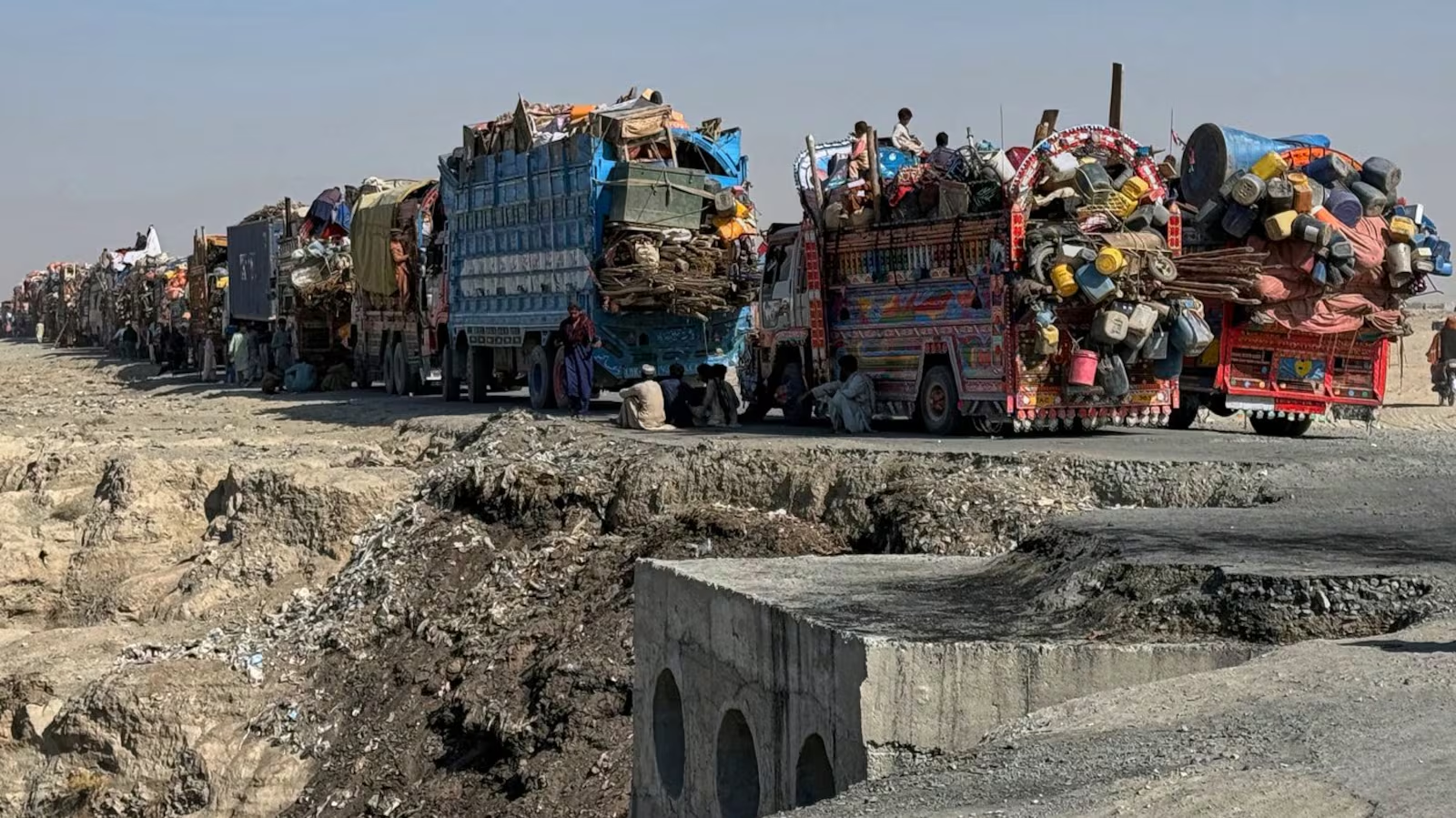
Representatives from both nations will meet again in Istanbul on November 6 to finalize the ceasefire framework and discuss the reopening of major border crossings, which remain closed, leaving hundreds of trucks and refugees stranded.
Afghan government spokesman Zabihullah Mujahid said Kabul remains committed to diplomacy and peaceful coexistence. “The Islamic Emirate seeks good relations with neighboring countries, including Pakistan, based on mutual respect and non-interference,” he said.
Pakistan’s Defence Minister Khawaja Mohammad Asif confirmed that Islamabad chose to give peace “another chance” at the request of mediators. Pakistani officials told the Associated Press that their delegation emphasized that Afghan territory must not be used for “terrorism” against Pakistan.
The recent escalation began after explosions in Kabul, which Afghanistan blamed on Pakistani airstrikes targeting suspected militants. Afghan officials claimed to have killed 58 Pakistani soldiers in retaliation, while Islamabad said 23 of its troops died in operations against militant hideouts across the border.
Pakistan’s Army Chief Field Marshal Asim Munir reiterated in Peshawar that the country “seeks peace with all neighbors, including Afghanistan,” but warned that cross-border terrorism from Afghan soil would not be tolerated.
Despite ongoing mistrust, Thursday’s agreement has revived cautious optimism that diplomacy — with the help of Turkey and Qatar — may prevent further bloodshed between the two uneasy neighbors, whose relations have been strained since the Taliban’s return to power in 2021.