

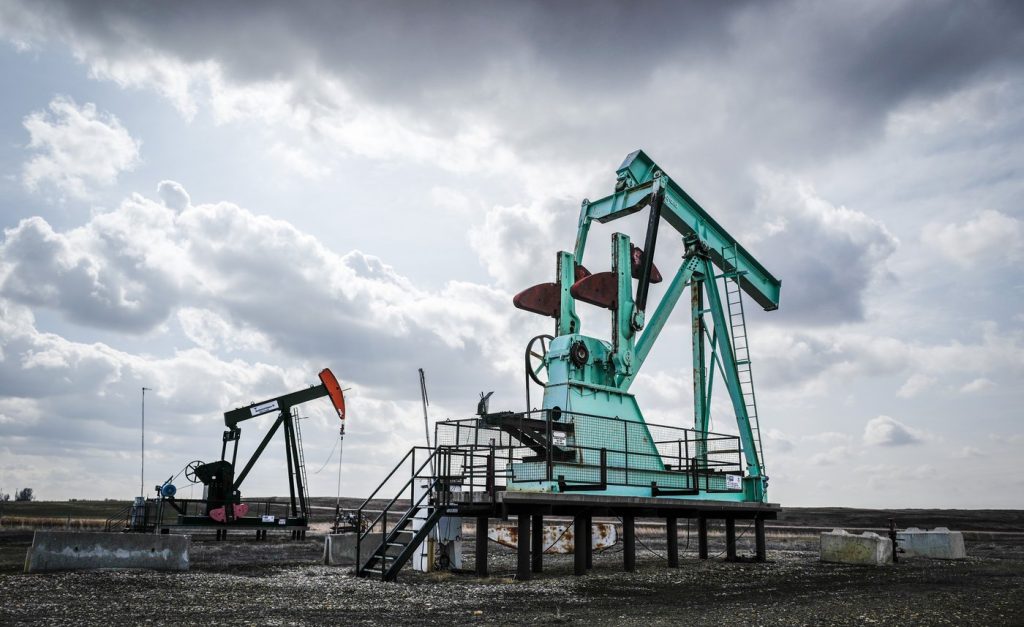
A new international report warns that Canada and other major fossil fuel producers are putting the world on a path toward breaching critical climate thresholds, with 2030 production levels projected to be far beyond what is compatible with the Paris Agreement.
The Production Gap Report, produced by three leading climate research organizations, finds that countries are planning to produce 120 per cent more fossil fuels by 2030 than is consistent with limiting global warming to 1.5°C, and 77 per cent more than aligned with a two-degree target. The report calls this growing gap a “collective failure” that will require deeper and costlier reductions in the future.
Coal shows the largest mismatch, with 2030 production forecast to be 500 per cent above 1.5°C-compatible levels, but oil and gas are also projected to significantly overshoot. Canada ranks among the top four oil producers in the world and plans one of the steepest increases in oil output by 2030, behind only Saudi Arabia, Brazil, the U.S., and Nigeria.
Critics say the report may even underestimate Canada’s contribution, since it was based on 2023 projections and does not account for recently approved liquefied natural gas projects. “We’re moving in the wrong direction on both fronts,” said Nichole Dusyk, a senior policy adviser with the International Institute for Sustainable Development, referring to both production growth and climate policy rollbacks.
Prime Minister Mark Carney’s government has repealed the consumer carbon price, paused the EV sales mandate, and has not recommitted to Canada’s 2030 and 2035 emissions reduction targets. Meanwhile, Alberta has frozen its industrial carbon price for 2026, and Saskatchewan is extending the life of its coal plants.
The report also singled out Canada’s billions in public investment in the Trans Mountain pipeline as an example of continued fossil fuel infrastructure “lock-in.” Dusyk warned that Canadians are already paying the price through rising insurance costs, property losses from wildfires and floods, and declining quality of life.
Despite the grim findings, the report highlights positive momentum in clean energy, with record-breaking deployments of solar, batteries, and electric vehicles and steep declines in renewable energy costs — offering a potential path forward if governments accelerate the transition.