

Canada’s decision to drop many of its retaliatory tariffs on U.S. goods could bring price relief to consumers, but labour unions are warning it could weaken the country’s hand in trade talks and put Canadian workers at risk.
Prime Minister Mark Carney announced Friday that, beginning September 1, Canada will roll back certain counter-tariffs to align with U.S. exemptions under the Canada-United States-Mexico Agreement. The move effectively restores free trade on most goods between the two countries, though tariffs on steel, aluminum, and autos will remain in place as negotiations continue.
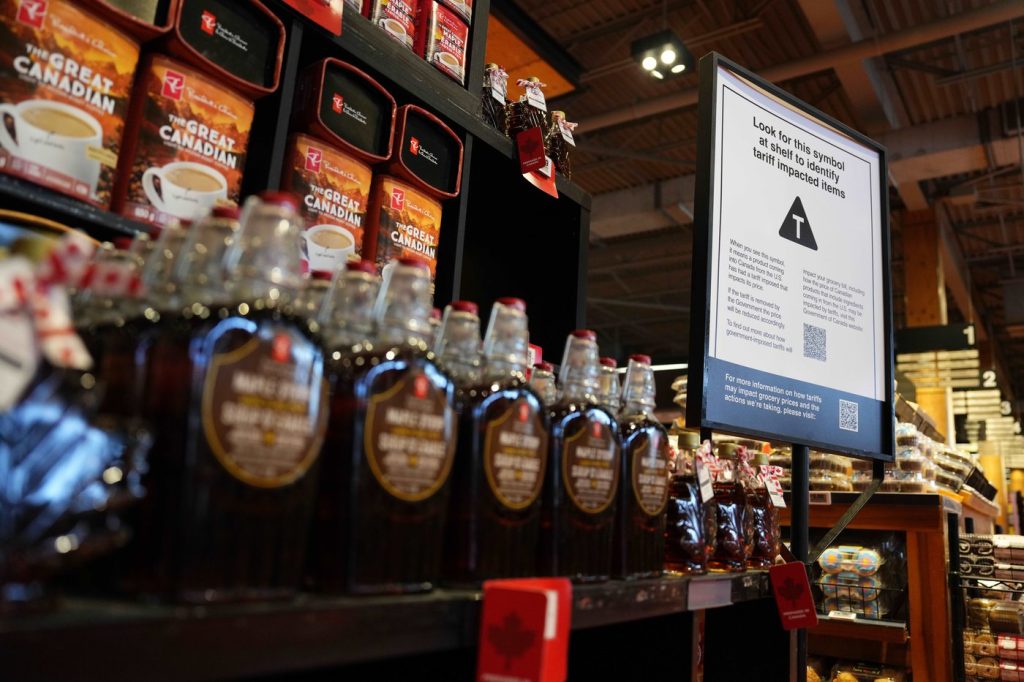
Economists say the biggest winners could be consumers and major grocers who rely on U.S. imports. Colin Mang, an assistant professor at McMaster University, said the change should lead to lower prices on items such as orange juice, spices, nuts, and baked goods. While families may not see dramatic price cuts overnight, Mang noted that meaningful savings could accumulate over time. Still, he cautioned that it remains to be seen whether retailers will pass on the savings or pocket the difference after having raised prices 10 to 15 per cent when tariffs were imposed.
Business groups, including the Canadian Federation of Independent Business, praised the move. CFIB vice-president Corinne Pohlmann said many small businesses had been struggling under counter-tariffs, and dropping them could help ease financial pressure. She suggested that funds collected by Ottawa from these tariffs should be returned to businesses to support recovery and growth.
Unions, however, voiced sharp opposition. Unifor president Lana Payne called the rollback “a betrayal of Canadian workers,” warning it sends the wrong message in the face of ongoing U.S. trade aggression. The Canadian Labour Congress echoed those concerns, with Chris Roberts saying the government should resist U.S. pressure rather than accept tariffs as a “new normal.” Both unions argue that easing counter-tariffs risks shifting investment, production, and jobs to the United States, harming Canada’s long-term economic security.
As Canada attempts to balance consumer relief with the protection of key industries, the debate underscores the difficult trade-offs in managing cross-border tensions. For shoppers, the policy could mean cheaper grocery bills. For workers, unions warn it could mean fewer paycheques.