

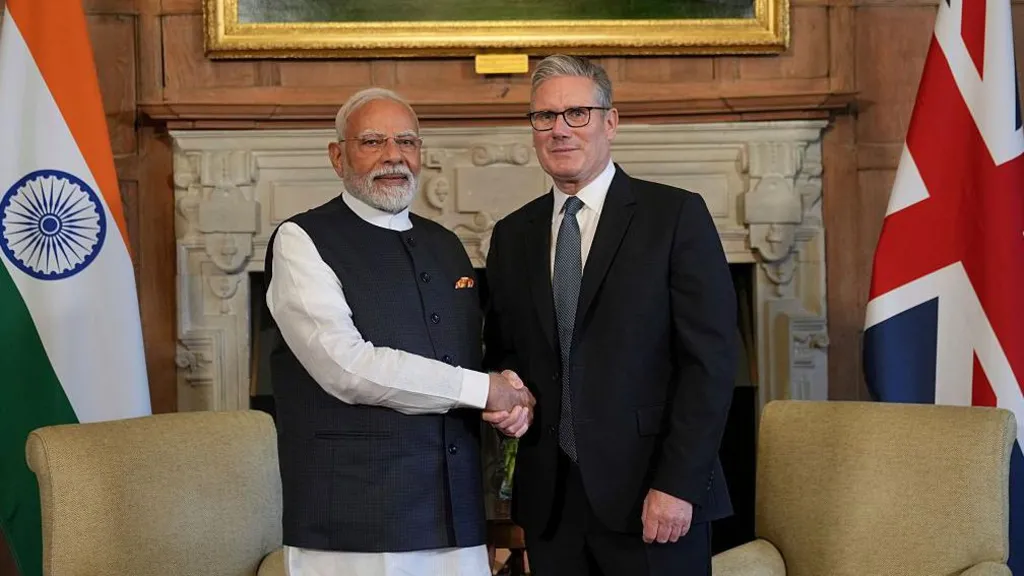
British companies are set to gain unprecedented access to India’s vast government procurement market, valued at around £38bn, under the recently signed India-UK free trade agreement. The deal allows UK suppliers to compete almost on par with Indian firms for high-value tenders across sectors like transport, green energy, and infrastructure—areas long shielded from foreign competition.
The agreement reduces the minimum contract value for foreign bids, opening opportunities for UK companies to target smaller projects such as rural roads, solar installations for schools, and IT systems for government offices. Goods from the UK with just 20% domestic input will qualify for procurement preference, enabling firms to source up to 80% of components internationally.
Trade experts say this level of access is “far greater” than what India has offered in previous deals, setting a new benchmark. However, challenges loom. UK suppliers will still be classified as Class-II local suppliers, with Indian firms retaining preferential Class-I status. Price competitiveness may be a sticking point, as British companies typically operate at higher costs than their Indian counterparts.
More significantly, delayed payments and weak contract enforcement—long-standing issues in Indian public procurement—pose serious risks. Studies show pending dues to suppliers often exceed total annual procurement, creating liquidity strains that drive smaller players out of the market. India’s low global ranking on contract enforcement underscores these concerns, despite recent reforms like online procurement portals and dispute resolution systems.
While the agreement promotes transparency, it sidesteps key issues such as payment discipline and penalties for non-compliance, and excludes dispute settlement provisions for the first four years. Analysts say UK firms will need to adapt to India’s complex procurement landscape, learning to navigate regulatory hurdles and bidding strategies over time.
Despite the obstacles, the move signals a major policy shift by the Indian government, opening a sector historically reserved for local small and medium enterprises. It reflects growing confidence that domestic companies can compete globally and hints at further concessions India might offer in future trade deals, potentially raising accountability and procurement standards to international levels.