

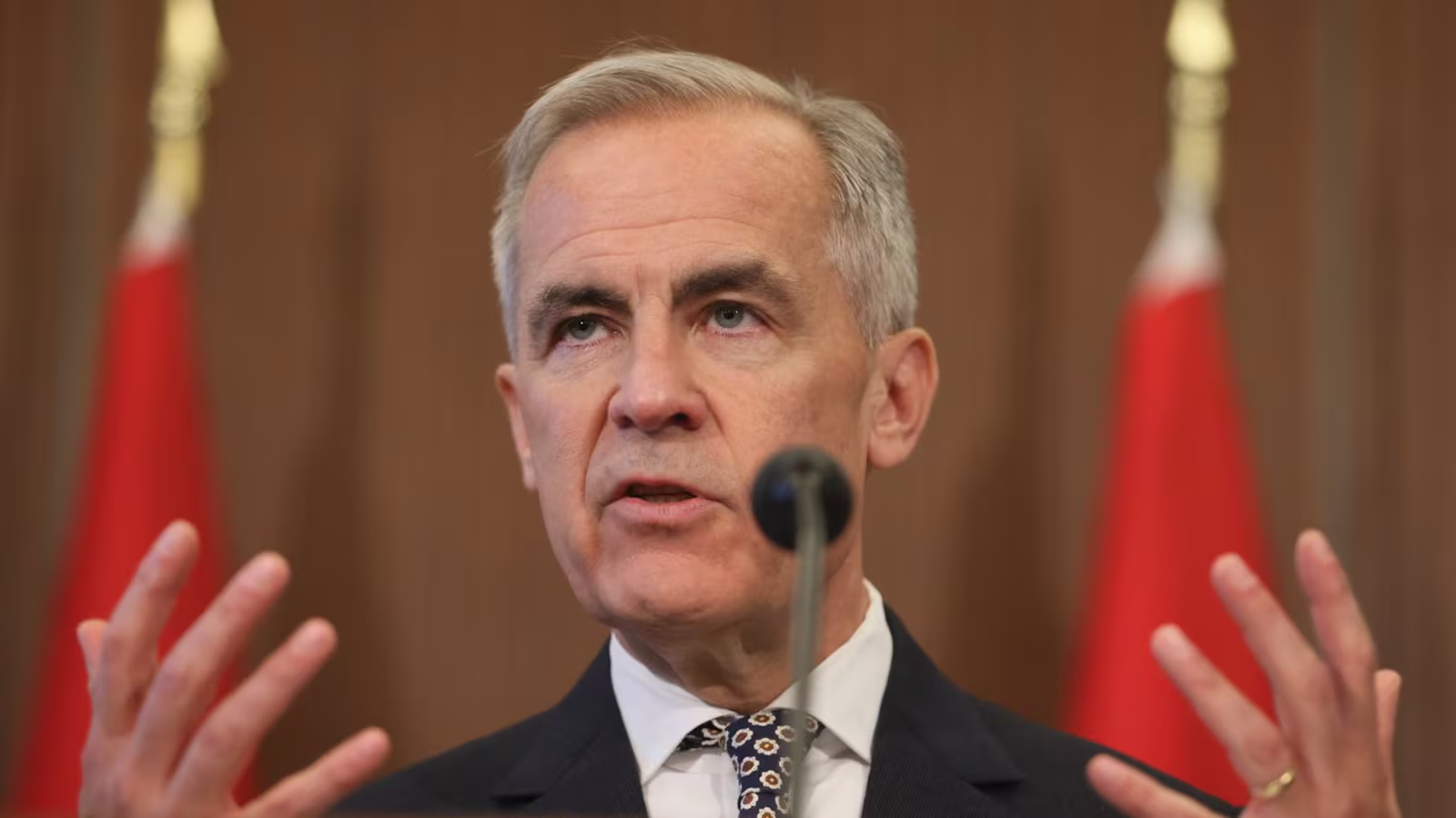
In a rare show of cross-party cooperation, the minority Liberal government passed its flagship major projects legislation in the House of Commons with Conservative support Friday evening, moving the bill one step closer to becoming law ahead of Canada Day.
Known as Bill C-5, or the “One Canadian Economy Act,” the legislation empowers the federal government to fast-track select infrastructure and industrial projects deemed to be in the national interest. Prime Minister Mark Carney described the bill as central to Canada’s domestic response to U.S. tariffs and economic pressure. “This is what makes us different from the United States, this is what makes us more independent from the United States, this is what’s going to move us forward,” Carney said at a press conference on Parliament Hill.
Introduced just two weeks ago on June 6, the bill sped through committee review in under eight hours, drawing criticism from opposition parties for its rapid pace. Carney defended the urgency, stating, “We are in a crisis. And if you don’t think we’re in a crisis, go to Sault Ste. Marie, go to Hamilton, go to Windsor.”
Friday’s vote followed a procedural twist, where the Speaker ruled that the bill’s two components—one addressing internal trade barriers and the other dealing with fast-tracking major projects—required separate votes. This allowed Bloc Québécois and NDP MPs to support the trade section while opposing the projects provision, citing concerns over federal overreach and environmental oversight.
Following the votes, Carney crossed the floor to shake hands with Conservative House Leader Andrew Scheer and Deputy Leader Melissa Lantsman, marking a symbolic moment of bipartisan cooperation. Scheer later told reporters that while Conservatives had reservations, “if there’s even a glimmer of hope that something might come from this, then Conservatives aren’t going to stand in the way.”
Provincial and territorial premiers have already submitted their wish lists of projects to be prioritized, though Carney noted no national shortlist has yet been finalized. “The real work begins now,” he said, emphasizing the need for deeper dialogue to select projects that fulfill national criteria. However, divisions have already emerged. Alberta Premier Danielle Smith supports a pipeline through British Columbia, while B.C. Premier David Eby pushed back, citing the lack of a project proponent or funding. Eby also asserted B.C.’s critical role in Canada’s economic strategy, calling his province the “economic engine of the new Canada” and demanding fair infrastructure investment from Ottawa.
The bill has faced strong criticism from Indigenous leaders and environmental organizations, who argue it gives the federal cabinet too much latitude to override existing laws. In response, the House transport committee made amendments, including removing the Indian Act from a list of laws that could be bypassed during project approvals. Still, First Nations groups warn the legislation could infringe on constitutionally protected rights and may trigger legal challenges.
Carney addressed those concerns directly, pledging the creation of an Indigenous advisory council within the new Major Projects Office to ensure Section 35 rights are upheld. He also announced plans to hold full-day summits with First Nations, Inuit, and Métis leaders, alongside Crown-Indigenous Relations Minister Rebecca Alty and Indigenous Services Minister Mandy Gull-Masty. “Consultation, co-operation, engagement and participation are at the heart of this bill,” Carney said.
Minister Alty called the summits a “serious sign” of the government’s intent to protect Indigenous rights. Meanwhile, the Canadian Chamber of Commerce praised the bill’s passage, calling it a timely response to economic disruption caused by U.S. President Donald Trump’s ongoing trade war. TC Energy CEO Francois Poirier echoed support, calling it “a bipartisan step forward” but noted that Canada’s regulatory framework still needs broader reform.
With the House of Commons now adjourned until September, the bill heads to the Senate, which will sit until June 27. If passed, Bill C-5 will become law by July 1—marking a dramatic and swift move by Carney’s government to assert federal leadership over the direction of Canada’s economic future.