

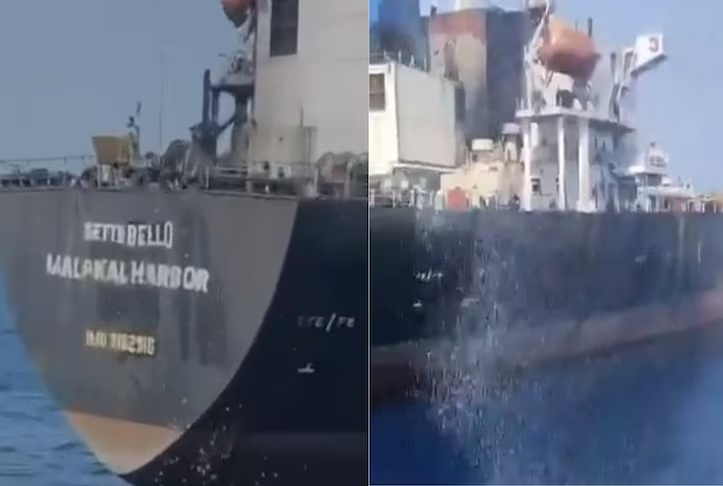
India has formally protested to the United States following an attack on a commercial oil tanker in the Gulf of Oman that left several Indian sailors missing and heightened concerns about the deteriorating security situation in one of the world’s most important maritime corridors.
In a significant diplomatic move, India’s Ministry of External Affairs summoned Jason Meeks to express New Delhi’s concerns over the incident involving the tanker Settebello. The protest, known diplomatically as a demarche, was delivered by Nagaraj Naidu following the attack.
According to Indian officials, the vessel was carrying 24 Indian crew members when it came under attack off the coast of Oman. Of those onboard, 21 Indian nationals have been rescued, while three remain missing. Search and rescue operations are continuing with the assistance of Omani authorities and the Indian Embassy in Oman.
In a strongly worded statement, the Indian government condemned the attack and described the growing threats to commercial shipping in the region as deeply concerning. New Delhi warned that the escalating conflict in the Middle East is creating serious risks for civilian vessels, international commerce, and the safety of seafarers from many nations.
India reiterated its call for an immediate reduction in regional tensions and urged all parties to pursue diplomatic solutions. The government stressed that attacks on commercial shipping and civilian infrastructure must cease and that freedom of navigation through international waterways must be restored in accordance with international law.
The incident occurred near the strategically vital Strait of Hormuz, a narrow waterway through which a substantial portion of the world’s oil and natural gas supplies are transported. Reports indicate that a missile struck the vessel’s engine room, causing significant damage and a fire onboard while the tanker was sailing northeast of the Omani port of Sohar.
The United States military provided a different account of the incident. In a statement, United States Central Command said American forces had disabled the Palau-flagged tanker after it allegedly failed to comply with instructions related to a maritime blockade. According to the U.S. military, precision munitions were used to target the ship’s engine room after repeated warnings were ignored.
The attack comes amid escalating tensions in the Gulf region. The United States has recently intensified enforcement measures against vessels suspected of violating restrictions linked to regional security operations. Washington maintains that such actions are necessary to protect maritime security and enforce international sanctions and blockade measures.
However, the growing confrontation has increased risks for commercial shipping. Several vessels have reportedly been caught in incidents across the Gulf of Oman and surrounding waters in recent months, creating concerns among shipping companies, insurers, and governments whose citizens work aboard international merchant vessels.
India has a particularly strong interest in maritime security because thousands of Indian seafarers serve on commercial ships operating throughout the Middle East and global shipping routes. As one of the world’s largest suppliers of maritime labour, India closely monitors developments affecting the safety of its citizens at sea.
The latest incident has added another layer of complexity to an already volatile regional situation. While rescue efforts continue for the missing crew members, India is expected to maintain diplomatic engagement with both regional governments and international partners to ensure the safety of Indian nationals and to support efforts aimed at restoring stability in the Gulf.
The attack underscores the growing challenges facing global shipping as geopolitical tensions continue to affect one of the world’s busiest and most strategically important waterways. For India, the immediate priority remains the safe recovery of the missing sailors and the protection of its citizens working in international maritime operations.