

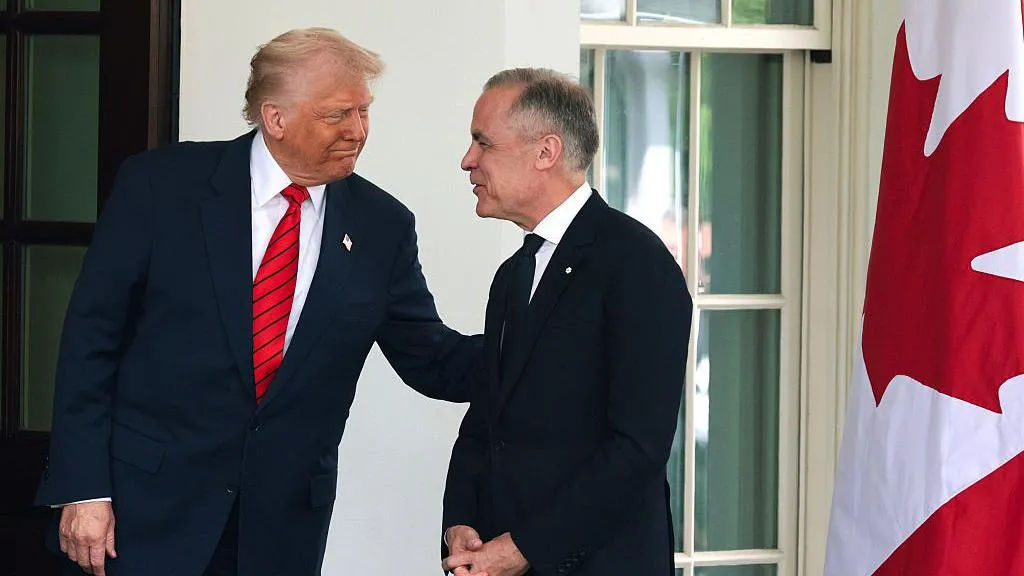
As world leaders arrive in Alberta for this year’s G7 summit, it’s clear that the war between Israel and Iran—not the planned topics—will take center stage.
What was meant to be a carefully choreographed meeting marking the G7’s 50th anniversary has shifted dramatically. Originally intended to focus on economic stability, trade relations, and climate resilience, the agenda is now dominated by the Middle East crisis following Israel’s unprecedented strikes on Iranian military and nuclear targets.
Hosted by Canada’s new Prime Minister Mark Carney in the secluded mountain setting of Kananaskis, the summit brings together leaders from the U.S., U.K., France, Germany, Italy, Japan, and the EU. But rather than showcasing unity, the gathering may instead reveal just how fractured the alliance has become.
Reactions to Israel’s actions vary sharply. U.S. President Donald Trump has applauded the strikes as “excellent,” while leaders such as France’s Emmanuel Macron and the U.K.’s Keir Starmer have urged restraint. Japan’s Prime Minister Shigeru Ishiba went further, condemning the attack as “intolerable.”
Managing these tensions will test Carney’s diplomatic skills. His original plan was to avoid controversy, even scrapping the tradition of a joint communiqué to sidestep disputes with Trump. Instead, the summit will likely end with a series of short, non-binding statements on specific issues like artificial intelligence, supply chains, and wildfire mitigation.
Yet, overshadowing these priorities are urgent questions about regional security, oil price volatility, and the broader implications of escalating conflict between Israel and Iran. With the potential for global economic fallout, G7 leaders are expected to dedicate considerable time to coordinated responses—though achieving consensus may prove elusive.
Adding to the summit’s complexity is the presence of President Trump, whose preference for bilateral deals over multilateral diplomacy has long disrupted G7 cohesion. Observers say many leaders are watching closely to see whether Trump arrives ready to collaborate or create new divides.
This will be Trump’s first in-person appearance at a major multilateral forum since returning to the White House. His posture toward the group—especially on issues like Russia, trade tariffs, and Ukraine—could determine the summit’s tone.
Ukraine’s President Volodymyr Zelenskyy will join the final day of talks to press for tighter sanctions on Russia. His allies want to lower the price cap on Russian oil and expand sanctions targeting Moscow’s energy and banking sectors. But Trump’s stance on these proposals remains unclear.
Meanwhile, leaders from Mexico, India, South Africa, Australia, Brazil, and South Korea will participate in side meetings, likely avoiding direct confrontation but signaling growing interest from the Global South in reshaping global governance.
Despite the diplomatic minefield, Carney hopes to contain tensions with soft-power gestures—including a possible golf outing at the nearby Kananaskis course, aimed at keeping Trump engaged.
Whether this gathering proves the G7’s enduring relevance—or its increasing dysfunction—will depend on how its members navigate a world where consensus is no longer guaranteed.