

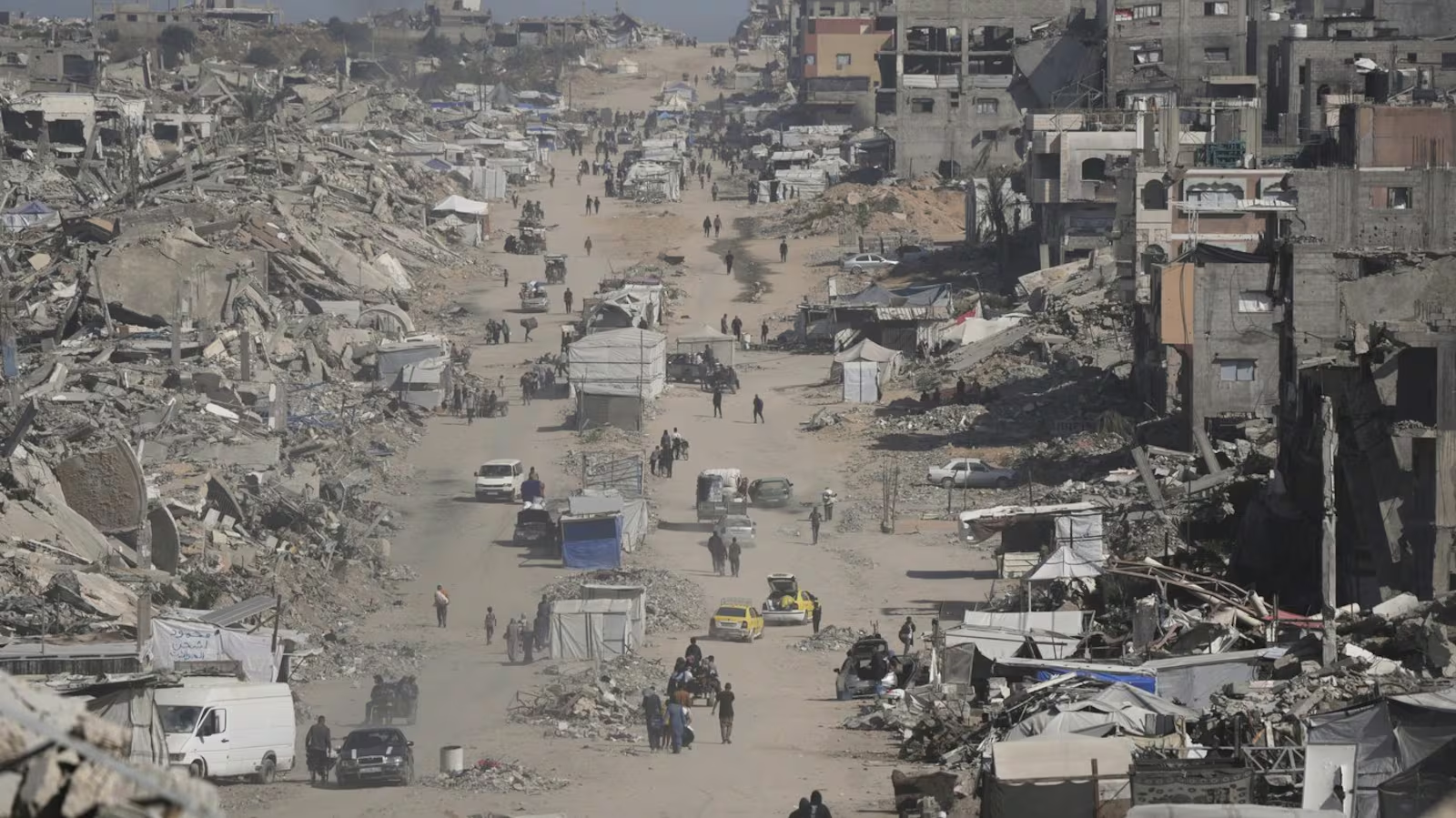
At least 82 Palestinians were killed in Israeli airstrikes across Gaza on Friday, coinciding with the conclusion of U.S. President Donald Trump’s regional Middle East tour — a trip that ended without a ceasefire deal or new humanitarian aid corridor for the war-ravaged territory.
Strikes battered northern Gaza and targeted areas near Deir al-Balah and Khan Younis overnight and into the morning. According to health officials, 66 bodies were brought to the Indonesian Hospital, while another 16 were taken to Nasser Hospital, pushing the death toll higher amid one of the most intense waves of bombardment in recent weeks.
The Israeli military offered no immediate comment, but government officials later suggested the attacks were preparatory strikes ahead of a larger ground operation — part of Prime Minister Benjamin Netanyahu’s stated mission to eliminate Hamas.
“We’re days away from entering Gaza with great strength to complete the mission,” Netanyahu said earlier this week, promising the destruction of Hamas unless hostages are released.
The latest strikes triggered panic across Jabaliya and Beit Lahiya, where families fled on foot and donkey carts through rising smoke and rubble-strewn streets.
“The army entered upon us, bombing, killing. We got out of the house with difficulty,” said Feisal Al-Attar, a displaced resident of Beit Lahiya. “We didn’t take anything — only our lives.”
Trump Skips Israel, Urges Action from Gulf States
Trump’s whirlwind Middle East visit — which excluded Israel — raised expectations of renewed diplomatic efforts, especially as Gaza enters its third month under blockade, with essential supplies including food, fuel, and medicine choked off by Israeli restrictions.
“We’re looking at Gaza. We’ve got to get that taken care of,” Trump said during a business forum in Abu Dhabi on Friday. “A lot of people are starving. There’s a lot of bad things going on.”
Despite the rhetoric, no ceasefire agreement has emerged, and Trump left the region with no concrete breakthrough.
Meanwhile, a U.S.-backed humanitarian group, the Gaza Humanitarian Foundation, announced plans to begin aid delivery operations by month’s end — led by American military veterans and ex-humanitarian coordinators. However, U.N. agencies and several NGOs have rejected the initiative, arguing it doesn’t meet humanitarian neutrality standards.
Hostage Families Plead for Unity and Urgent Action
As the Israeli Cabinet convened Friday to assess Qatar-hosted negotiations, families of the remaining hostages in Gaza issued an emotional statement, urging Netanyahu to cooperate with Trump’s diplomatic overtures.
“Missing this historic opportunity to bring the hostages home would be a failure remembered in infamy,” read a joint statement from the Hostage Families Forum.
Israel says Hamas still holds 58 hostages, with at least 23 believed to be alive. The war began on October 7, 2023, when Hamas militants killed 1,200 Israelis in a cross-border attack and kidnapped hundreds. In retaliation, Israeli operations have now killed over 53,000 Palestinians, according to Gaza’s Health Ministry — the majority believed to be civilians.
Since Israel ended a temporary ceasefire on March 18, nearly 3,000 more Palestinians have been killed.
A Humanitarian Crisis with No End in Sight
As Gaza reels from relentless airstrikes and suffocating conditions under siege, aid groups warn of catastrophic consequences if humanitarian access isn’t restored immediately.
With hospitals overwhelmed, infrastructure collapsing, and water and food supplies dwindling, international observers are demanding urgent intervention.
Whether Trump’s visit will prove to be a diplomatic stepping stone or another missed opportunity remains uncertain. For the people of Gaza, the only certainty is more suffering — unless the global community acts.