

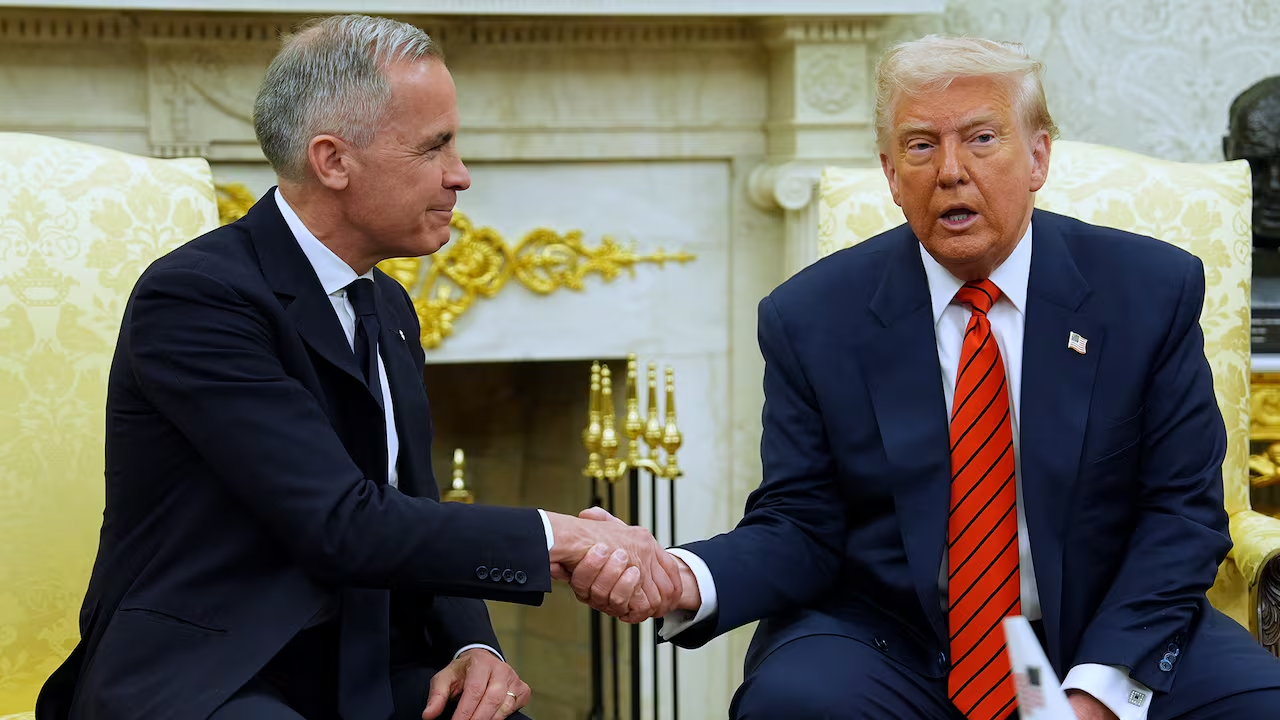
Prime Minister Mark Carney struck an optimistic yet cautious tone following his first official meeting with U.S. President Donald Trump on Tuesday, describing the encounter as constructive while acknowledging that significant work remains to redefine the Canada-U.S. relationship.
The two leaders met for about two hours at the White House, including a public appearance in the Oval Office and a private lunch with key cabinet members and senior staff. This was their first in-person discussion since Carney assumed office on March 14, and it came at a critical time amid heightened trade tensions and unresolved tariff disputes.
Emerging from the meeting, both leaders appeared satisfied with the tone and progress. Trump remarked favorably about Carney, stating there was no tension during their talks. Carney, in turn, described the conversation as the “end of the beginning” of a renewed bilateral effort and pledged to continue dialogue in the coming weeks, including at the upcoming G7 Summit in Alberta this June.
“This meeting was about building a relationship based on mutual respect and shared interests,” Carney said during a post-meeting press conference. “We are now fully engaged, but there is a lot more work to do.”
Carney is expected to brief Canada’s premiers on Wednesday, outlining key points from his discussion with Trump and coordinating next steps. He stressed that Canada would continue to focus on strengthening its own economic and security posture while engaging the U.S. in meaningful negotiations.
Notably, Carney reiterated a firm message of Canadian sovereignty during both private and public remarks, stating, “Canada is not for sale—and it never will be.”
Trade expert Fen Hampson, co-chair of the Expert Group on Canada-U.S. Relations, said Carney now faces a dual challenge: navigating the upcoming 2026 review of the Canada-U.S.-Mexico trade agreement (CUSMA), which Trump has hinted at reopening early, and addressing the more immediate need to reverse punitive U.S. tariffs impacting Canada’s manufacturing sector.
Hampson noted that despite Trump’s insistence that the tariffs would remain for now, the U.S. president is known for abrupt reversals. “We’ve seen him impose tariffs and then suddenly lower or delay them. He could change his stance again,” Hampson said.
He added that the economic impact of these tariffs on the U.S. itself—particularly as its economy shows signs of weakening—could eventually work in Canada’s favour.
Carney also signaled a forthcoming cabinet shuffle ahead of Parliament’s return at the end of the month. Hampson suggested the Prime Minister should prioritize experienced negotiators in these appointments, given the stakes of upcoming trade talks. “He needs people who can manage, yes—but above all, who can negotiate tough,” he said.
Despite the many challenges ahead, Carney emphasized his forward-looking approach: “The question is how we will cooperate going forward to deliver transformational benefits to both our economies.”