

Recent remarks made by Pakistan’s Army Chief, General Asim Munir, regarding Kashmir have drawn sharp criticism in India and reignited tensions between the two nuclear-armed neighbours. His comments came just days before a deadly terrorist attack in Pahalgam, Indian-administered Kashmir, that claimed 26 civilian lives — the deadliest such incident in two decades.
At an event in Islamabad on April 17, Gen Munir referred to Kashmir as Pakistan’s “jugular vein” and emphasized that Pakistan would never abandon its support for Kashmiris “in their heroic struggle against Indian occupation.” He also controversially stated that “we are different from Hindus in every possible way,” a statement that has been widely criticized for its sectarian undertone.
The Indian government has condemned the speech, particularly in light of the April 22 attack in Pahalgam, although no direct evidence linking the remarks to the incident has been presented. Nonetheless, the timing has led Indian officials and analysts to view the speech as inflammatory and possibly emboldening to extremist elements.
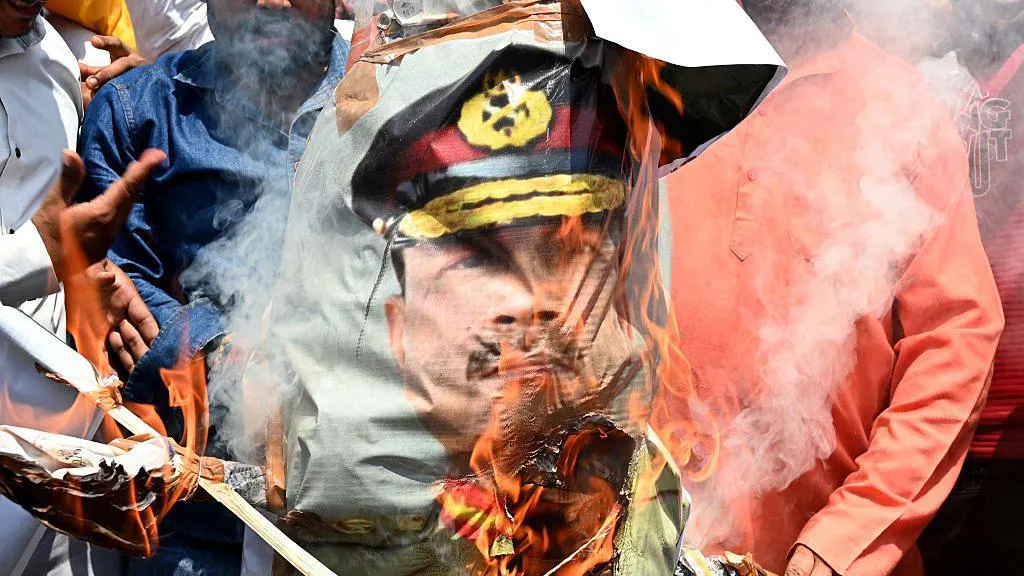
In response, Hindu nationalist groups in India, including VHP and Bajrang Dal, held protests and burned effigies of Gen Munir. India has reiterated its concerns about Pakistan’s alleged support for cross-border militancy, a charge Islamabad denies.
Gen Munir, who became Chief of Army Staff in November 2022, is viewed as Pakistan’s most powerful figure, especially following a political crackdown on supporters of jailed former PM Imran Khan. Unlike his predecessor Gen Qamar Javed Bajwa, who supported backchannel diplomacy and emphasized regional stability, Gen Munir is perceived as adopting a more hardline and assertive stance—both domestically and internationally.
Earlier this year, on Kashmir Solidarity Day (February 5), Munir declared Pakistan was prepared to fight “10 more wars” for Kashmir if needed. His recent rhetoric appears to reinforce a shift from the “Bajwa Doctrine” toward a more confrontational military posture.
Observers say Munir is under pressure to deliver quick, forceful responses amid rising terrorism, economic instability, and regional unease. Analysts warn that his recent tone may escalate hostilities unless tempered by diplomacy.
At home, Munir has strengthened his grip on power through a crackdown on dissent within the military and political circles. Former ISI chief Lt Gen Faiz Hameed, once close to Khan, has been arrested, and other senior figures sidelined.
As diplomatic channels remain tense and the region watches for India’s next move, analysts suggest the coming weeks will be critical in determining whether tensions will escalate further or de-escalate through international mediation.
With over two years remaining in his five-year term, Gen Munir’s decisions now will shape not only his legacy but the trajectory of South Asian stability.