

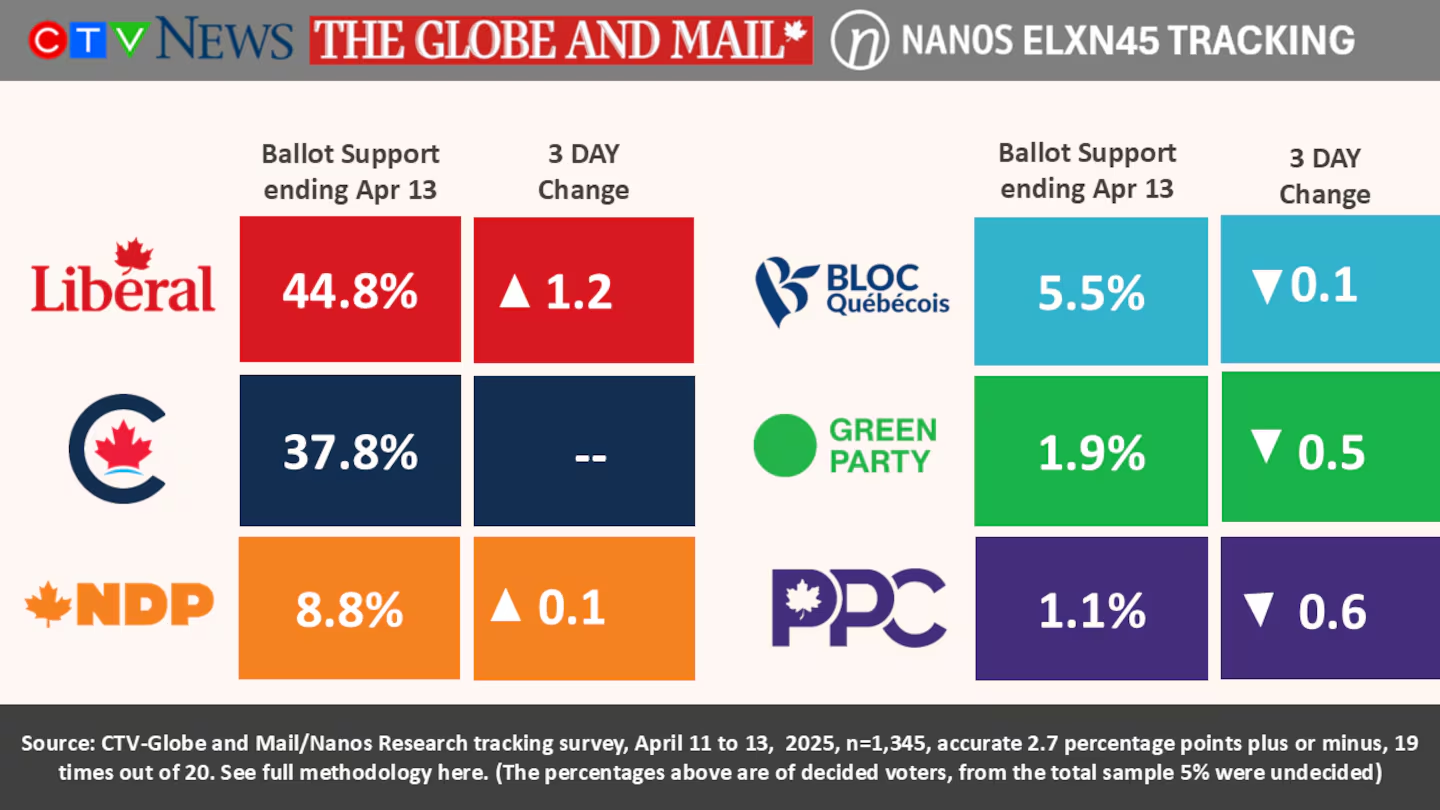
As the federal election campaign enters Day 23, the Liberal Party has expanded its national lead over the Conservatives to seven points, according to the latest polling data from Nanos Research.
The newest three-day rolling average, which ended April 13, shows the Liberals at 45 per cent nationally—up one point from the previous sample—while the Conservatives slipped to 38 per cent. The New Democrats trail in third at nine per cent, followed by the Bloc Québécois at six per cent. The Green Party and People’s Party of Canada continue to hold marginal support at two and one per cent, respectively.
Nanos Research founder Nik Nanos said the gap between the two leading parties has grown modestly over the past week, widening from four points to seven. However, he noted that this is still shy of the 11-point lead the Liberals enjoyed earlier in the campaign. With only days remaining before the highly anticipated French and English leaders’ debates, the polls suggest that the next phase of the campaign could be pivotal.
Regionally, the Liberals remain dominant in key battlegrounds such as Ontario, Quebec, and Atlantic Canada. In Ontario, where the highest number of federal seats are at stake, the Liberals are polling at 52 per cent, well ahead of the Conservatives at 37 per cent. The NDP trails significantly at just five per cent. In Quebec, the Liberals continue to lead with 45 per cent support, ahead of the Bloc Québécois at 24 per cent and the Conservatives at 21. Atlantic Canada shows a similar trend, with the Liberals holding a commanding 17-point lead over the Conservatives—56 to 39 per cent.
Out west, the picture looks different. The Conservatives continue to dominate the Prairies, where they hold 59 per cent support, compared to 28 per cent for the Liberals. In British Columbia, the race is tightening, with the Conservatives at 42 per cent and the Liberals closing in at 40.
Leadership preferences continue to favour Liberal leader Mark Carney, who maintains a comfortable 16-point lead over Conservative leader Pierre Poilievre in terms of who Canadians would prefer as prime minister. Carney is the choice of 50 per cent of respondents, compared to 34 per cent for Poilievre.
The data also shows significant gender and age divides. Women are far more likely to support the Liberals, with 52 per cent indicating they would vote for them, compared to just 29 per cent for the Conservatives. Among men, the Conservatives lead with 47 per cent support versus 38 per cent for the Liberals.
Age continues to play a role in voting preferences. Younger voters under 35 lean slightly toward the Conservatives, while older Canadians, particularly those aged 55 and above, show strong support for the Liberals, with 52 per cent backing Carney’s party compared to 34 per cent for the Conservatives. Among voters aged 35 to 54, the race is closer, but the Liberals still hold a narrow edge at 45 to 40 per cent.
As the campaign nears the crucial debate stage, the latest numbers suggest the Liberals are gaining ground again—but with nearly two weeks to go, momentum remains up for grabs.