

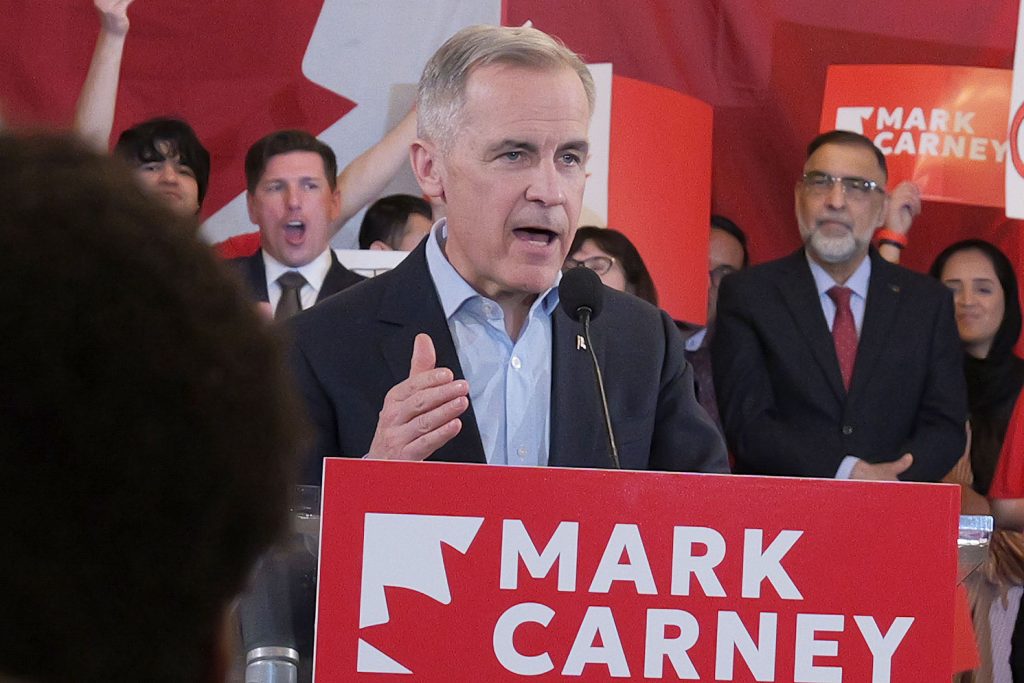
As the third week of the federal election campaign kicks off, party leaders are intensifying efforts in British Columbia, a key battleground province with 43 seats up for grabs. Liberal Leader Mark Carney and Conservative Leader Pierre Poilievre rolled out sharply contrasting policy priorities during separate campaign events Monday, while NDP Leader Jagmeet Singh continued to focus on worker protections and housing reform.
In Victoria, Carney announced bold new environmental conservation initiatives, including the creation of 10 new national parks and marine conservation areas, and 15 new urban parks. Speaking alongside B.C. Premier David Eby, who reaffirmed his support for the NDP’s re-election efforts, Carney also pledged to invest $100 million into a Strategic Water Security Technology Fund aimed at bolstering Canada’s leadership in climate monitoring, AI, and clean water innovation.
“We’re committed to a bold new nature strategy—one that preserves Canada’s unique ecosystems and uses our financial resources for maximum environmental impact,” Carney said.
The Liberals also unveiled targeted senior-focused measures, including temporary flexibility in retirement withdrawals and a one-year increase in the Guaranteed Income Supplement (GIS) for low-income seniors.
Meanwhile, Conservative Leader Pierre Poilievre was in Terrace, B.C., where he focused on accelerating resource project approvals. Poilievre proposed a “one project, one review” model to streamline the approval process for major infrastructure developments. He pledged to launch a single coordinating office across federal and provincial governments and vowed to unblock at least 10 major resource projects currently stalled in regulatory review—including LNG Canada Phase II, a large-scale liquefied natural gas project in northern B.C.
“Projects that create jobs and strengthen our energy sector are trapped in red tape,” Poilievre stated. “We’re going to unlock them—with one permit, one review, and a clear path forward.”
In Toronto, NDP Leader Jagmeet Singh met with Hudson’s Bay employees, advocating that workers receive priority compensation in bankruptcies. Singh emphasized that “wages, benefits, and severance should come before corporate creditors” and reaffirmed the NDP’s housing plan to build three million homes by 2030 through a $16 billion investment.
His plan includes incentives for cities to increase multi-unit housing near transit and support for provincial infrastructure expansion for water and sewage systems needed to sustain new developments.
Elsewhere in the campaign, federal security officials in Ottawa reported a foreign interference operation linked to the Chinese government targeting Liberal Leader Mark Carney. The Security and Intelligence Threats to Elections Task Force confirmed that content critical of Carney was amplified on WeChat by a China-linked news account. The operation highlighted Carney’s positions on U.S.-Canada relations and sought to influence voter perception of his credentials.
As the campaign intensifies, Monday also marked the deadline for candidate nominations, though Elections Canada is still processing final paperwork and has not confirmed how many parties will field full slates.
With party leaders targeting different corners of British Columbia and advancing divergent priorities, the province continues to hold a pivotal role in shaping the outcome of the April 28 federal election.