

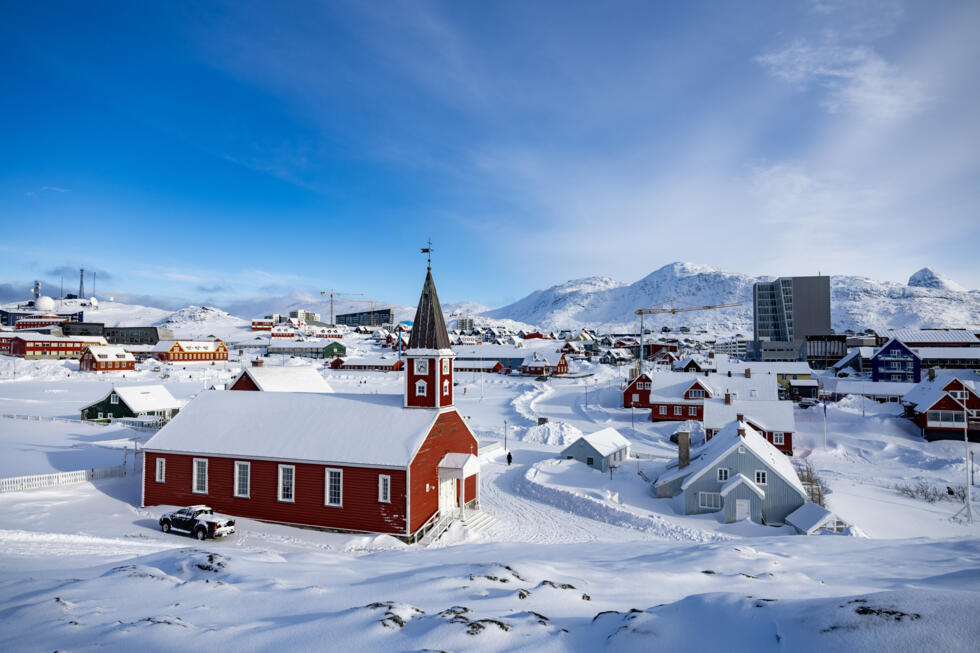
Greenland’s Prime Minister Mute Bourup Egede issued a firm rebuke on Wednesday, asserting that “Greenland is ours” and cannot be claimed or purchased. His statement came in response to U.S. President Donald Trump, who vowed to secure the Arctic island for the United States “one way or another,” while also pledging support for its people’s right to self-determination.
In a bilingual post on Facebook in Greenlandic and Danish, Egede emphasized that Greenlanders are neither American nor Danish but a distinct people with the sole authority to shape their future. “Greenland belongs to us,” he wrote.
The exchange follows Trump’s Tuesday address to Congress, just days before Greenland’s parliamentary elections on March 11. “We stand firmly behind your right to chart your own course,” Trump told Greenlanders, extending an invitation to join the U.S. “We’ll protect you, enrich you, and elevate Greenland to heights you’ve never imagined.”
Yet Trump also doubled down on his ambition to acquire the territory from Denmark, a key U.S. ally, calling it vital for “international world security.” “We’re collaborating with all parties to make it happen,” he said. “One way or another, it’ll be ours.”
Greenlanders, who inhabit a sprawling, resource-rich island under Denmark’s semi-autonomous governance, have reacted with alarm and indignation to Trump’s rhetoric. Many view it as a threat to their homeland’s sovereignty.
Denmark’s Foreign Minister Lars Lokke Rasmussen, speaking from Finland on Wednesday, downplayed the notion that Greenlanders would trade Danish ties for U.S. control. Highlighting Trump’s nod to self-determination as the speech’s core takeaway, he expressed confidence in Greenland’s trajectory. “They’re seeking a looser, more equitable relationship with Denmark, and we’re working toward that,” Lokke said. He stressed the need for next week’s elections to proceed without foreign meddling.
Trump’s remarks have sparked a surge of debate in Greenland, amplifying calls for full independence from Denmark as a central issue in the campaign. With voters heading to the polls in less than a week, the island’s future—and who gets to define it—has taken center stage.