

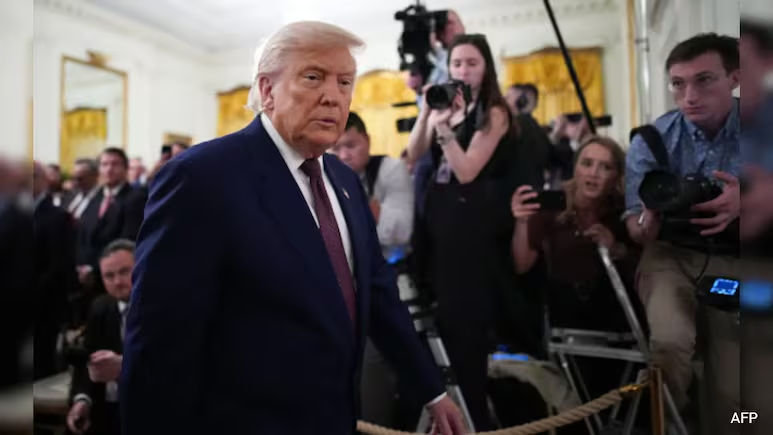
Amid delicate diplomatic efforts aimed at easing tensions in the Middle East, U.S. President Donald Trump issued a blunt warning to Iran, declaring that any attempt to shut down the Strait of Hormuz would have devastating consequences for the Islamic Republic.
Trump’s remarks came while senior American and Iranian officials were meeting in Switzerland in an effort to reduce tensions, secure freedom of navigation in the Strait of Hormuz and lay the groundwork for a broader peace agreement. The first round of talks concluded Monday with mediators Pakistan and Qatar announcing that both sides had agreed to establish a direct communication mechanism to prevent misunderstandings and ensure safe passage for commercial shipping through one of the world’s most important oil routes.
Vice President JD Vance led the U.S. delegation and described the discussions as constructive, saying they had laid the foundation for a potentially successful long-term agreement. The negotiations are part of a 60-day framework established under a preliminary deal reached last week and are expected to continue through technical discussions in the coming weeks.
Despite the diplomatic progress, tensions remained high. In media interviews and social media posts, President Trump reiterated warnings that the United States would respond forcefully if Iran attempted to interfere with shipping in the Strait of Hormuz or if Tehran-backed Hezbollah militants escalated fighting in Lebanon. He warned that any disruption to maritime traffic would bring severe consequences and pledged an even stronger response than previous military actions.
Iran responded sharply, with chief negotiator Mohammad Bagher Ghalibaf cautioning Washington against provocative statements and insisting that Iran’s armed forces were prepared to defend the country and respond decisively to any threats.
The Strait of Hormuz remains a focal point in the negotiations because nearly one-fifth of the world’s oil supply passes through the narrow waterway. Rising tensions and fears of disruption have already driven up energy prices, affecting economies around the globe and increasing pressure on leaders to avoid a wider conflict.
While the exchange of harsh rhetoric underscored the fragility of the situation, diplomats viewed the establishment of a communication channel between Washington and Tehran as a significant breakthrough. The mechanism is intended to prevent accidental confrontations and maintain the uninterrupted flow of commercial vessels through the strategic passage.
With technical negotiations continuing and a ceasefire in Lebanon showing signs of holding, hopes remain that diplomacy can avert a broader regional war. Yet the sharp words exchanged by both sides also serve as a reminder that peace efforts are unfolding against a backdrop of deep mistrust and continuing military tensions.