

Pakistan has emerged at the centre of one of the most significant diplomatic developments in recent Middle Eastern history, with Prime Minister Shehbaz Sharif announcing that the United States and Iran will formally sign a landmark peace agreement in Geneva on June 19.
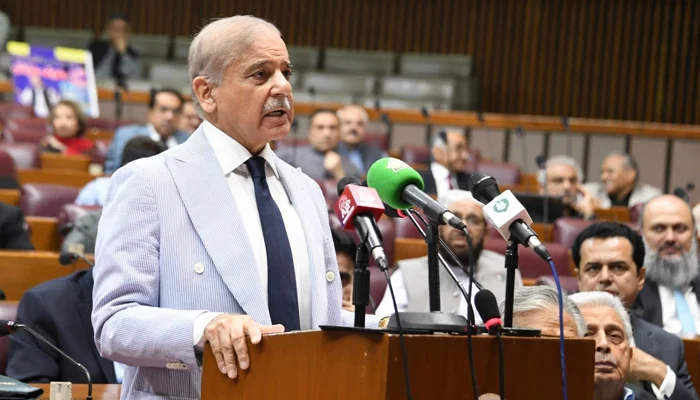
Addressing Pakistan’s National Assembly, Sharif described the breakthrough as a defining moment for international diplomacy and a major triumph for peace after months of conflict that shook the Middle East, disrupted global energy markets, and raised fears of a wider regional war.
Calling the agreement a “historic moment,” the prime minister said the world was witnessing the victory of dialogue, patience, and diplomacy over violence and destruction. He told lawmakers that the agreement would bring an immediate and permanent end to military operations on all fronts, including the conflict linked to Lebanon.
Sharif said that after more than three months of warfare and uncertainty, the prospect of peace offered hope not only to the people directly affected by the conflict but also to the broader international community. He characterized the development as a turning point that future generations would remember as a milestone in efforts to prevent further escalation in the region.
The agreement follows months of intense negotiations involving multiple regional and international actors. While the deal remains a framework that will require further technical discussions and implementation measures, it represents the most significant progress toward ending the conflict since fighting erupted earlier this year.
The prime minister praised the leadership of several countries that contributed to the peace process. He expressed gratitude to Donald Trump, Iranian Supreme Leader Mojtaba Khamenei, and Iranian President Masoud Pezeshkian for their willingness to pursue negotiations despite difficult circumstances.
Special recognition was also given to the leadership of Qatar, Saudi Arabia, Türkiye, and China for their diplomatic efforts. Sharif credited Qatar’s Emir, Saudi Crown Prince Mohammed bin Salman, Turkish President Recep Tayyip Erdoğan, and Chinese President Xi Jinping with playing constructive roles in advancing discussions and encouraging compromise between the parties.
The Pakistani leader emphasized that the conflict had placed enormous strain on the global economy. Rising energy prices, disrupted trade routes, and uncertainty in international markets affected countries around the world, including Pakistan. He noted that his government had worked to shield Pakistani citizens from the worst economic consequences while supporting diplomatic efforts to restore stability.
Sharif also acknowledged the contributions of Pakistan’s military and diplomatic leadership, including Field Marshal Syed Asim Munir and Deputy Prime Minister and Foreign Minister Ishaq Dar. He praised their sustained engagement throughout the negotiation process and described their efforts as critical to helping achieve the breakthrough.
The peace agreement is expected to have far-reaching economic implications. One of the most anticipated outcomes is the reopening of the Strait of Hormuz, one of the world’s most important maritime trade routes. The waterway handles a substantial share of global oil and natural gas shipments, and disruptions there have contributed to volatility in energy markets since the conflict began.
Financial markets have already reacted positively to news of the agreement, with oil prices declining on expectations that energy supplies will stabilize and commercial shipping will gradually return to normal.
Although challenges remain and implementation details have yet to be finalized, the Geneva signing ceremony is expected to mark the formal beginning of a new diplomatic chapter between Washington and Tehran. Observers believe the agreement could reduce regional tensions, stabilize global markets, and create opportunities for further negotiations on broader security issues, including Iran’s nuclear program.
For Pakistan, the successful conclusion of the talks represents a significant diplomatic achievement and reinforces its growing role as a mediator in international affairs. As preparations continue for the June 19 signing ceremony, world leaders and markets alike will be watching closely to see whether the agreement can deliver the lasting peace and stability that negotiators have worked for months to achieve.
If successfully implemented, the accord could become one of the most consequential diplomatic agreements of the decade, bringing an end to a conflict that threatened regional security and the global economy while opening the door to a more stable future for the Middle East.