

The federal government has scored an important legislative victory with the passage of new bail reform measures, while two additional crime-related bills are moving through Parliament and could become law before the summer recess.
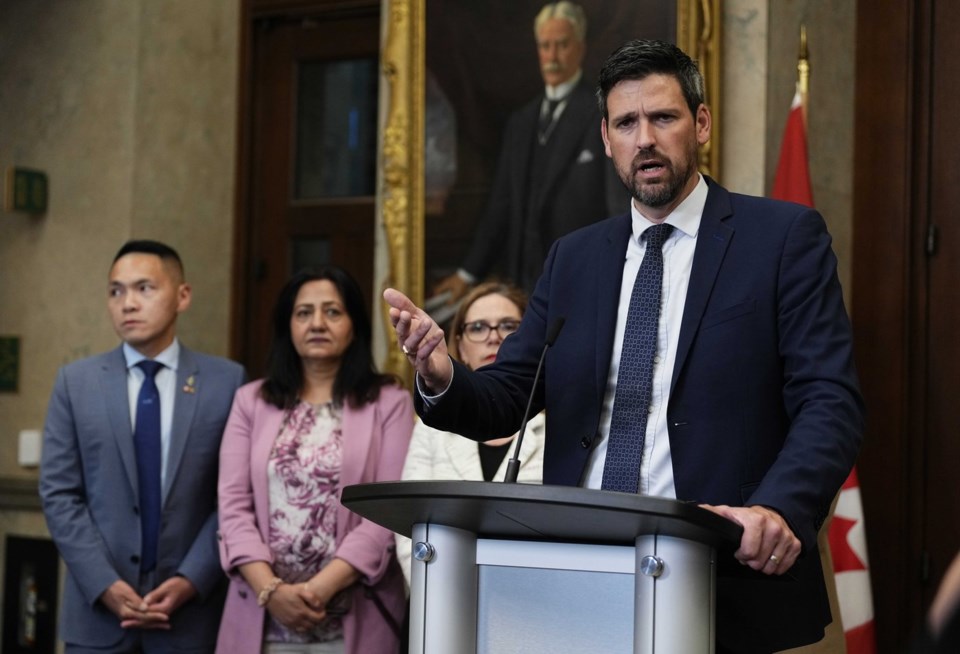
Justice Minister Sean Fraser said the government remains committed to advancing a comprehensive public safety agenda that addresses concerns raised by provinces, municipalities, police services, and community organizations across Canada.
The first of the three measures, Bill C-14, officially became law after receiving Royal Assent this week. The legislation introduces tougher bail provisions and sentencing reforms aimed at addressing repeat violent offenders and organized criminal activity.
According to Fraser, the legislation responds directly to concerns repeatedly raised by local governments, law enforcement agencies, and provincial leaders regarding public safety and repeat offending.
One of the most significant changes involves the expansion of “reverse onus” bail provisions. Under the new rules, individuals accused of certain serious offences—including some vehicle thefts, extortion-related crimes, and human trafficking offences—will face a higher threshold when seeking release. Instead of prosecutors having to prove why an accused person should remain in custody, the accused will now be required to demonstrate why they should be granted bail.

The legislation also strengthens sentencing provisions by allowing courts to impose consecutive sentences for repeat violent crimes as well as offences involving vehicle theft, break-and-enter crimes, extortion, and arson.
The new law has received support from municipal leaders and provincial governments that have been calling for stronger measures to address repeat criminal activity.
Federation of Canadian Municipalities welcomed the legislation, arguing that repeat offenders place significant pressure on police services, emergency responders, local businesses, and communities.
Provincial officials also expressed support. Niki Sharma said many of the reforms align with recommendations British Columbia has been advocating for, particularly the expanded reverse-onus provisions aimed at addressing repeat violence.
Meanwhile, two additional crime bills remain under active consideration in Parliament.
Bill C-16, known as the Protecting Victims Act, is currently before the Senate. The proposed legislation would restore certain mandatory minimum prison sentences and create new criminal offences related to coercive and controlling behaviour as well as the distribution of non-consensual sexually explicit deepfake content.
The government is also seeking passage of Bill C-9, known as the Combating Hate Act. That legislation would create new criminal offences targeting the intimidation or obstruction of individuals attending religious, cultural, or community institutions. The bill is intended to strengthen protections against hate-motivated conduct and improve public safety around places of worship and community gathering spaces.
Fraser indicated that both bills could potentially complete the legislative process before Parliament adjourns for the summer.
The government’s push for tougher criminal justice measures comes amid growing public concern about repeat offenders, violent crime, vehicle theft, hate-related incidents, and emerging forms of technology-facilitated abuse.
If all three measures become law, they would represent one of the most significant criminal justice reform packages introduced by the federal government in recent years, combining stricter bail rules, enhanced protections for victims, stronger hate-crime provisions, and new tools to address evolving forms of criminal behaviour in the digital age.
With only days remaining before Parliament rises for the summer, lawmakers now face a race against time to complete debate and secure final approval for the remaining legislation.