

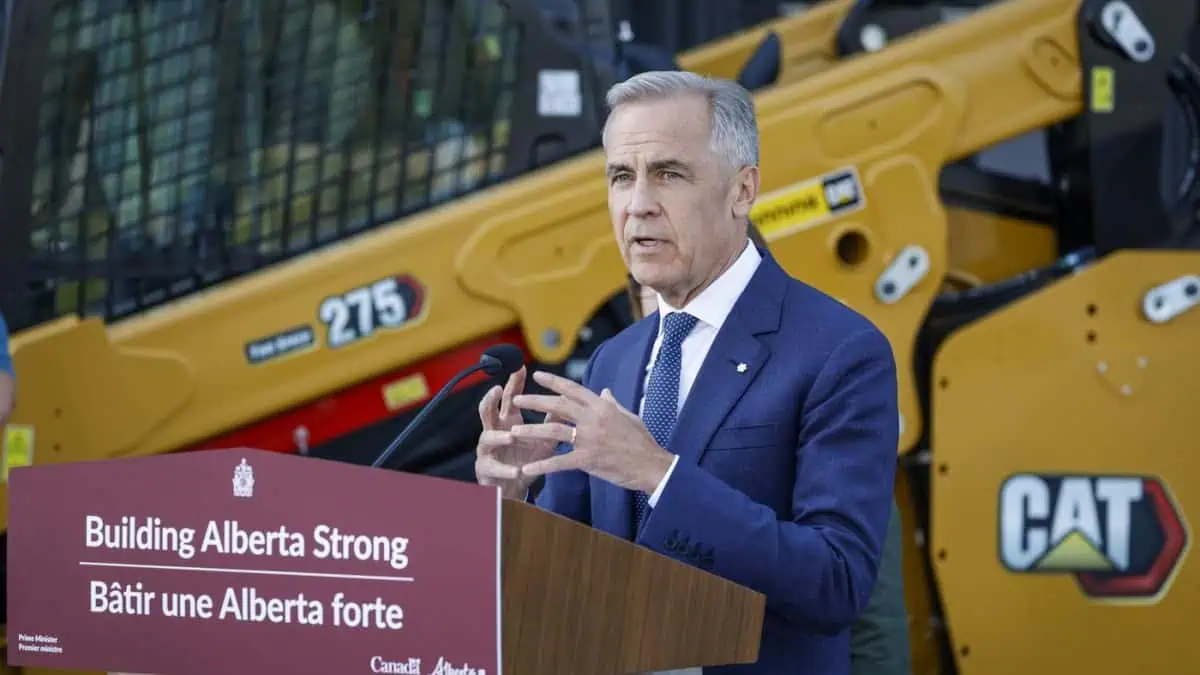
Ottawa, July 29: Prime Minister Mark Carney says Canada has regained control of its immigration system after a period in which the number of international students and temporary foreign workers grew beyond sustainable levels, while indicating that the federal government intends to maintain a cautious approach to immigration in the years ahead.
Carney made the remarks during a news conference in Red Deer, Alberta, where he was asked about Alberta’s upcoming referendum on how the province should approach immigration policy.
The Prime Minister acknowledged that immigration levels were “far too high” when his government assumed office and said Canada had effectively “lost control” of the number of international students and temporary foreign workers entering the country.
Government Cites Sharp Decline in Temporary Immigration
Carney said the federal government’s recent policy changes have significantly reduced the number of temporary residents entering Canada.
According to the Prime Minister, the number of asylum seekers entering the country has declined by approximately one-third, while the number of temporary foreign workers has fallen by 50 per cent and the number of international students has decreased by two-thirds.

He said these measures demonstrate that Ottawa has “taken back control” of Canada’s immigration system after several years of rapid growth in temporary migration.
Housing Remains a Major Concern
Despite the reductions, Carney acknowledged that current immigration levels continue to place pressure on Canada’s housing market.
He argued that there is a strong case for maintaining “a few more years of restraint” to allow housing construction, infrastructure and public services to better align with population growth.
Housing affordability has become one of the federal government’s central policy priorities as communities across the country continue to experience shortages of affordable homes and rental accommodations.
Collaboration With Provinces
Carney said the federal government now has a clearer understanding of immigration numbers and is prepared to work with provincial premiers to determine the next phase of Canada’s immigration strategy.
He suggested that future discussions with the provinces will focus on balancing Canada’s economic and labour market needs with the capacity of housing, healthcare, education and other public services.
Shift in Immigration Policy
The Prime Minister’s comments reflect a significant shift in Canada’s immigration policy after years of record population growth driven largely by temporary residents, including international students and temporary foreign workers.
The federal government has introduced a series of measures over the past year aimed at reducing temporary immigration, tightening eligibility requirements for study permits and temporary work programs, and slowing overall population growth to ease pressure on housing and public infrastructure.
Political and Economic Debate Continues
Carney’s acknowledgement that Canada had “lost control” of temporary immigration is likely to fuel ongoing political debate over the management of immigration policy.
Supporters of stricter limits argue that lower immigration levels are necessary to address housing shortages and improve the delivery of public services. Others caution that Canada continues to face significant labour shortages in several sectors and that immigration remains essential to long-term economic growth and addressing demographic challenges.
As governments across Canada continue to balance economic needs with housing affordability and infrastructure capacity, immigration policy is expected to remain one of the country’s most closely watched political issues in the months ahead.