

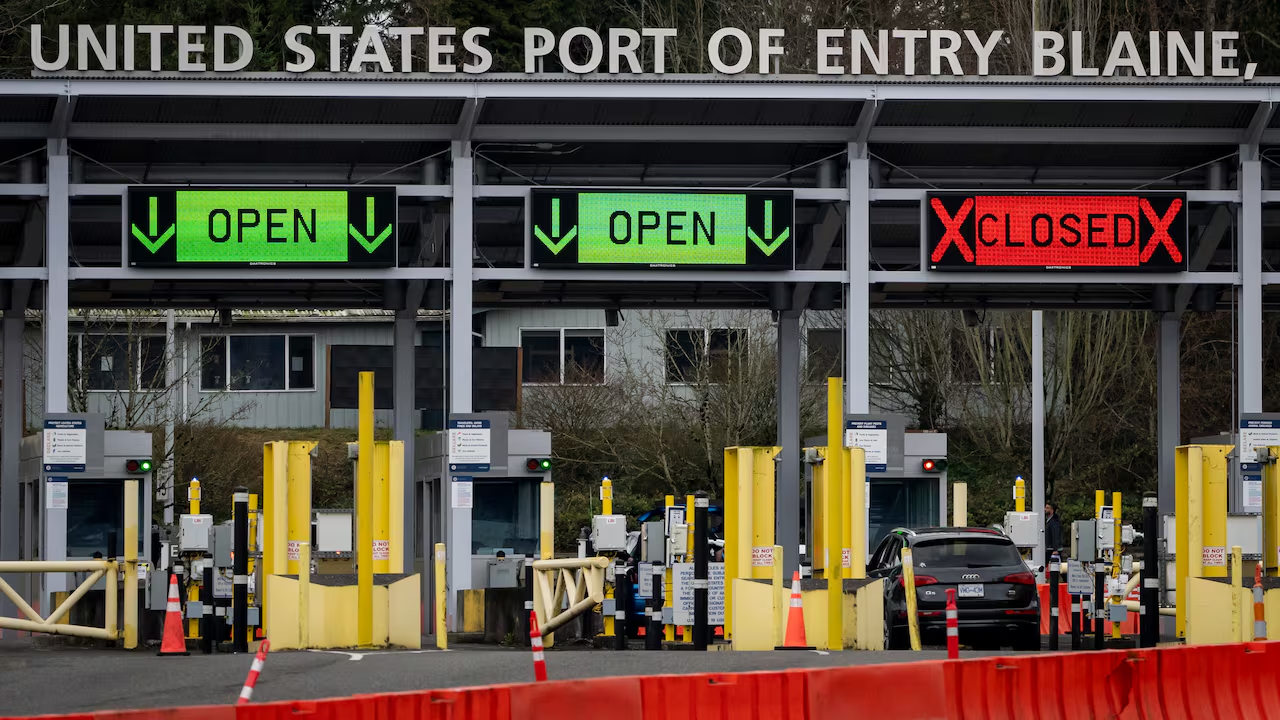
A new study suggests that Canadians are avoiding travel to the United States in far greater numbers than previously reported, dealing a significant blow to American tourism, border businesses, and local economies across the country.
While official government statistics indicated a decline of approximately 25 per cent in Canadian visits to the United States over the past year, newly analyzed cellphone mobility data suggests the real drop may be closer to 42 per cent. The findings point to one of the most dramatic shifts in Canada-U.S. travel patterns in modern history.
Researchers who examined the movement of Canadian mobile devices between April 2025 and March 2026 found that travel to nearly every major American destination declined sharply. The downturn followed escalating political and economic tensions between Canada and the United States, including tariff disputes, trade uncertainty, and controversial comments by U.S. President Donald Trump regarding Canada.
The steepest declines were recorded in traditional vacation destinations that have long depended on Canadian visitors. Myrtle Beach, South Carolina, experienced a stunning 65 per cent drop in Canadian travel. Several Florida destinations, including Orlando, Miami, Naples, Cape Coral, and Panama City, recorded declines exceeding 50 per cent.
The trend extends far beyond tourist hotspots. Major business centres such as New York, San Francisco, Boston, and several Michigan cities also experienced substantial decreases in Canadian visitors. Researchers found that out of 267 metropolitan areas studied across the United States, only three recorded any increase in Canadian visits.

Experts say the findings indicate a broader transformation in the economic relationship between the two countries. What initially appeared to be a tourism boycott has evolved into a wider reduction in business travel, corporate visits, and cross-border activity.
Researchers believe many Canadian companies may be increasingly seeking business opportunities in Europe and other international markets rather than expanding relationships with American partners. The data suggests that both leisure and commercial travel have been affected by the deteriorating political climate.
The impact is being felt particularly strongly in regions with close economic ties to Canada. Several communities in Michigan, which rely heavily on trade with Ontario’s manufacturing sector, have experienced notable declines in Canadian visitors. Border communities that traditionally depend on day trips, shopping excursions, and weekend travel have also reported significant losses.
The economic consequences could be substantial. Previous estimates suggested that a 10 per cent decline in Canadian tourism would cost the American economy approximately US$2.1 billion annually. If the newly reported 42 per cent decline accurately reflects travel patterns, the economic impact could exceed US$8 billion.
The decline has also created serious challenges for Canadian businesses operating near border crossings. Duty-free stores, many of them family-owned enterprises, report some of the steepest sales declines in their history. Industry representatives say several businesses are now considering closure as cross-border traffic continues to shrink.
Las Vegas, one of the most popular destinations for Canadian travellers, has also been affected. Canadians have historically represented the largest international tourism market for the city, but recent figures show significant declines in visitor numbers. Airlines serving Las Vegas have reported notable reductions in passenger volumes from Canada, prompting tourism officials to actively encourage Canadians to return.
The downturn has become so pronounced that local leaders in Las Vegas have publicly appealed to Canadian visitors, emphasizing their importance to the city’s tourism industry and economy.
Canadian Prime Minister Mark Carney has praised Canadians for supporting domestic tourism and choosing Canadian products during the ongoing trade tensions. His government has also encouraged increased support for Canadian businesses and suppliers.
Researchers note that the cellphone data offers a more detailed picture of travel patterns than traditional border statistics. The information shows not only fewer trips overall but also changes in traveller behaviour. Canadians who continue to visit the United States are making shorter trips, visiting fewer destinations, and spending less time moving between American cities.
More than a year after the travel slowdown began, there are few signs of recovery. Businesses on both sides of the border are increasingly recognizing that the decline may represent a long-term shift rather than a temporary reaction.
For decades, the Canada-U.S. border was one of the busiest and most economically integrated international crossings in the world. The latest data suggests that relationship is undergoing one of its most significant transformations in generations, with economic, political, and social consequences that could be felt for years to come.