

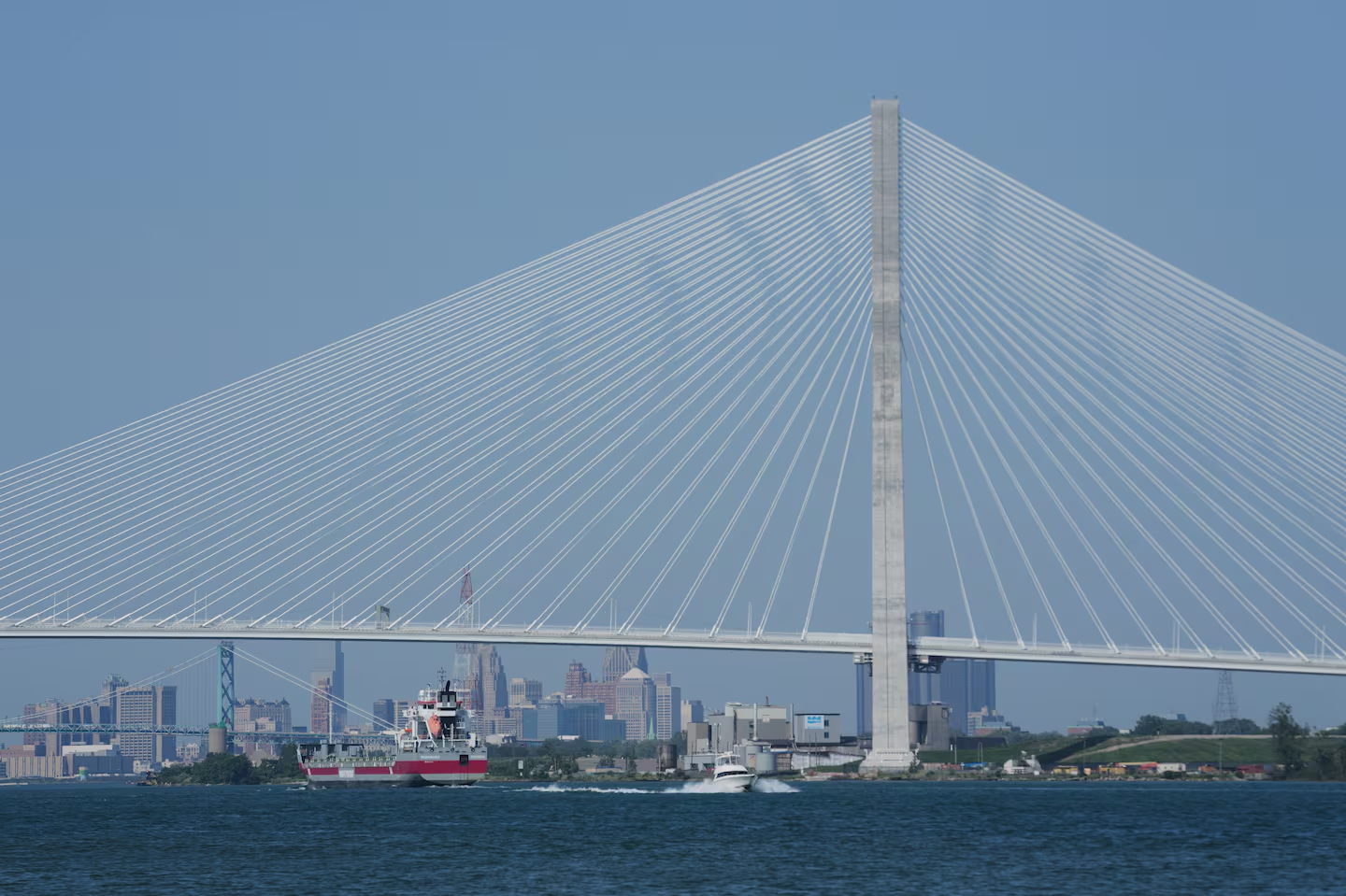
Ottawa, July 22: Facing mounting political pressure and growing public scrutiny, the Government of Canada has released the details of its proposed agreement with the United States governing the opening and operation of the Gordie Howe International Bridge, scheduled to open on July 27, 2026.
The newly published agreement confirms that Canada will share 50 per cent of the bridge’s net operating revenues with the United States for the first 15 years, a significant departure from the original 2012 Canada-Michigan Crossing Agreement.
Under the agreement, “net bridge and crossing-related revenues” are defined as all revenue collected from bridge operations after deducting operating expenses. However, the agreement does not include interest charges or repayment of the billions of dollars Canada borrowed to construct the bridge.
This clarification has triggered political controversy because it appears to contradict earlier public statements made by Prime Minister Mark Carney. In interviews earlier this month, Carney stated that Canada would first collect toll revenues, service the debt incurred to build the bridge, and only then share the remaining net revenues with the United States.
The original 2012 agreement provided that Canada would finance the approximately $6.4-billion construction project and retain 100 per cent of toll revenues until the entire investment had been recovered—an estimated period of at least 50 years. Only after full cost recovery would Canada and Michigan equally share toll revenues.

The revised agreement now accelerates revenue sharing, meaning Canada will begin splitting net operating revenues with the United States well before recovering its full investment.
Another notable provision establishes a United States-Canada Economic Development Fund, into which the U.S. share of revenues will be directed. The fund will be administered by the United States and used for projects benefiting American communities and bilateral trade, with both governments jointly agreeing on its objectives.
The agreement also gives the United States an important role in future toll decisions. During the first 15 years of bridge operations, Canada must obtain U.S. approval before increasing tolls by more than 10 per cent or reducing them below comparable regional rates. If the U.S. does not respond within 30 days, approval will be considered automatically granted.
Government officials from both countries will continue working to finalize the legal, financial and administrative arrangements required to implement the agreement before the bridge opens.
Meanwhile, growing trade tensions between Canada and the United States have affected opening-day celebrations. The federal government announced that the planned joint Canada-U.S. inauguration ceremony has been cancelled, and the opening on Friday will now be a Canadian-only event.
The decision follows renewed trade threats from U.S. President Donald Trump, who recently announced plans to impose 50 per cent tariffs on a range of Canadian products beginning August 19, citing disputes over Canadian alcohol policies, dairy supply management, and automotive trade.
The Gordie Howe International Bridge, connecting Windsor, Ontario, and Detroit, Michigan, is one of the largest infrastructure projects in Canadian history. Construction began in 2018, and upon opening it will rank among the five longest cable-stayed bridges in North America.
While supporters view the bridge as a major catalyst for trade, transportation and economic growth, critics argue the revised revenue-sharing arrangement may delay Canada’s recovery of its multibillion-dollar investment and raises important questions about the long-term financial benefits for Canadian taxpayers.