

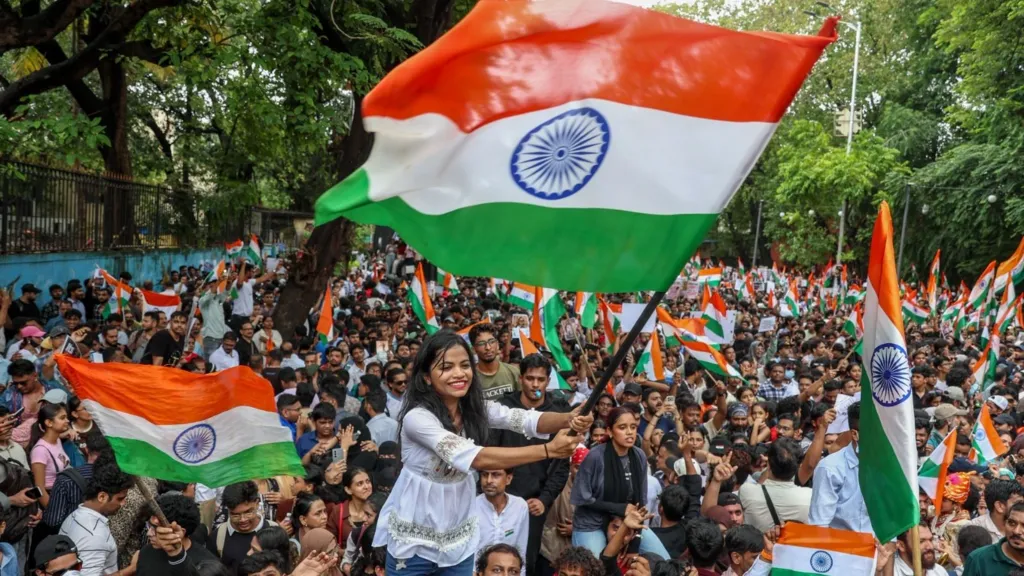
New Delhi, July 27: The resignation of India’s Education Minister Dharmendra Pradhan has become a defining moment for the country’s growing youth protest movement, with thousands of young demonstrators describing it as proof that sustained public pressure can influence government decisions after years of limited political concessions.
Pradhan stepped down following more than a week of nationwide demonstrations triggered by the cancellation of the National Eligibility cum Entrance Test (NEET) after allegations that examination papers had been leaked.
The resignation marks only the second departure of a cabinet minister during Prime Minister Narendra Modi’s 12 years in office and is widely viewed as a significant victory for student activists.
Protests Grew From Education Crisis
The protests began after authorities cancelled this year’s NEET medical entrance examination, forcing nearly two million students to prepare for another test.
The controversy intensified following reports that more than 20 students died by suicide after the examination scandal, with grieving families blaming the uncertainty created by the paper leak.

The movement was spearheaded by the satirical Cockroach Janta Party (CJP), an online youth campaign that demanded Pradhan’s resignation, comprehensive education reforms and compensation for affected families.
Initially attracting limited attention, the demonstrations expanded rapidly after environmental activist and educator Sonam Wangchuk was detained and hospitalized while participating in a hunger strike in New Delhi.
Images and videos of police action against demonstrators—including baton charges, tear gas and detentions—spread widely across social media platforms, drawing increasing public support and prompting larger protests in several cities.
Social Media Drives Mobilization
Many participants say platforms such as Instagram played a central role in organizing demonstrations and documenting events.
Student activist Sakhi, 22, said online videos showing police action against protesters reached millions of viewers and helped sustain public attention.
She argued that while the government remained influential on traditional media and messaging platforms, it underestimated the role of newer social media channels in mobilizing younger voters.
Broader Frustrations Surface
Although the immediate trigger was the examination scandal, many protesters say their concerns extend well beyond education.
Participants have highlighted issues including rising youth unemployment, privatization of education, limited job opportunities and demands for greater government accountability.
Government data show that unemployment among Indians aged 15 to 29 rose to 16.2 per cent in June, up from 13.8 per cent a year earlier.
A 2026 study by Azim Premji University also found that fewer than seven per cent of graduates seeking employment obtained permanent salaried jobs within a year, while fewer than four per cent secured white-collar positions.
For many young protesters, these figures reinforce concerns that educational achievement no longer guarantees stable employment.
Calls for Continued Reform
Several activists emphasized that Pradhan’s resignation represents only an initial step rather than the end of the movement.
Mumbai activist Somaya Korde said many young Indians had participated in street protests for the first time and intended to continue raising broader social and economic issues.
Similarly, 18-year-old Harshvardhan Kadam, whose video alleging police intimidation during a protest gained widespread attention online, described the resignation as evidence that public voices can influence political outcomes.
Concerns Over Police Action
Despite celebrating the resignation, many demonstrators remain concerned about possible legal consequences.
Police have reportedly registered cases against more than 100 protesters and arrested more than 40 people in connection with recent demonstrations.
Human rights organizations, including Human Rights Watch, have previously expressed concern about the treatment of activists and peaceful protesters in India, while government officials have stated that no retaliatory action would be taken against individuals who participated lawfully in the demonstrations.
A Defining Moment for Young Voters
Political observers say the movement reflects the growing political engagement of India’s Generation Z, which represents a significant share of the country’s electorate.
Whether the protests develop into a sustained political force remains uncertain, but analysts say the demonstrations have already altered the national conversation by highlighting concerns over education, employment and accountability.
For many young participants, the resignation of the education minister is viewed not as the conclusion of their campaign but as evidence that organized civic participation can produce tangible political outcomes.