

The federal government has unveiled sweeping new privacy legislation designed to give Canadians greater control over their personal information, strengthen protections for children online, and crack down on the growing threat posed by deepfakes and other emerging digital technologies.
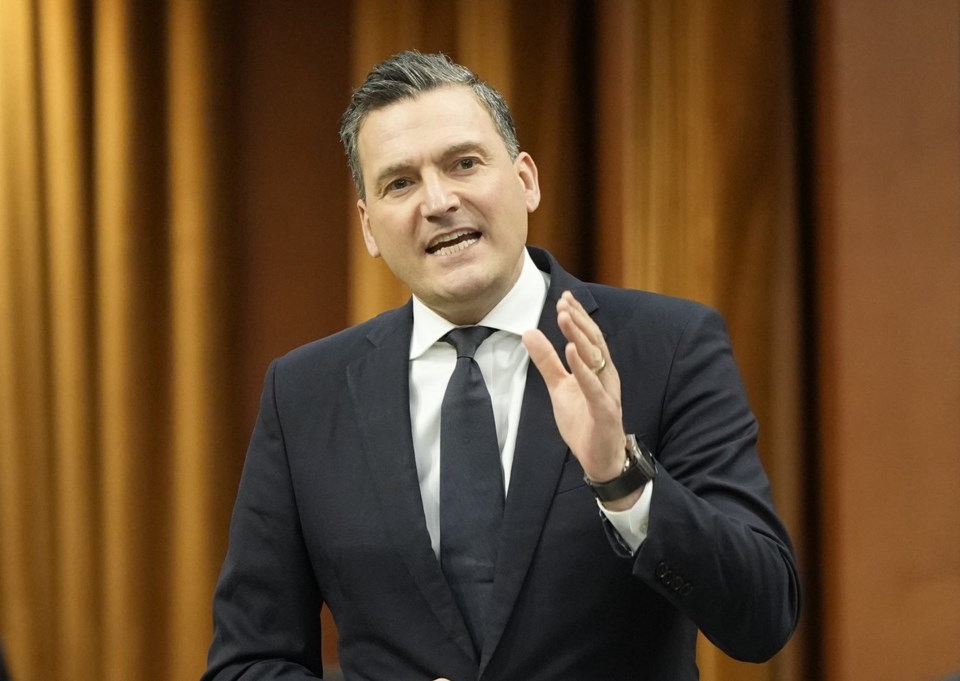
The proposed legislation, introduced in Parliament by Artificial Intelligence and Digital Innovation Minister Evan Solomon, represents one of the most significant updates to Canada’s privacy framework in decades. The government says the reforms are necessary to address the realities of an increasingly digital world where artificial intelligence, online tracking, algorithmic decision-making, and synthetic media have transformed how personal information is collected and used.
At the heart of the legislation is the recognition of privacy as a fundamental right for all Canadians. The bill seeks to modernize existing laws that were created long before the rise of artificial intelligence, social media platforms, sophisticated data collection systems, and the widespread online presence of children and youth.
Minister Solomon said Canadians deserve stronger protections in an era where personal information has become one of the most valuable commodities in the digital economy. He emphasized that the proposed law would provide individuals with greater control over their digital identities and personal data while establishing clear responsibilities for businesses and technology companies operating in Canada.
Among the most significant changes is the introduction of a “right to deletion,” which would allow Canadians to request the removal of personal information held by organizations. The measure would also provide legal mechanisms for individuals to seek the removal of deepfakes and other manipulated digital content that falsely portrays them online.
The legislation would require organizations to obtain meaningful consent before collecting or using personal information and ensure that privacy policies are written in plain language that Canadians can easily understand. Companies would also be required to clearly explain how personal information is collected, stored, shared, and used.
Special attention is being given to the protection of children. The government is proposing stricter standards for organizations that collect or manage children’s personal information and has explicitly recognized the best interests of children as a key principle in the legislation. Officials say the goal is to ensure that young Canadians are better protected from online harms, data exploitation, and privacy violations.
The bill also introduces new transparency requirements surrounding automated decision-making systems. Organizations using artificial intelligence or algorithms to make significant decisions affecting individuals would be required to disclose how those systems are being used and provide greater accountability for automated outcomes.
A key feature of the proposal is the creation of a new independent regulator, the Digital Safety and Data Protection Commission of Canada. The commission would oversee enforcement of both privacy laws and recently proposed online safety legislation. The regulator would have significant investigative and enforcement powers, including the authority to issue binding orders and impose substantial penalties on organizations that fail to comply with the law.
For the most serious violations, fines could reach up to $25 million or five percent of a company’s global annual revenue, whichever is higher. These enhanced enforcement powers are intended to ensure that large corporations and technology platforms take privacy obligations seriously.
The proposed regulator would also play an important role in implementing the government’s broader digital safety agenda, including recently introduced measures aimed at protecting children on social media platforms and regulating certain artificial intelligence applications.
Privacy Commissioner Philippe Dufresne welcomed many aspects of the legislation, noting that several long-standing recommendations from his office have been incorporated into the bill. He particularly praised the recognition of privacy as a fundamental right, stronger protections for children, privacy impact assessment requirements, and enhanced enforcement mechanisms.
While the government argues that the legislation strikes an appropriate balance between innovation and privacy protection, opposition parties have indicated they will carefully examine the proposal to ensure it does not grant excessive powers to government regulators or create unintended consequences for Canadians and businesses.
The legislation marks the Liberal government’s third attempt to modernize Canada’s private-sector privacy laws after previous efforts introduced in 2020 and 2023 failed to become law before Parliament dissolved.
As artificial intelligence, digital platforms, and online technologies continue to evolve rapidly, the proposed reforms represent a major step toward creating a modern privacy framework capable of protecting Canadians in the digital age. If passed, the legislation would significantly reshape how personal information is handled in Canada and establish stronger safeguards for individuals navigating an increasingly complex online environment.
The government’s message is clear: in the age of artificial intelligence and digital transformation, protecting privacy is no longer optional—it is a fundamental right that requires modern laws, stronger enforcement, and greater accountability.