

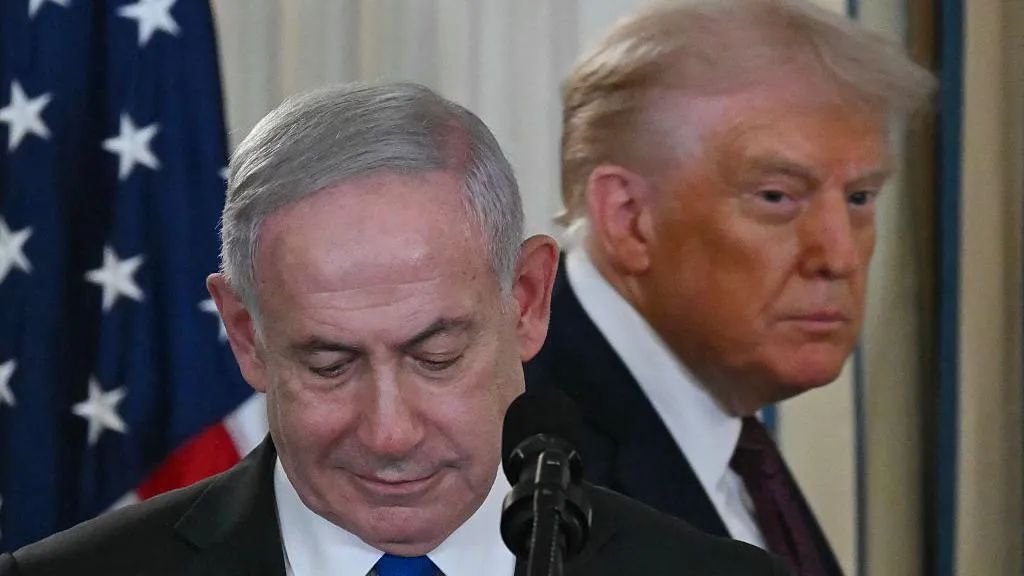
The emerging peace agreement between the United States and Iran has created a major political challenge for Israeli Prime Minister Benjamin Netanyahu, placing him in one of the most difficult positions of his long political career and raising serious questions about the future of his security strategy ahead of Israel’s next general election.
For decades, Netanyahu has built his political identity around three central themes: maintaining a close and influential relationship with Washington, confronting Iran as Israel’s greatest strategic threat, and projecting himself as the leader best equipped to guarantee Israel’s security. Critics and political observers now argue that all three pillars have been shaken by the recent U.S.-Iran agreement.
The ceasefire and peace framework brokered by the United States came as a surprise to many in Israel and appears to have left Netanyahu largely on the sidelines during a process that could reshape the Middle East. The situation became even more politically damaging when U.S. President Donald Trump publicly criticized Israel’s decision to carry out a military strike in Beirut shortly after the agreement was announced.
Trump’s unusually blunt criticism was widely interpreted as a sign of growing tensions between Washington and Jerusalem, undermining Netanyahu’s long-standing reputation as a leader capable of influencing American policy and maintaining a uniquely strong relationship with U.S. administrations.
Political opponents in Israel quickly seized on the development. Opposition leaders argued that Netanyahu now faces a difficult dilemma: either challenge Israel’s most important ally and risk damaging relations with Washington or accept a peace arrangement that many in his government believe does not adequately address Israel’s security concerns.
The controversy has become even more intense because the agreement reportedly includes restrictions on military activity involving Hezbollah in Lebanon, a group that Israel considers one of its most dangerous regional adversaries. Several members of Netanyahu’s governing coalition, particularly from the nationalist and far-right factions, have openly rejected any arrangement that they believe limits Israel’s freedom to act against security threats.
National Security Minister Itamar Ben-Gvir and other government figures have publicly stated that Israel is not bound by any agreement that compromises its security interests. Their comments highlight growing divisions within Netanyahu’s coalition and signal the political pressure he faces from his own supporters.
Israeli security experts have also expressed concern that the agreement may strengthen Iran’s regional influence rather than weaken it. Some analysts argue that by giving Tehran a greater role in determining future arrangements involving Lebanon, the agreement could help Iran maintain influence through its allies and continue supporting Hezbollah politically and militarily.
Throughout his career, Netanyahu has consistently presented Iran’s nuclear ambitions as the greatest threat facing Israel. While he continues to insist that preventing Iran from obtaining nuclear weapons remains his highest priority, critics argue that the current agreement leaves Iran politically stronger and diplomatically more influential than many had expected.
At a recent press conference, Netanyahu defended his record and reiterated that Israel would continue to take whatever steps it deems necessary to prevent Iran from becoming a nuclear power. He acknowledged differences with Washington but emphasized that Israel would continue to protect its security interests independently when required.
The political challenge facing Netanyahu extends beyond Iran. Since the October 2023 Hamas attacks, his government has pursued a far more aggressive regional security policy, involving military operations in Gaza, Lebanon, and Syria. While those actions remain popular among many Israelis, they have also placed enormous demands on Israel’s military resources and reservists while producing no clear long-term political solutions.
In Gaza, despite extensive military operations, Hamas continues to maintain influence over significant parts of the territory. Meanwhile, efforts to establish a stable post-war political framework have struggled to gain momentum.
The U.S.-Iran agreement has further complicated Netanyahu’s position by potentially limiting Israel’s freedom to pursue military options while increasing American expectations for regional stability. Analysts note that unlike previous disputes with U.S. administrations, Netanyahu may have fewer political tools available to challenge Washington’s position under the current circumstances.
With national elections expected before the end of October, the peace agreement has introduced a new and unpredictable element into Israeli politics. Netanyahu must now convince voters that his security policies remain effective while navigating tensions with Washington and managing growing criticism from both allies and opponents.
For a leader who has long built his reputation on strength, security, and diplomatic influence, the U.S.-Iran peace deal may represent one of the most significant political tests of his career. Whether he can transform this challenge into an opportunity—or whether it becomes a turning point in Israeli politics—may become clear in the months ahead.