

The announcement of a peace framework between the United States and Iran has brought immediate relief to global energy markets, sending oil prices sharply lower. However, industry experts warn that hopes for a rapid return to pre-war fuel prices may prove overly optimistic despite assurances from U.S. President Donald Trump that oil prices will “drop like a rock.”
Oil prices have already retreated significantly from the highs reached during the conflict. Brent crude, the international benchmark, has fallen by roughly US$25 per barrel from its recent peak and is now trading below US$85. The decline reflects growing confidence that the Strait of Hormuz, one of the world’s most critical oil shipping routes, will soon reopen following the signing of a peace agreement expected later this week.
Yet energy analysts caution that lower prices at the pump may not arrive as quickly as consumers hope. While the market has reacted positively to the prospect of peace, the logistical and operational challenges facing the global oil industry are substantial.
One of the biggest obstacles is the Strait of Hormuz itself. The narrow waterway, through which a significant portion of the world’s oil exports pass, has remained largely inaccessible since the conflict began. During the war, Iran reportedly deployed naval mines in parts of the strait, creating hazards that will require extensive clearance operations before normal shipping traffic can resume.
Maritime experts estimate that clearing the shipping lanes and restoring full commercial operations could take weeks or even months. Even after the waterway reopens, hundreds of millions of barrels of oil currently stranded in the region will need to be transported to global markets through a carefully managed process designed to avoid congestion and safety risks.
The challenge extends beyond shipping. Oil producers across the Middle East significantly reduced or suspended production during the conflict. Restarting oil fields is a complex process that cannot be accomplished overnight. Engineers must gradually bring wells back into operation, and there is no guarantee that production levels will immediately return to pre-war volumes.
Industry analysts also point to storage facilities that are currently filled near capacity. Before production can ramp up substantially, existing inventories must first be drawn down and transported to buyers around the world.
Even if these near-term hurdles are overcome, longer-term issues remain. Energy infrastructure damaged during the conflict may require extensive repairs, while governments are expected to begin replenishing strategic petroleum reserves that were heavily depleted during the crisis. This additional demand could support higher oil prices for years.
Economists note that the futures market, which reflects expectations about future oil prices, has not shown confidence in a rapid return to the low-price environment that existed before the war. While spot prices have fallen sharply, longer-term contracts suggest traders expect oil prices to remain elevated for an extended period.
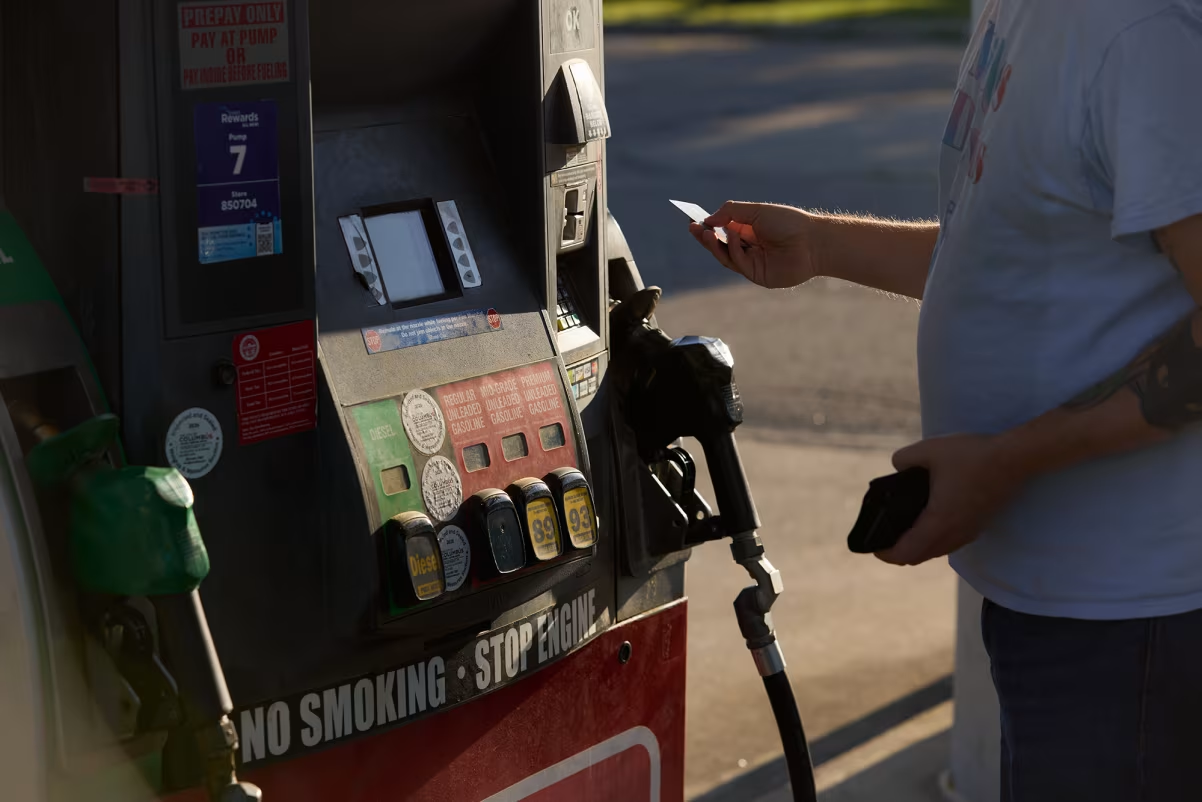
The situation has important implications for motorists and consumers. During the conflict, analysts warned that prolonged disruption in the Strait of Hormuz could push oil prices well above US$100 per barrel and drive gasoline prices to record levels. The peace agreement has reduced that immediate threat, but experts say a dramatic collapse in fuel prices is unlikely.
Instead, the market appears to be preparing for a gradual normalization process rather than a sudden return to cheap energy. Temporary declines in prices may occur as stranded oil reaches international markets, but renewed demand, infrastructure rebuilding, and strategic reserve replenishment could eventually place upward pressure on prices once again.
The agreement between Washington and Tehran has undoubtedly improved the outlook for global energy markets and reduced fears of a prolonged supply crisis. However, the road back to stable and affordable energy prices may prove longer and more complicated than political leaders and consumers would like.
For now, motorists can expect some relief at fuel pumps, but industry experts believe the era of ultra-low oil prices that existed before the conflict may not return anytime soon. The global energy market, like the broader geopolitical landscape, is entering what many analysts describe as a “new normal” rather than a return to the old one.