

Nearly 3,000 EVs Land in Canada in First Wave Under New Tariff Agreement with China
TORONTO – The first wave of Chinese-manufactured electric vehicles has officially arrived in Canada, marking a significant shift in the country’s automotive landscape and signaling the implementation of Prime Minister Mark Carney’s controversial trade agreement with China.
According to newly released federal data, 2,910 Chinese-made electric passenger vehicles entered Canada during the month of May, representing the first shipments since Ottawa reached a tariff-quota agreement with Beijing earlier this year.
The arrivals come after Prime Minister Mark Carney’s January visit to China, where both countries negotiated a trade arrangement that reduced Canada’s tariff on a limited number of Chinese-made electric vehicles from 100 per cent to 6.1 per cent. In exchange, China agreed to ease tariffs on Canadian agricultural exports, including canola products.
Under the agreement, Canada will allow up to 49,000 Chinese-made electric vehicles into the country annually, with a six-month cap of 24,500 vehicles.
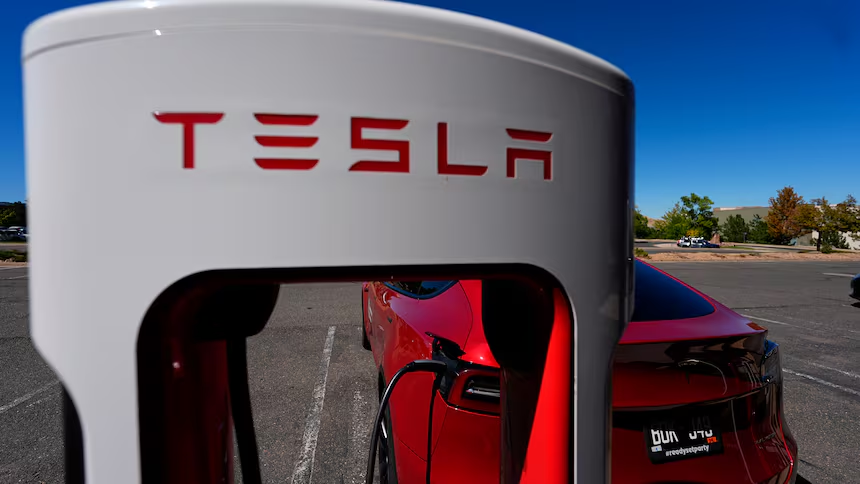
While federal officials have not disclosed the specific brands arriving in Canada, Prime Minister Carney recently indicated that many of the imported vehicles are expected to be Tesla models manufactured at the company’s facilities in China.
The arrival of the vehicles comes at a time when Canadians are facing rising fuel prices driven by ongoing geopolitical tensions in the Middle East and the continuing conflict involving Iran. Combined with the return of federal electric vehicle purchase incentives, industry observers believe the market conditions could significantly boost consumer interest in electric transportation.
Daniel Breton, President and CEO of Electric Mobility Canada, said increased competition in the EV marketplace is already benefiting Canadian consumers.
“It is becoming increasingly clear that greater competition is beginning to put downward pressure on prices,” Breton noted, adding that some electric vehicle models have already become more affordable as manufacturers respond to market changes.
Supporters of the agreement argue that increased access to competitively priced electric vehicles will accelerate Canada’s transition toward cleaner transportation while helping consumers cope with rising transportation costs.
However, the move has generated strong criticism from Canada’s domestic automotive sector.
The Canadian Vehicle Manufacturers Association, representing Canada’s major automobile producers, warned that the influx of Chinese-made vehicles could undermine Canada’s automotive manufacturing industry while raising concerns related to cybersecurity and data protection.
Industry leaders argue that Chinese manufacturers operate under a different regulatory and economic framework than North American producers and caution that connected vehicle technology could create privacy and security risks if not properly regulated.
The concerns come amid growing discussions within Canada regarding connected vehicle technology and data collection. Federal officials have previously acknowledged that modern electric vehicles generate large volumes of data that could potentially have intelligence and surveillance value if accessed by unauthorized parties.
Despite those concerns, advocates of electric mobility believe Canadian consumers will ultimately benefit from greater vehicle choice, improved affordability and accelerated innovation.
As additional shipments continue arriving throughout the summer, Canadians may soon begin seeing a broader range of electric vehicles available at dealerships nationwide.
The success or failure of the new trade arrangement will likely be closely watched by both the automotive industry and policymakers, as Canada balances its goals of reducing emissions, strengthening international trade relationships and protecting domestic manufacturing jobs.
With nearly 3,000 vehicles already arriving in a single month, the Canadian electric vehicle market appears poised for one of its most significant transformations in recent years.