

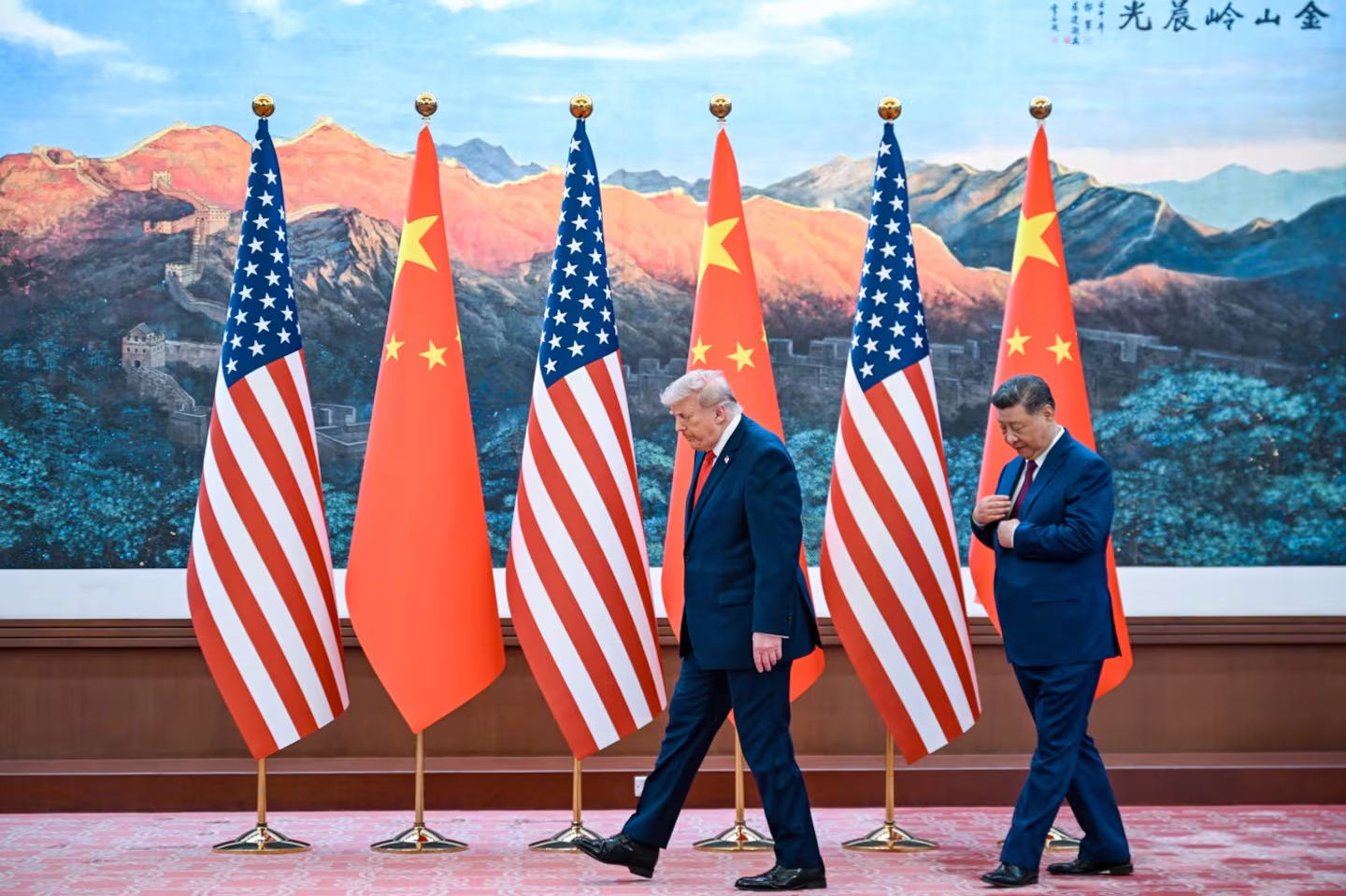
Tensions between the world’s two largest powers surfaced openly Thursday as Xi Jinping warned Donald Trump that disagreements over Taiwan could lead to “clashes and even conflicts” between China and the United States.
The unusually blunt warning came during a closely watched summit in Beijing, where the two leaders met for approximately two hours behind closed doors following an elaborate state welcome ceremony at the Great Hall of the People.
According to China’s Foreign Ministry, Xi stressed that Taiwan remains “the most important issue in China-U.S. relations.”
“If it is handled properly, the bilateral relationship will enjoy overall stability. Otherwise, the two countries will have clashes and even conflicts, putting the entire relationship in great jeopardy,” Chinese Foreign Ministry spokesperson Mao Ning wrote in a public statement following the meeting.
The warning highlighted the deep divisions that continue to separate Washington and Beijing despite warm public exchanges between the two leaders.
Before the private talks began, Donald Trump praised Xi, calling him “a great leader” and “my friend,” while expressing optimism that relations between the two countries would improve.
“It’s an honour to be your friend,” Trump said, adding that “the relationship between China and the USA is going to be better than ever before.”
However, Xi Jinping delivered a more cautious and strategic message, warning about the dangers of the so-called “Thucydides Trap” — the theory that conflict often arises when a rising global power challenges an established one.
The summit also focused heavily on trade, global economic tensions, and the ongoing conflict involving Iran, which continues to dominate international diplomacy and energy markets.
The White House later stated that both leaders discussed ways to improve economic co-operation, expand market access for American businesses, and potentially increase Chinese purchases of U.S. goods including agricultural products and oil.
Taiwan remains one of the most sensitive issues between the two nations. China considers the self-governed island part of its territory, while the United States maintains longstanding military and political support for Taiwan’s self-defense capabilities.
The Trump administration recently approved an estimated $11-billion arms package for Taiwan, a move that has angered Beijing and heightened regional tensions.
Despite the sharp warning, both leaders attempted to project stability publicly. Xi later hosted Trump at a formal state banquet and guided him on a tour of the historic Temple of Heaven.
During the evening event, Xi emphasized that cooperation between the two powers would benefit the world.
“Co-operation benefits both sides, while confrontation harms both,” Xi said. “The two countries should be partners rather than rivals.”
Trump announced that Xi is expected to make a reciprocal visit to Washington later this year, signaling that diplomatic engagement between the two countries will continue despite rising geopolitical tensions.
Political analysts say the summit revealed both the complexity and fragility of current China-U.S. relations — where public diplomacy and ceremonial friendship continue alongside deep disagreements over Taiwan, trade, military strategy, and global influence.