

In a dramatic escalation of the ongoing conflict between Israel and Iran, the United States launched coordinated airstrikes early Sunday on three key Iranian nuclear facilities, marking Washington’s direct entry into the war and triggering fears of a full-scale regional conflict.
President Donald Trump addressed the nation from the White House hours after the attacks, declaring Iran’s nuclear sites “completely and fully obliterated.” The targets included Iran’s deeply fortified Fordo enrichment facility, as well as the sites at Natanz and Isfahan.
Iran’s Foreign Minister Abbas Araghchi, speaking from Turkey, condemned the strikes as a declaration of war and said the U.S. had “crossed a very big red line.” He warned of “far-reaching consequences” and announced plans to meet with Russian President Vladimir Putin to coordinate a response.
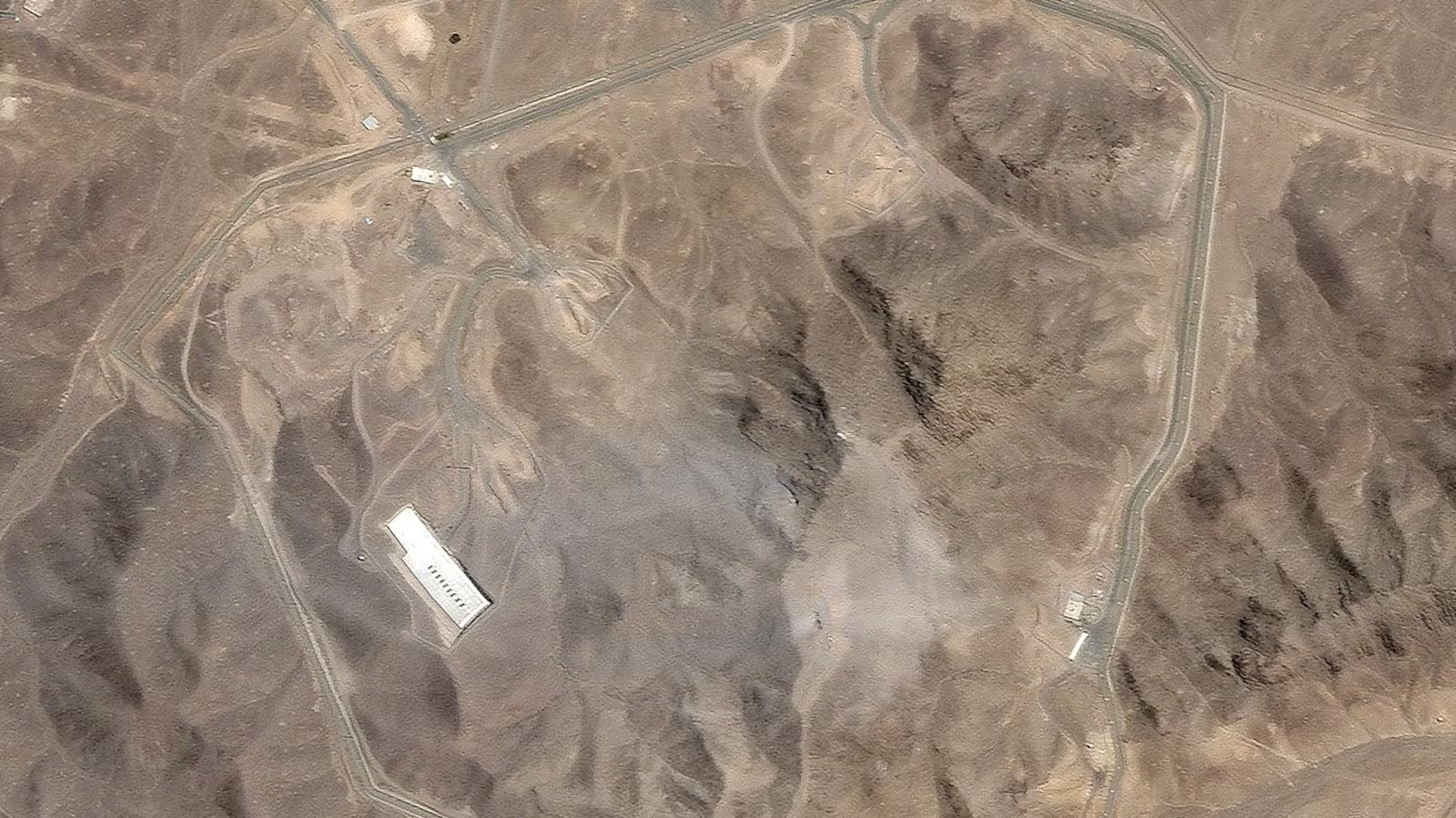
The Atomic Energy Organization of Iran confirmed the three facilities were hit but insisted the country’s nuclear program would continue. The UN’s International Atomic Energy Agency reported no immediate radiation leaks, although satellite imagery showed damage and smoke lingering at the Fordo site.
The strikes came without congressional approval, and President Trump warned Tehran that any retaliation would provoke further U.S. military action. “There will either be peace or there will be tragedy for Iran,” he said, framing the decision as a stark choice for Tehran’s leadership.
Within hours of the U.S. offensive, Iran’s Revolutionary Guard launched a retaliatory strike—firing 40 missiles at Israeli targets. One building in Tel Aviv sustained major damage, and over 80 people were injured, though most injuries were minor. Israel responded swiftly, striking Iranian missile launchers and military assets in western Iran.
The Pentagon has yet to release full details of the operation, though U.S. officials confirmed that stealth B-2 bombers dropped 30,000-pound bunker-buster bombs on the Fordo site, while Navy submarines launched roughly 30 Tomahawk missiles. Trump hailed the mission as a historic moment and vowed that Iran must now “agree to end this war.”
Despite years of U.S. intelligence assessments indicating that Iran was not actively building a nuclear weapon, the Trump administration has maintained that Tehran’s stockpile and capabilities made it an urgent threat. The president, under pressure from Israeli leaders and Republican lawmakers, reportedly concluded that Israel’s sustained attacks had softened Iran’s defenses, creating a window for a decisive strike.
Trump’s decision marks a significant reversal from earlier positions. He campaigned on ending foreign wars and previously blocked Israeli requests for military coordination, urging patience and diplomacy. However, as Iran’s conflict with Israel intensified, Trump’s tone shifted from cautious optimism to explicit threats, culminating in Sunday’s intervention.
Israeli Prime Minister Benjamin Netanyahu praised the U.S. strike in a video message, calling it “a bold and righteous act” that would “change history.” He added, “The United States has done what no other country could do.”
The international community reacted with alarm. UN Secretary-General António Guterres warned of a “dangerous escalation” and urged all parties to return to diplomacy, cautioning that the conflict could spiral beyond control.
Meanwhile, Iranian-backed Houthi rebels in Yemen renewed threats to target U.S. ships and called on Muslim nations to unite against what they described as “Zionist-American arrogance.”
Iran’s Supreme Leader Ayatollah Ali Khamenei had warned last week that any U.S. involvement would bring “irreparable damage.” With Washington now firmly in the fight, Tehran’s leadership is expected to reassess its strategy, especially as casualties mount.
According to the Human Rights Activists group based in Washington, Israeli strikes on Iran have killed at least 865 people and wounded more than 3,300, including civilians and security forces.
The strikes follow months of failed diplomacy, including direct backchannel efforts by the Trump administration to dissuade Iran from enriching uranium to weapons-grade levels. Critics have noted the irony that Trump’s 2018 decision to pull the U.S. out of the 2015 nuclear deal helped trigger the current escalation.
As U.S. military officials prepare to brief the public, the world watches nervously, uncertain whether Sunday’s strikes represent a singular action—or the beginning of a broader, more dangerous war in the Middle East.