

The administration of Donald Trump has imposed a new round of sanctions targeting an Iranian agency accused of attempting to control commercial shipping through the strategically critical Strait of Hormuz, intensifying economic pressure amid ongoing regional tensions and negotiations.
The latest sanctions were announced Wednesday by the United States Department of the Treasury as Washington continues a broader campaign aimed at pressuring Iran during the ongoing conflict in the Middle East.
The sanctions specifically target Iran’s newly established Persian Gulf Strait Authority, an agency reportedly tasked with overseeing and regulating maritime traffic through the Strait of Hormuz — one of the world’s most vital global energy shipping routes.
U.S. officials allege the agency attempted to impose transit approvals and levy substantial toll fees on vessels passing through the strait, where roughly one-fifth of the world’s oil and natural gas shipments normally travel.
The measures also apply to individuals and organizations cooperating with the Iranian authority.
In a statement announcing the sanctions, U.S. Treasury Secretary Scott Bessent accused Iran of attempting to pressure international maritime trade and global energy markets.
The sanctions announcement came shortly after U.S. officials confirmed additional American military action against Iranian-linked targets.
According to reports, U.S. forces carried out strikes on Iranian military-related facilities following incidents involving Iranian drones and maritime threats near the Strait of Hormuz.
The ongoing tensions stem from the broader regional conflict that escalated after U.S. and Israeli strikes on Iran earlier this year, leading Tehran to tighten its control over Gulf shipping routes and significantly disrupt global energy supply chains.
The resulting instability has contributed to higher oil and energy prices worldwide, increasing economic and political pressure on governments and consumers alike.
Iran’s Islamic Revolutionary Guard Corps has defended its actions in the region, stating that vessels must comply with Iranian-designated maritime corridors in order to ensure safe passage through the strait.
Despite rising military tensions, diplomatic negotiations between Washington and Tehran continue.
President Trump said Wednesday that discussions remain ongoing and reiterated his belief that a deal with Iran remains possible, although negotiations have yet to produce a final agreement.
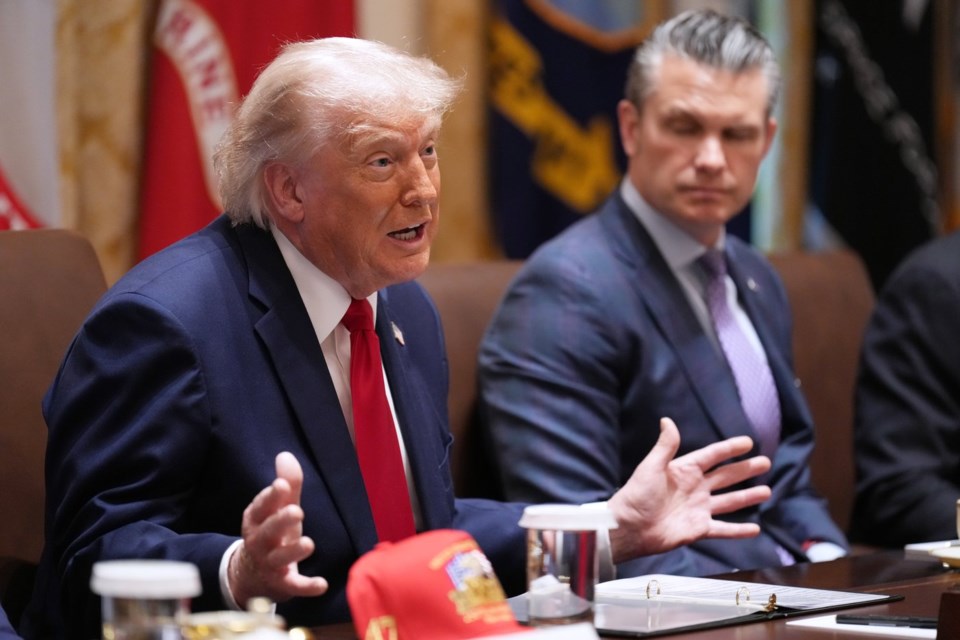
“They want very much to make a deal,” Trump said during a cabinet meeting at the White House.
The discussions reportedly focus on extending ceasefire arrangements, reopening unrestricted shipping access through the Strait of Hormuz and addressing concerns surrounding Iran’s nuclear program and regional security activities.
However, recent military strikes and continued economic sanctions may further complicate negotiations between the two longtime adversaries.
The Strait of Hormuz remains one of the most strategically important waterways in the world, connecting the Persian Gulf to international shipping routes and serving as a major corridor for global oil exports.
Analysts warn that prolonged instability in the region could continue to impact international energy markets, shipping costs and broader economic conditions worldwide.