

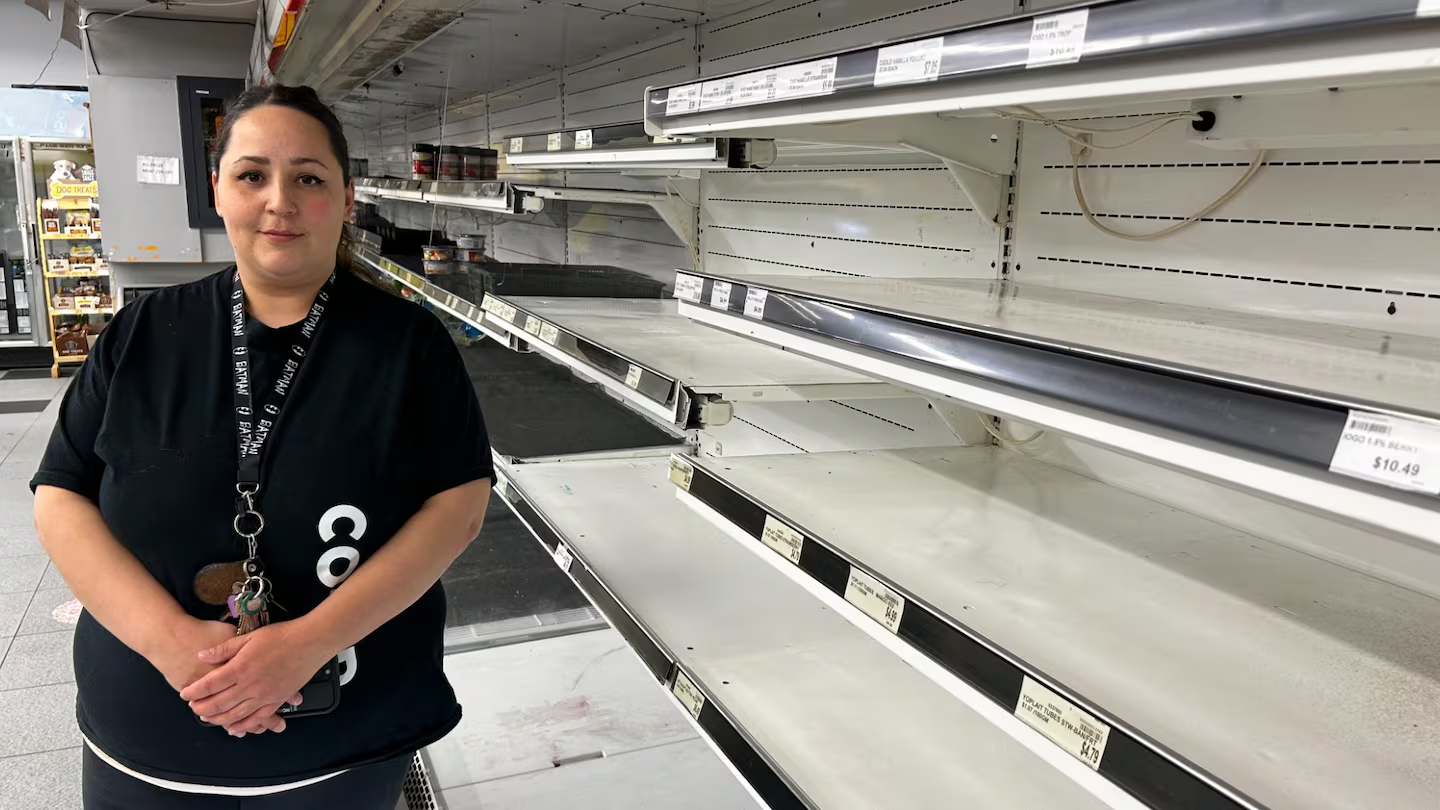
Residents of the remote northern Manitoba town of Leaf Rapids say their community is facing a humanitarian and economic crisis as worsening living conditions, empty grocery shelves and collapsing local services force some families to consider leaving the town they have called home for generations.
Located nearly 1,000 kilometres northwest of Winnipeg, Leaf Rapids is now struggling with severe shortages of food and essential services after news emerged that the community’s only grocery store — the local Co-op — may soon close permanently.
The announcement has created widespread fear and uncertainty among residents, many of whom already face significant challenges including a long-term boil water advisory, limited health care, deteriorating infrastructure and a shrinking population.
For longtime resident Sylvia Smith, the news came as a devastating shock after receiving a letter from Manitoba authorities advising some residents receiving social assistance that relocation support could be available if they chose to leave the town.
Smith, who returned to Leaf Rapids 17 years ago after growing up in the community, says leaving is not an option she wants to consider.
“It’s really frustrating. Where else are we going to go?” she said.
Her partner, Kelly Spence, receives monthly Employment and Income Assistance support and says the worsening conditions are making survival increasingly difficult.
Residents describe grocery store shelves sitting nearly empty, with many staple items no longer available.
“We can’t even get flour anymore,” one resident said. “People are struggling just to feed themselves.”
The situation has become especially alarming because the community lacks reliable transportation services, leaving many residents unable to travel to larger northern centres such as Thompson or Lynn Lake for groceries and supplies.
According to local officials, the Leaf Rapids Co-op owes more than $1 million to Federated Co-operatives Limited after years of financial struggles. Store management says the community has until the end of June to find a solution or face possible closure.
The decline of Leaf Rapids has been ongoing for more than two decades.
The town was once a thriving mining community built around the nearby Ruttan copper-zinc mine, which employed hundreds of workers during the 1970s and 1980s. At its peak, the town had a population of approximately 1,500 residents and offered services that included a hospital, restaurants, recreation facilities, a movie theatre and local businesses.
However, the closure of the mine in 2002 triggered a steady economic decline.
Businesses shut down, services disappeared and many residents left in search of employment opportunities elsewhere.
Today, only an estimated 200 to 250 residents remain in the community.
The crisis intensified further following last year’s devastating Manitoba wildfires, which forced a full evacuation of the town. Some residents who evacuated never returned.
Many homes now remain boarded up or abandoned.
Community advocates say Leaf Rapids represents a growing concern about the future of remote northern communities in Canada and whether governments are doing enough to ensure residents have access to safe housing, food, water and healthcare.
Hilda Anderson-Pyrz, president of the National Family and Survivors Circle in Canada, says the conditions facing residents would likely trigger emergency intervention if they occurred in a southern urban community.
“The people of Leaf Rapids deserve dignity, reliable services and the ability to remain in their community if they choose,” she said.
Residents are also calling for the restoration of local municipal leadership after the town’s mayor and council were dissolved in 2019, leaving administration under provincial oversight.
Longtime resident Raymond Meunier says the community wants the opportunity to determine its own future.
“We’re willing to fight for this town,” he said. “This is our home, this is our North, and this is our way of life.”
Despite the hardships, many residents say they remain determined to stay and rebuild their community rather than abandon it.
For them, the struggle is no longer just about economic survival — it is about preserving identity, community and hope for future generations in Northern Manitoba.