

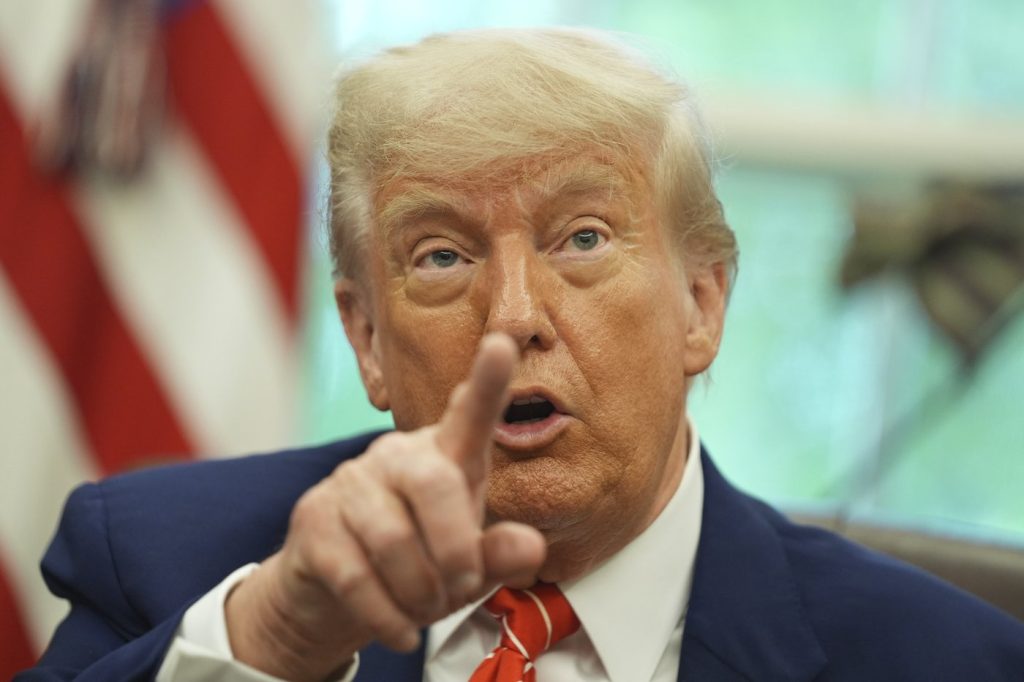
A new preliminary trade agreement between the United States and the United Kingdom is offering insight into how President Donald Trump may approach upcoming trade talks with Canada. Though not yet finalized and with many details still unclear, the deal hints at Trump’s ongoing strategy of using tariffs as leverage while remaining open to selective concessions.
Announced earlier today, the agreement would maintain a baseline 10 per cent tariff on most U.K. imports, while removing duties on steel and aluminum. Notably, Trump’s administration also agreed to reduce tariffs on British automobile imports to 10 per cent for a limited quota of 100,000 vehicles.
Experts believe the deal is a signal to countries nervous about Trump’s combative trade tactics that negotiations are still possible. Carleton University international affairs professor Fen Osler Hampson says the move shows that while Trump may continue using tariffs as a pressure tactic, he is open to compromise when it suits broader goals.
For Canada, this could be a hopeful sign as it prepares for the upcoming review of the Canada-U.S.-Mexico Agreement (CUSMA). According to Hampson, the U.K. agreement indicates that while Trump is unlikely to eliminate tariffs altogether, there is room to reduce them through strategic negotiation.