

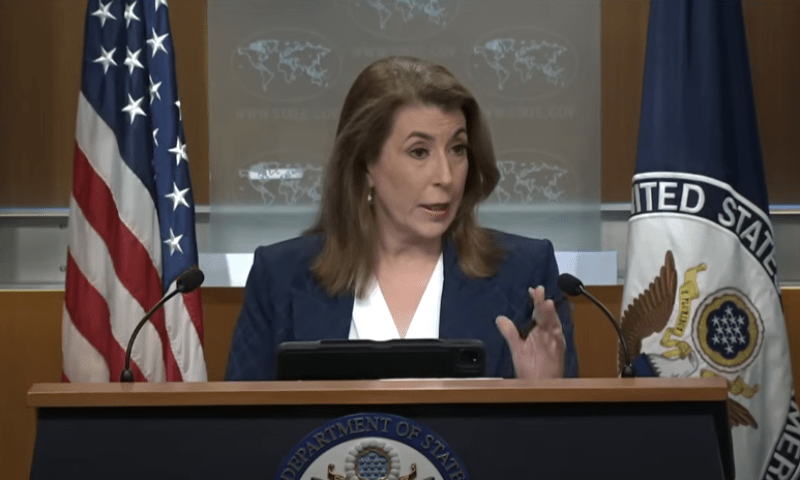
In a significant development, the U.S. State Department has confirmed President Donald Trump’s willingness to work toward resolving the long-standing Kashmir conflict between India and Pakistan. The announcement came during a White House press briefing on June 10, where State Department spokesperson Tammy Bruce echoed Trump’s intention to address what he termed a “generational” issue.
Trump previously offered to assist after helping broker a ceasefire between the two nuclear-armed neighbours following their most intense military standoff in decades. Commending both nations for achieving peace, Trump said, “I will work with both of you to see if, after a ‘thousand years,’ a solution can be arrived at concerning Kashmir.”
When asked about next steps, Bruce remained cautious about revealing specifics. “I can’t speak to his plans,” she said, “but the world knows his nature.” She hinted that the White House may soon release more details and emphasized Trump’s history of facilitating difficult conversations globally. “It shouldn’t surprise anyone that he’d want to manage something like that,” Bruce noted.
As tensions between India and Pakistan remain high, Pakistan has launched a broad diplomatic campaign in the United States to present its viewpoint and counter India’s growing influence in Washington. This includes a recent visit by a delegation led by former Pakistani foreign minister Bilawal Bhutto Zardari. According to Bruce, the delegation met with U.S. officials, including Under Secretary for Political Affairs Allison Hooker, to discuss counterterrorism cooperation and bilateral relations. Hooker reaffirmed the U.S. commitment to maintaining the fragile ceasefire in the region.
On the Indian front, Deputy Secretary Landau held meetings with a parliamentary delegation from New Delhi, reaffirming Washington’s strong support for India’s counterterrorism efforts.
Meanwhile, Trump—never shy about claiming diplomatic victories—reiterated in the Oval Office that he was personally responsible for defusing tensions between the two South Asian powers. “They don’t give me credit for anything,” he said, “but nobody else could have stopped it.”
With both countries closely watching Washington’s next move, Trump’s renewed interest in Kashmir marks a potentially game-changing moment in South Asia’s geopolitics—though whether it leads to lasting peace remains to be seen.