

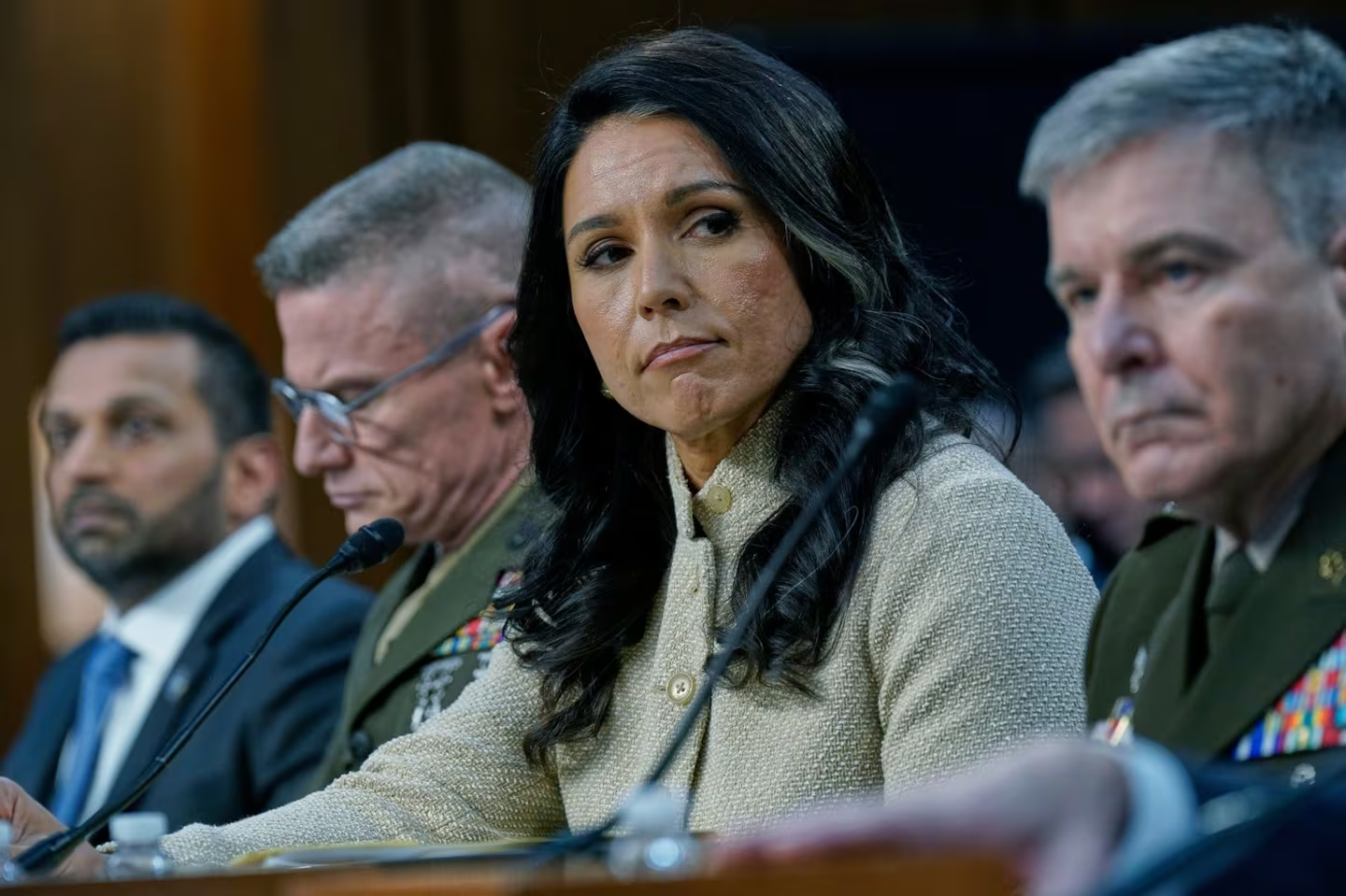
Tulsi Gabbard has resigned as Director of National Intelligence under U.S. President Donald Trump, citing personal reasons related to her husband’s serious health condition. In a resignation letter posted on social media, Gabbard said she would step down officially on June 30 to support her husband, who was recently diagnosed with a rare form of bone cancer.
Trump praised Gabbard’s work in office, calling her service “incredible,” while announcing that her deputy, Aaron Lukas, will serve as acting intelligence chief.
Although Gabbard stated that family concerns drove her decision, her departure follows months of growing speculation about tensions between her anti-war political philosophy and the Trump administration’s increasingly aggressive foreign policy actions, particularly regarding Iran.
A former Democratic congresswoman from Hawaii and military veteran, Gabbard built her national reputation by strongly opposing U.S. military interventions overseas. That stance reportedly placed her at odds with sections of the administration after the United States joined military operations targeting Iran earlier this year.
During congressional hearings, Gabbard faced repeated scrutiny over intelligence assessments related to Iran’s nuclear program and the consequences of U.S. military action in the region. Her cautious responses and refusal to fully endorse the administration’s position created visible friction with lawmakers and reportedly with Trump himself.
Her resignation marks the fourth Cabinet-level departure during Trump’s second term and continues a period of instability within key U.S. departments. Gabbard’s tenure was often controversial, particularly after she used her office to support several politically sensitive investigations and arguments related to the 2020 U.S. election and intelligence reforms.
Despite criticism from opponents, Gabbard remained a highly influential and unconventional political figure. Once considered a rising progressive Democrat and former presidential candidate, she later broke from the Democratic Party, became an independent, and eventually emerged as one of Trump’s most prominent allies on foreign policy and anti-establishment issues.
Her political journey — from Democratic congresswoman to Republican-aligned intelligence chief — made her one of the most closely watched and debated figures in American politics. With her resignation, questions are now emerging about the future direction of U.S. intelligence policy and the growing divisions inside the Trump administration over foreign affairs and military intervention.