

U.S. President Donald Trump said Wednesday that the United States does not require China’s assistance to end the ongoing conflict involving Iran, even as tensions continue to escalate around the strategically vital Strait of Hormuz.
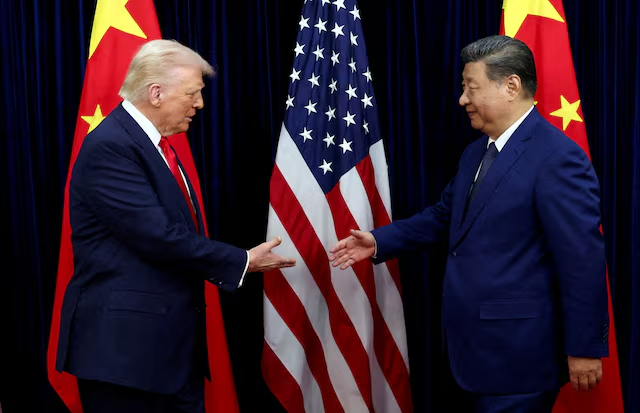
Speaking before departing for a summit in Beijing with Chinese President Xi Jinping, Trump dismissed suggestions that China could play a key role in resolving the crisis.
“I don’t think we need any help with Iran. We’ll win it one way or the other, peacefully or otherwise,” Trump told reporters before leaving Washington.
The comments come amid growing international concern over maritime disruptions in the Strait of Hormuz, a narrow waterway through which nearly one-fifth of the world’s oil supply normally passes. The conflict has already significantly affected global energy markets and shipping operations.
According to reports, Iran has strengthened its influence over the strait in recent days by securing new oil and liquefied natural gas shipping arrangements with Iraq and Pakistan. Iranian officials reportedly view control over the waterway as a major long-term strategic and economic objective.
An Iranian military spokesperson, quoted by state media, suggested that increased supervision of the strait could potentially generate revenue exceeding Iran’s current oil income while expanding Tehran’s geopolitical leverage.
The ongoing crisis continues to expose major divisions between Washington and Tehran despite a fragile ceasefire that took effect more than a month ago.
The United States has demanded that Iran dismantle its nuclear program and end restrictions affecting maritime traffic through the region. Iran, meanwhile, is seeking compensation for war damages, an end to U.S. sanctions and broader regional ceasefires involving allied groups such as Hezbollah in Lebanon.
Meanwhile, global shipping companies and energy markets remain on edge. A Chinese supertanker carrying Iraqi crude oil was reportedly attempting to cross the Strait of Hormuz on Wednesday, highlighting the growing importance of alternative regional shipping arrangements.
The International Energy Agency warned that global oil supplies could fall significantly throughout 2026 because of disruptions linked to the Iran conflict. Brent crude prices have already climbed above $108 per barrel amid fears of prolonged instability.
The conflict is also becoming an increasingly sensitive political issue inside the United States ahead of upcoming midterm elections. Recent polling indicates many Americans remain unconvinced by the administration’s justification for military involvement.
Despite growing economic concerns linked to rising inflation and energy prices, Trump said domestic financial pressures are not influencing his position on Iran.
“I don’t think about Americans’ financial situation,” Trump said. “I think about one thing: We cannot let Iran have a nuclear weapon.”
At the same time, regional violence continues beyond Iran itself. Israeli airstrikes in southern Lebanon reportedly killed several people Wednesday, including children, according to Lebanese health officials, underscoring fears that the wider Middle East conflict could continue to expand despite diplomatic efforts.