

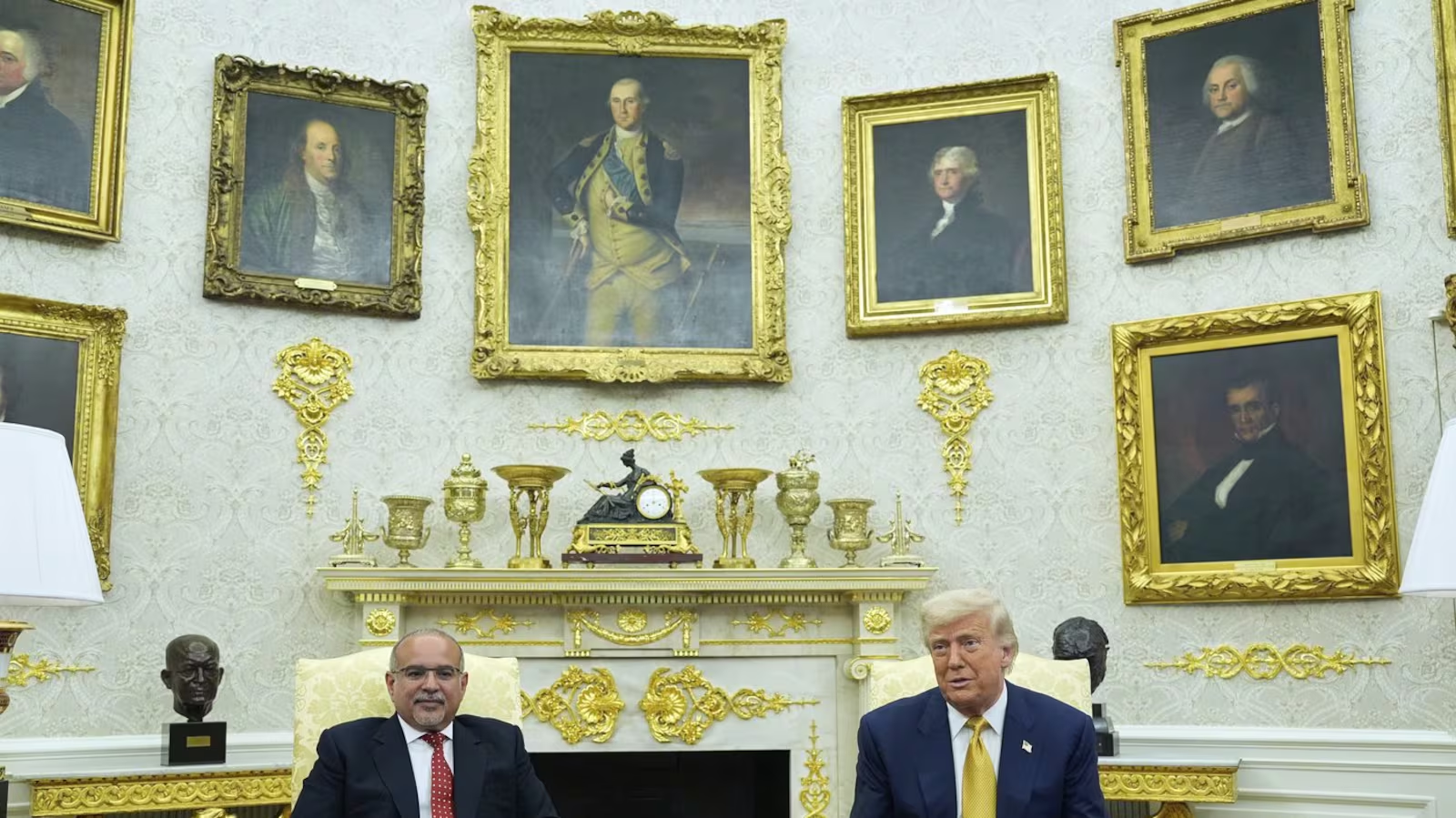
U.S. President Donald Trump welcomed two prominent Gulf leaders to the White House on Wednesday as escalating violence in the Middle East cast fresh doubt on his efforts to broker lasting peace in the region. While Trump met with Bahrain’s Crown Prince Salman bin Hamad Al Khalifa in the Oval Office, he later hosted a private dinner with Qatar’s Prime Minister Sheikh Mohammed bin Abdulrahman Al Thani.
Trump, now in his second term, has placed considerable focus on the wealthy Gulf states, where his family maintains deep business ties. Having already visited Saudi Arabia, Qatar, and the United Arab Emirates during his first overseas trip of the term, Trump used Wednesday’s meetings to emphasize diplomacy as a gateway to economic development, even as longstanding regional conflicts flared once again.
Speaking alongside the crown prince, Trump underscored the reciprocal nature of U.S.-Bahrain relations. “Anything they needed, we helped them. And anything we needed, they helped us,” he said. The prince highlighted a portfolio of $17 billion in investments with the U.S., including deals involving aircraft, jet engines, and technology infrastructure, while signaling future ventures in aluminum production and artificial intelligence. The visit also yielded an agreement to deepen cooperation in civilian nuclear energy, and Bahrain’s king is expected to visit later this year.
Later that evening, Trump shared a private dinner with Qatar’s prime minister, who belongs to the country’s ruling family. Trump praised his earlier visit to Qatar, where he toured palaces and stopped at Al Udeid Air Base, a critical U.S. military installation. The base had been targeted by Iranian ballistic missiles following U.S. strikes on Iran’s nuclear facilities—one missile hit the base, while others were intercepted.
Controversy has swirled around Trump’s interest in using a luxurious Boeing 747 reportedly donated by Qatar as his Air Force One replacement, citing frustration with Boeing’s delays on official aircraft. The proposal has sparked debate over ethics and security risks in accepting such a gift from a foreign nation.
Middle East analyst Aaron David Miller noted that the Gulf appeals to Trump’s worldview, calling it “rich, stable, and populated by authoritarians with whom the president feels very comfortable.”
Meanwhile, tensions surged in the Middle East as conflict erupted in southern Syria between Sunni Bedouin tribes and Druze factions. The involvement of Syrian government forces prompted Israeli strikes on Damascus. Though a ceasefire was announced, its durability remained uncertain.
Secretary of State Marco Rubio, present during Trump’s meeting with Bahrain’s crown prince, described the situation as “an unfortunate misunderstanding” but remained hopeful for de-escalation and a return to post-war recovery in Syria.
Despite global criticism of Israel’s military campaign in Gaza, the country has steadily diminished the influence of regional adversaries like Hezbollah and Iran. Yet experts like Brian Katulis from the Middle East Institute warned that Israel’s increased assertiveness has introduced greater volatility. He pointed to a lack of a comprehensive strategy for dealing with unresolved challenges such as Iran’s nuclear ambitions and its support for militant proxies like the Houthis.
As violence simmers and political questions deepen, Trump’s promise to deliver peace in the Middle East faces intensifying scrutiny.
Ask ChatGPT